 Save to Pinterest
 The first time I tasted authentic tom kha gai, I was sitting in a small Bangkok restaurant during monsoon season, watching rain streak the windows while steam rose from the bowl in front of me. One spoonful and I understood why this soup is whispered about in Thai kitchens like a closely guarded secret. Years later, I finally learned to make it myself, and what struck me most was how the aromatics bloom in that first few minutes, filling your kitchen with a fragrance that somehow tastes like vacation and comfort at once. It's become the soup I make when someone needs feeding, when the weather turns cool, or when I simply want to remember why I fell in love with Thai food in the first place.
I remember making this for my neighbor who had just moved in, standing in my kitchen while her kids played in the yard, explaining how the galangal is different from ginger, how you can feel the difference the moment it hits the broth. She took one taste and got quiet in that way people do when something tastes like home, even if home is somewhere they've never been. That's when I knew this recipe belonged in heavy rotation.
Ingredients
- Chicken broth: Use a good quality broth—this is your foundation, and it will either carry the aromatics beautifully or let them get lost, so choose wisely.
- Lemongrass: Trim the tough outer layers and smash it with the side of your knife to release the oils; this small step makes an enormous difference in how the flavor blooms.
- Fresh galangal: This is non-negotiable for authentic flavor—it's peppery and floral in a way ginger simply cannot replicate, though ginger works in a pinch.
- Makrut lime leaves: These are essential; their citrus-floral notes are what make tom kha unmistakably itself, so hunt them down at an Asian market.
- Thai bird's eye chilies: Lightly crush them to release heat without obliterating the delicate balance; you're looking for warmth, not a scorching fire.
- Chicken thighs: Don't use breast meat—thighs stay tender and flavorful in the gentle simmer, while breast meat can turn stringy and sad.
- Full-fat coconut milk: This is not the place to skimp; low-fat versions are thin and watery, and they'll betray your soup's creamy promise.
- Mushrooms: Straw mushrooms are traditional and give the soup an authentic texture, but cremini work beautifully if that's what you have.
- Shallots: Their sweetness softens and rounds out the sharper notes, adding a subtle depth that regular onions can't quite achieve.
- Fish sauce: It smells funky in the bottle, but trust it—it's the umami anchor that makes everything taste more like itself.
- Lime juice: Freshly squeezed makes all the difference; bottled lime juice tastes tired and one-dimensional by comparison.
- Palm sugar: It has a subtle caramel note that brown sugar mimics but never quite matches, though brown sugar absolutely works.
Tired of Takeout? 🥡
Get 10 meals you can make faster than delivery arrives. Seriously.
One email. No spam. Unsubscribe anytime.
Instructions
- Build your aromatic base:
- Pour the chicken broth into a medium pot and bring it to a gentle simmer—you want tiny bubbles, not a rolling boil. Add the smashed lemongrass, galangal slices, torn lime leaves, and crushed chilies, then let them infuse for 5 to 7 minutes while you prep the remaining ingredients. Your kitchen will smell incredible, and you'll understand why this soup is worth making.
- Cook the chicken gently:
- Add the sliced chicken thighs and shallot to the fragrant broth and cook for 3 to 4 minutes, just until the chicken loses its raw, pink appearance and turns opaque. Don't let it cook longer—overcooked chicken becomes tough, and we're aiming for tender here.
- Welcome the coconut milk:
- Add the mushrooms, then slowly pour in the coconut milk while stirring gently to combine. Bring the soup back to a quiet simmer, never a hard boil, because vigorous boiling can break the coconut milk and make it grainy.
- Season with intention:
- Add the fish sauce, palm sugar, and lime juice, then taste and adjust—this is where the magic happens. Chase the balance of salty, sour, and sweet, adding more lime if it needs brightness, more fish sauce if it needs depth, more sugar if it feels too sharp.
- Finish and serve:
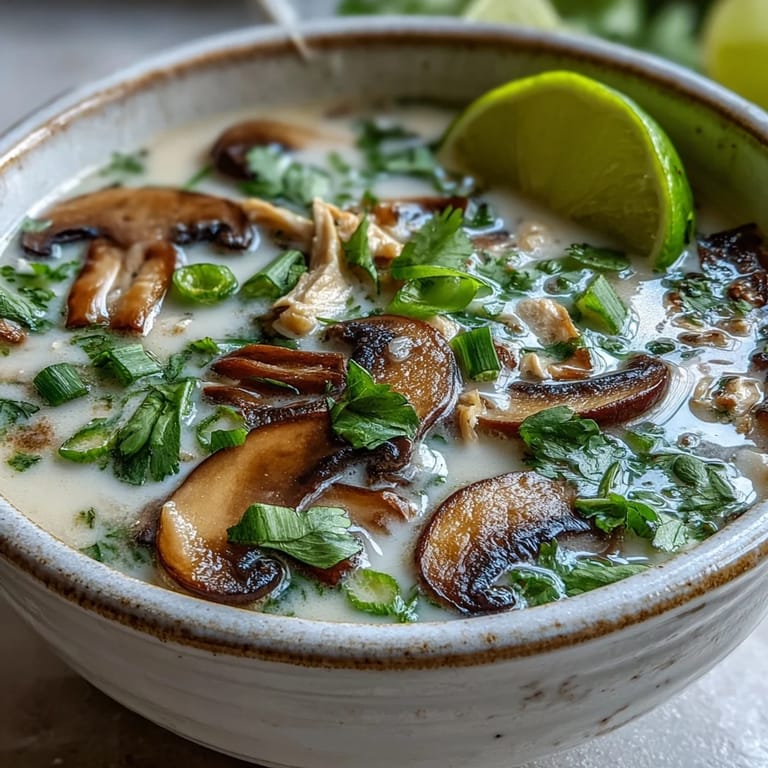
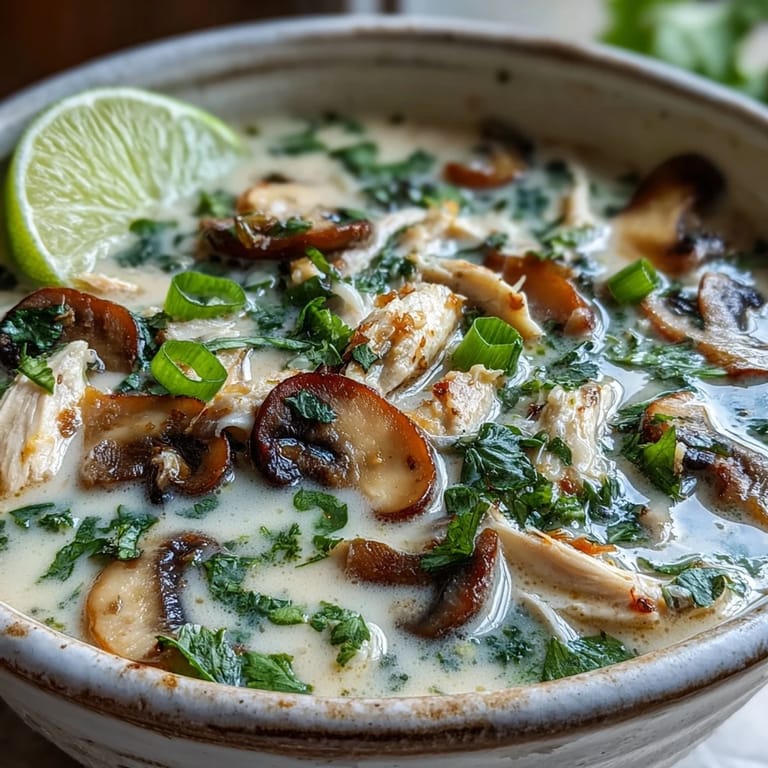
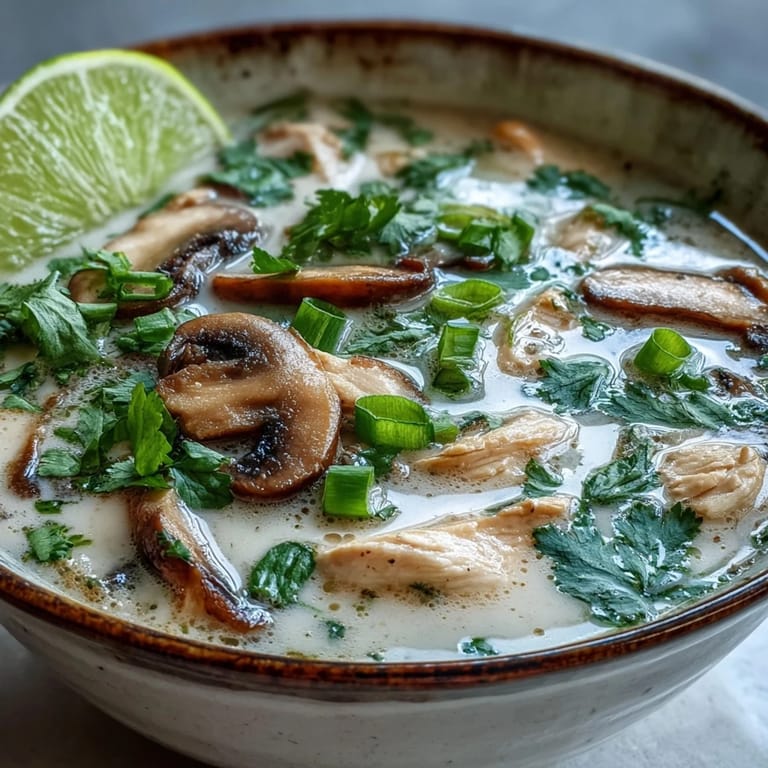
- Remove from heat and discard the large aromatics if you prefer a cleaner bowl, though some people love leaving them in for continued flavor. Ladle the soup into bowls and scatter cilantro and green onions over the top, then serve with lime wedges so people can adjust the tartness to their liking.
 Save to Pinterest
 There was an evening when I made this soup for friends who were going through a difficult time, and I watched it quiet their worried chatter, at least for a moment. Food doesn't fix heartbreak, but sometimes it creates a small pocket of peace, and that's what this soup does.
The Secret of Aromatics
The first 5 to 7 minutes of simmering aromatics might feel like nothing is happening, but it's actually everything. The heat coaxes the essential oils from the lemongrass, galangal, and lime leaves, infusing the broth so completely that the soup tastes like the fragrance smells. This is not a step to rush or skip; it's the foundation of whether your tom kha tastes authentic or just vaguely Thai.
Coconut Milk: The Creamy Truth
Not all coconut milk is created equal, and this soup knows the difference. Shake the can before opening—if it's mostly clear liquid with a tiny layer of cream on top, it's a watered-down version that will betray your efforts. You want a can that feels heavy and full-fat, where the cream and liquid are integrated throughout. The richness is what makes each spoonful feel luxurious despite being relatively simple.
Variations and Customizations
This soup is forgiving enough to bend to your preferences and dietary needs without losing its soul. For vegetarians, swap the chicken for firm tofu cut into bite-sized pieces, use vegetable broth instead of chicken broth, and replace the fish sauce with soy sauce—the soup shifts but remains unmistakably tom kha. The heat level is entirely up to you; start with one crushed chili and add more if you want fire, or remove them entirely if you're cooking for people who prefer their food gentle.
- For a heartier meal, serve with steamed jasmine rice on the side so people can adjust the broth-to-rice ratio to their liking.
- If you can't find galangal, fresh ginger works in a pinch, though the flavor will be different and slightly less floral.
- Leftovers keep in the refrigerator for 3 to 4 days, and the flavors actually deepen and meld slightly overnight.
 Save to Pinterest
 Make this soup when you want to feel close to someone—whether you're cooking for others or just for yourself on an evening that needs gentleness. There's something about a bowl of tom kha gai that makes you slow down and pay attention.
Recipe FAQs
- → What makes Tom Kha Gai different from Tom Yum?
Tom Kha Gai features coconut milk for a rich, creamy base, while Tom Yum is a clear, spicy soup without coconut. The coconut adds sweetness and velvety texture that mellows the heat.
- → Can I substitute galangal with ginger?
While ginger works in a pinch, galangal has a distinct piney, citrusy flavor that's essential for authentic taste. Look for frozen galangal at Asian markets if fresh isn't available.
- → How do I prevent the coconut milk from curdling?
Simmer gently rather than boiling vigorously. Stir in coconut milk last and keep heat low. Avoid adding lime juice until after removing from heat.
- → Is this soup spicy?
Mild to medium heat depending on chili quantity. Start with fewer chilies and add more gradually. Removing seeds reduces heat significantly.
- → Can I make this vegetarian?
Substitute chicken with firm tofu, use vegetable broth, and replace fish sauce with soy sauce or mushroom soy sauce for umami depth.
- → How long does this keep in the refrigerator?
Store in an airtight container for up to 3 days. Reheat gently over low heat to prevent separation. The flavors often improve overnight.