 Save to Pinterest
 My aunt called me three days before Christmas asking if I could bring the ham, and I nearly hung up on her—until she mentioned black currant jam. That's when something clicked. I'd seen jars of that deep purple preserve at the market dozens of times but never knew what to do with them. That year, I glazed a ham with it mixed into a sharp Dijon mustard sauce, and the moment it came out of the oven, caramelized and gleaming, my uncle actually paused mid-conversation. Sometimes the best dishes come from last-minute desperation.
I made this for my partner's parents the second time, and they arrived early while the kitchen still smelled like caramelizing sugar and mustard. His mother watched me brush on the final glaze and said it looked like something from a restaurant, which shouldn't have mattered but somehow did. We didn't even need side dishes that night—people just kept returning to the ham, slicing thin pieces and closing their eyes a little.
Ingredients
- Bone-in, fully cooked ham (6–8 lb): The bone provides incredible flavor during baking and anchors the ham so it doesn't shift around—buy from a butcher if you can, as they'll trim it properly.
- Black currant jam (1 cup): This is the star, bringing jammy sweetness and a subtle tartness that elevates ham beyond the typical brown sugar glaze you've seen a thousand times.
- Dijon mustard (3 tablespoons): The sharpness cuts through richness and prevents the glaze from becoming cloying—don't substitute with yellow mustard.
- Apple cider vinegar (2 tablespoons): This adds brightness and helps the glaze caramelize beautifully instead of just coating the ham.
- Brown sugar (2 tablespoons): A small amount deepens the glaze's color and helps it set with a slight crust.
- Freshly ground black pepper (1 teaspoon): Toast it slightly in your palm before adding if you want to awaken its scent and flavor.
- Ground allspice (1/2 teaspoon, optional): A pinch reminds you this ham belongs at a gathering, not just a weeknight dinner.
Tired of Takeout? 🥡
Get 10 meals you can make faster than delivery arrives. Seriously.
One email. No spam. Unsubscribe anytime.
Instructions
- Set your oven and pan up for success:
- Preheat the oven to 325°F and line your roasting pan with foil, then nestle a rack inside. This low, steady heat ensures the ham warms through without the exterior drying out.
- Prepare the ham:
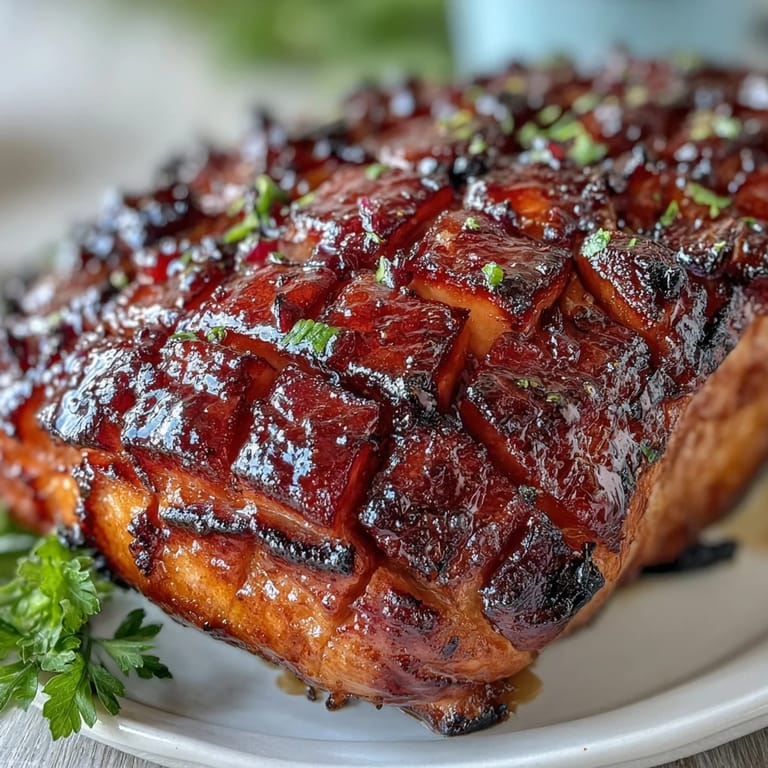
- Trim away any thick skin but leave a thin layer of fat—that's your canvas for the glaze. Score the fat in a crosshatch diamond pattern with a sharp knife, about 1/4 inch deep, which helps the glaze sink in and creates those caramelized edges everyone reaches for.
- Position and begin:
- Place the ham cut side down on the rack. This orientation protects the cut and keeps the meat moist.
- Make your glaze:
- Combine the jam, mustard, vinegar, brown sugar, pepper, and allspice in a saucepan over medium heat, stirring until the mixture is smooth and warm—you're not cooking it down, just bringing everything together so the flavors marry. The glaze should smell sweet and sharp at once.
- First coating:
- Brush about one-third of the glaze over the ham with a pastry brush, working it into the scored fat. Cover loosely with foil and slide the pan into the oven.
- First hour:
- Bake covered for 1 hour—this keeps the ham from drying while it heats through.
- Uncover and glaze again:
- After 1 hour, pull the pan out, brush with half of the remaining glaze, and return it uncovered. Bake for 30 minutes.
- Final glaze and finish:
- Brush with the last of the glaze and bake uncovered for another 30 minutes until the ham is glossy and the edges are caramelized and dark. The internal temperature should reach 140°F, but honestly, you'll know it's ready when it smells like caramel and Dijon and your kitchen feels celebratory.
- Rest before slicing:
- Remove from the oven, tent loosely with foil, and let it rest for 15–20 minutes. This resting period is non-negotiable—it allows the juices to redistribute so every slice stays tender.
- Garnish and serve:
- If you have fresh black currants or thyme sprigs, scatter them over the ham just before bringing it to the table. Serve warm, and watch people's faces light up.
 Save to Pinterest
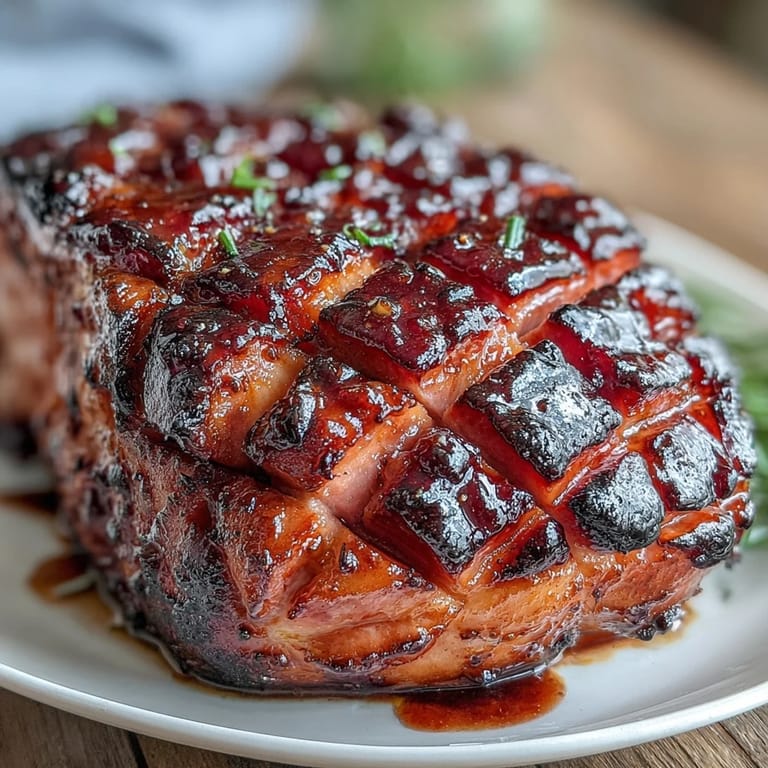
 There's a moment near the end of baking when the kitchen fills with this dark, jammy aroma and you suddenly understand why people fought over holiday meals. This isn't just dinner—it's the moment when a simple recipe becomes a memory everyone shares.
Why This Glaze Changes Everything
Most ham glazes are one-note—brown sugar, maybe some mustard, occasionally pineapple. This black currant jam brings sophistication without pretension. The tartness of the fruit keeps the glaze from tasting saccharine, while the Dijon mustard adds a subtle bite that makes people pause and wonder what they're tasting. The apple cider vinegar is the secret handshake here, helping the whole thing caramelize into glossy, dark patches instead of staying syrupy.
Timing and Temperature Wisdom
The 325°F oven temperature matters because it's gentle enough that you won't end up with a ham that's scorched outside and cold inside. Since commercial ham is already fully cooked, you're really just warming it through and creating that caramelized exterior. The three-stage glazing process—starting with foil coverage, then uncovered glazing—ensures the meat stays moist while the surface gets that restaurant-worthy finish. If you're working with a larger ham, add 10–15 minutes per additional pound.
Beyond the Holiday Table
I've made this glaze for pork tenderloin, chicken breasts, and even roasted root vegetables, and it works beautifully across the board. Leftovers transform into phenomenal sandwiches—pile thin slices onto good bread with a little of the pan drippings, and you've got something better than the original meal. The glaze also keeps well in the refrigerator for about a week, so you could make it ahead and brush it on whatever protein you're serving.
- For extra heat, stir a pinch of cayenne into the glaze right before your first brush.
- If you can't find black currant jam, red currant or even raspberry jam works in a pinch, though the flavor will shift slightly.
- Always let the ham rest after baking—rushing straight to carving means you'll lose precious juices.
 Save to Pinterest
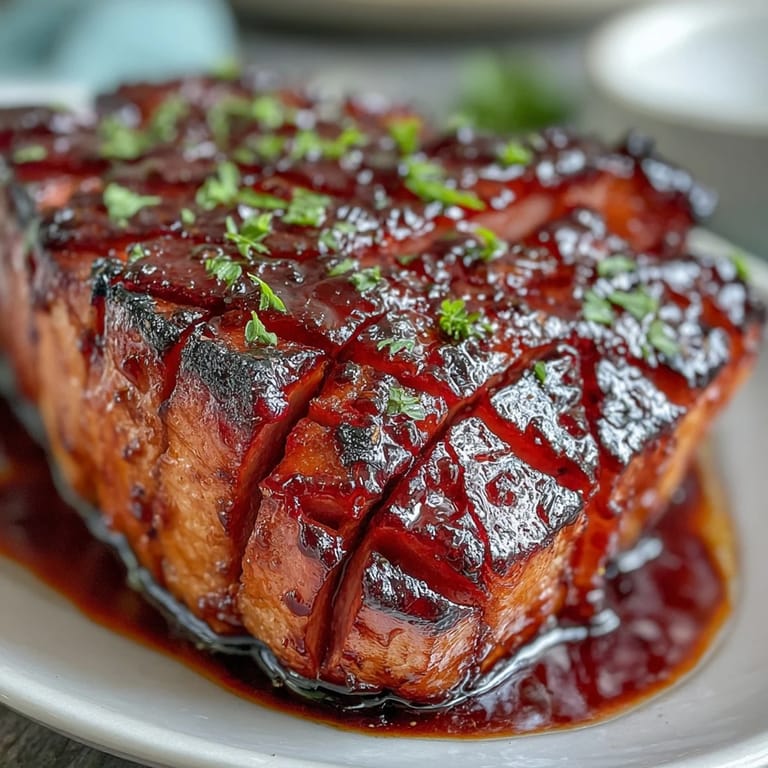
 This ham has a way of turning an ordinary Sunday dinner into something people talk about months later. Make it once, and you'll understand why.
Recipe FAQs
- → What type of ham is best for this glaze?
Use a fully cooked, bone-in ham weighing 6 to 8 pounds for optimal flavor and even cooking.
- → How do I achieve the perfect glaze consistency?
Gently warm the black currant jam mixture until smooth and pourable but not boiling, ensuring easy brushing onto the ham.
- → Can I prepare this dish in advance?
Yes, you can apply the glaze and refrigerate the ham overnight. Reapply glaze before baking for best results.
- → What temperature should the ham reach when done?
Heat until an internal temperature of 140°F (60°C) is reached for a moist and safe serving temperature.
- → Are there alternative garnishes to black currants?
Fresh herbs like thyme or rosemary complement the glaze and add aromatic freshness to the presentation.
- → How can I add a spicy twist to the glaze?
Incorporate a pinch of cayenne pepper to the glaze mixture for an added kick of heat.