 Save to Pinterest
 I discovered the Celtic Cross platter at a friend's dinner party in Dublin, where a elegant round board caught everyone's eye before a single crumb was touched. The cheeses were arranged in four distinct quadrants, each telling its own story—creamy Irish cheddar next to delicate Brie, with sharp blue cheese and nutty Manchego completing the cross. What struck me most was how the visual structure made people slow down and appreciate each cheese individually, rather than grabbing randomly. Since that evening, I've made this platter dozens of times, and it never fails to become the centerpiece conversation starter at any gathering.
I made this for my sister's book club last spring, and what I remember most isn't the compliments but the quiet moment when everyone went still, forks hovering, deciding which cheese to try first. Someone paired the blue cheese with an apricot, someone else dipped a walnut into the herbed cream, and suddenly the platter became a conversation without words. That's when I realized this isn't really about the individual ingredients—it's about creating permission for people to linger and explore together.
Ingredients
- Irish cheddar, cubed: The foundation of this platter—choose a real farmhouse cheddar if you can find it, as the flavor difference is worth the hunt.
- Brie, sliced: Slice it just before serving so the cream doesn't oxidize and turn greyish; keep it cool until the last moment.
- Blue cheese, crumbled: This is your boldest player, so don't skimp on quality—a pungent, properly aged blue transforms the whole experience.
- Manchego, sliced: Its slightly salty, buttery notes bridge perfectly between the mild and intense cheeses on either side.
- Sour cream or Greek yogurt: Greek yogurt gives a lighter texture and slightly tangy bite that complements all four cheeses beautifully.
- Fresh chives, finely chopped: Chop them just before mixing so they stay bright green and aromatic.
- Lemon juice: A squeeze cuts through the richness and keeps the dip from tasting flat.
- Seedless red grapes: They add a clean sweetness and visual pop that draws the eye around the platter naturally.
- Dried apricots: Their gentle sweetness softens the sharp cheese edges and gives texture contrast.
- Walnuts: Toast them lightly if you have time—five minutes in a dry pan wakes up their flavor and makes them irresistible.
- Honey: A drizzle over the blue cheese creates pockets of sweetness that make people pause and enjoy.
- Rustic crackers: Choose ones with actual texture and flavor, not the thin, salty kind that overshadow the cheese.
- Baguette, sliced: Slice on an angle so each piece feels substantial enough to hold cheese without tearing.
Tired of Takeout? 🥡
Get 10 meals you can make faster than delivery arrives. Seriously.
One email. No spam. Unsubscribe anytime.
Instructions
- Build the dip foundation:
- Mix your yogurt or sour cream with the bright green chives, a squeeze of lemon, and seasoning—taste it and adjust because this is your flavor anchor for the whole board. Spoon it into a small round bowl that feels at home in the center of your serving platter.
- Position your center:
- Place that bowl dead center on your large round platter; this is your compass point for everything that comes next.
- Create the four quadrants:
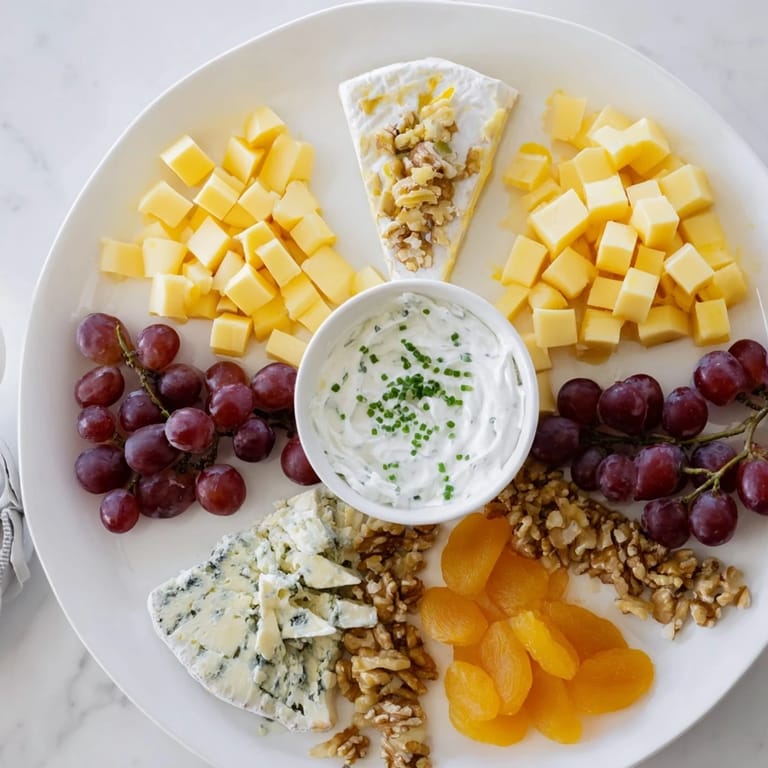
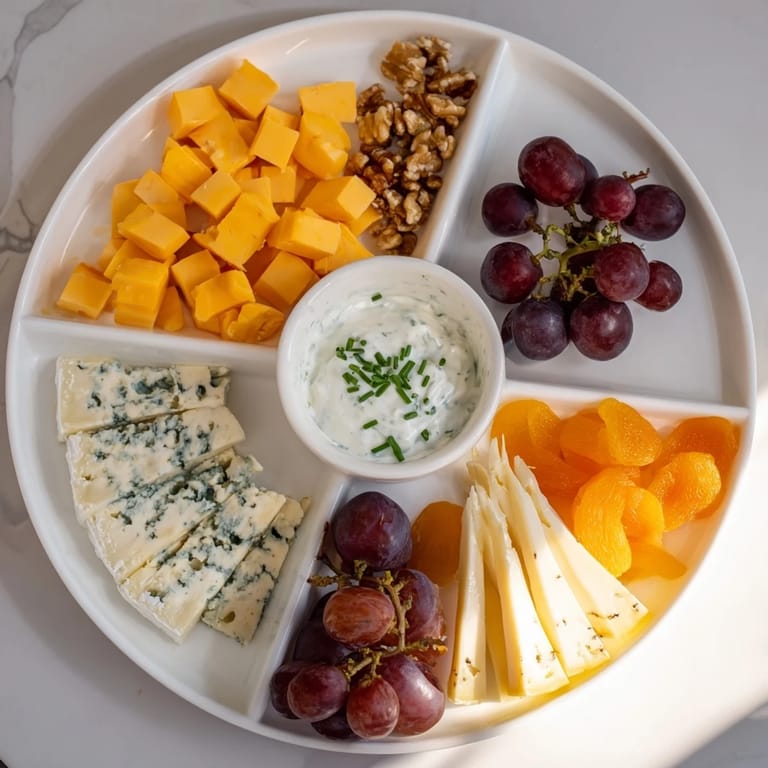
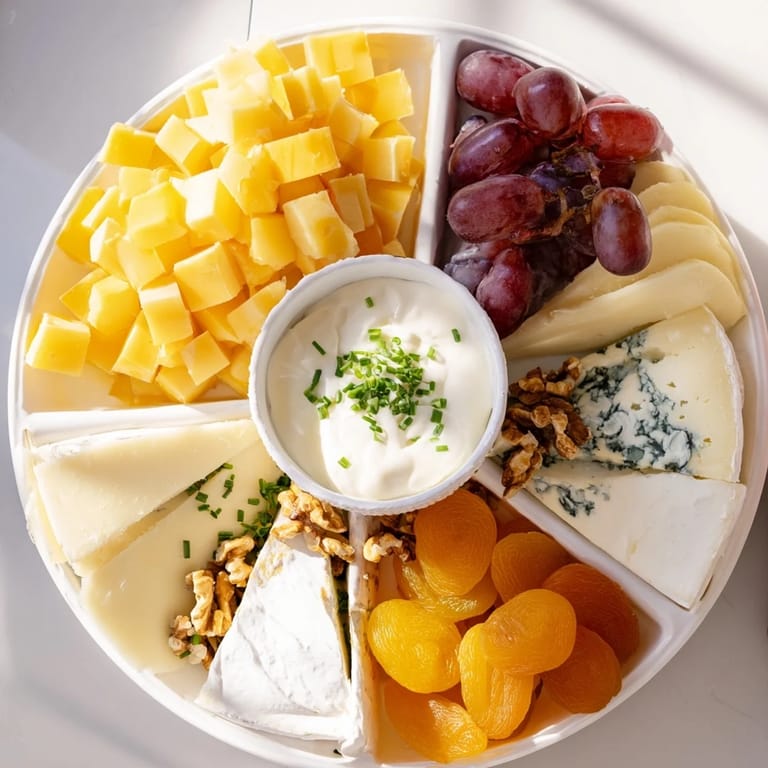
- Imagine a cross dividing your platter into quarters and let each one be its own kingdom—fan the Irish cheddar in one, overlap the Brie slices in another, scatter the crumbled blue cheese in a third, and arrange the Manchego in the fourth. The slight overlap and organic arrangement look intentional without feeling stiff.
- Fill the spaces with grace:
- Tuck grapes, apricots, and nuts into the gaps between quadrants, thinking about color balance as you go—let red grapes pool in one spot, golden apricots in another. This is where the platter comes alive with visual rhythm.
- Add the honey flourish:
- Drizzle honey over the blue cheese section so it catches the light and creates little jewels of sweetness that make people curious.
- Frame it all:
- Arrange your crackers and baguette slices around the outer edge like a golden frame, leaving enough space so they don't feel crowded.
- Bring it to the table:
- Let everything sit for five minutes so the cheeses warm to room temperature and their flavors become more expressive. This is when you serve it, while it still has energy.
 Save to Pinterest
 My mother once told me that a good platter is a gift that lets people be themselves—some will be adventurous and try everything, others will stick safely with what they know, and both are right. The Celtic Cross design respects that by offering clear choice without overwhelm.
The Geometry of Appetizers
There's something almost architectural about arranging food in quadrants; it removes the anxiety of 'where do I put this' and replaces it with clear intention. The cross shape also means no one feels like they're reaching across someone else or fighting for corner territory—everyone gets an equal view and access. When people understand the structure, they relax and enjoy.
Cheese Temperature and Time
I learned this the hard way at a winter gathering when I rushed the platter from fridge to table and everyone complained the cheese tasted waxy. Room temperature isn't just fancy talk—it's the difference between tasting the cheese maker's skill and tasting cold dairy. The flavors bloom, the textures soften, and suddenly those expensive wheels are worth every penny. Same goes for timing; assemble the platter no more than thirty minutes before serving, or the cut edges of cheese start to lose moisture and the fruit begins to weep.
Wine Pairing and the Perfect Moment
A crisp Sauvignon Blanc plays beautifully with the Irish cheddar's brightness, while a light Pinot Noir won't overpower the delicate Brie or compete with the blue cheese's intensity. The magic happens when someone takes a bite of blue cheese with an apricot, sips wine, and their eyes light up—that alignment of flavors is worth planning for. Keep the wine chilled and the platter at room temperature, and you've created conditions where everyone feels like they're tasting something special.
- Swap seasonal fruits as they arrive—pears and apples in autumn, berries in summer, whatever feels fresh.
- Some guests love honey on the cheddar instead of just the blue, so keep extra in a small drizzle bottle nearby.
- If you're feeding vegetarians, check that your cheeses are made with plant rennet, and label them discreetly so people know it's intentional inclusion, not an afterthought.
 Save to Pinterest
 This platter reminds me why I cook for people—not to impress, but to create a moment where everyone feels welcome to explore and enjoy together. Serve it with intention and watch what happens.
Recipe FAQs
- → How do I arrange the cheeses for the platter?
Divide the serving platter into four quadrants and place each cheese type separately in its own section around the central dip for balance and visual appeal.
- → What makes the central dip special?
The dip blends sour cream or Greek yogurt with fresh chives, lemon juice, salt, and pepper, providing a creamy, tangy center that complements all the cheeses.
- → Can I substitute any ingredients in this arrangement?
Yes, you can swap cheeses or add seasonal fruits like apple or pear slices, adjusting nuts or accompaniments to your taste and availability.
- → How should I serve this platter for best flavor?
Serve cheeses at room temperature to enhance their flavors and textures. Arrange crackers and bread around the edge just before serving.
- → What beverages pair well with this cheese selection?
Crisp white wines like Sauvignon Blanc or light reds such as Pinot Noir complement the cheeses and fruit without overpowering the flavors.