 Save to Pinterest
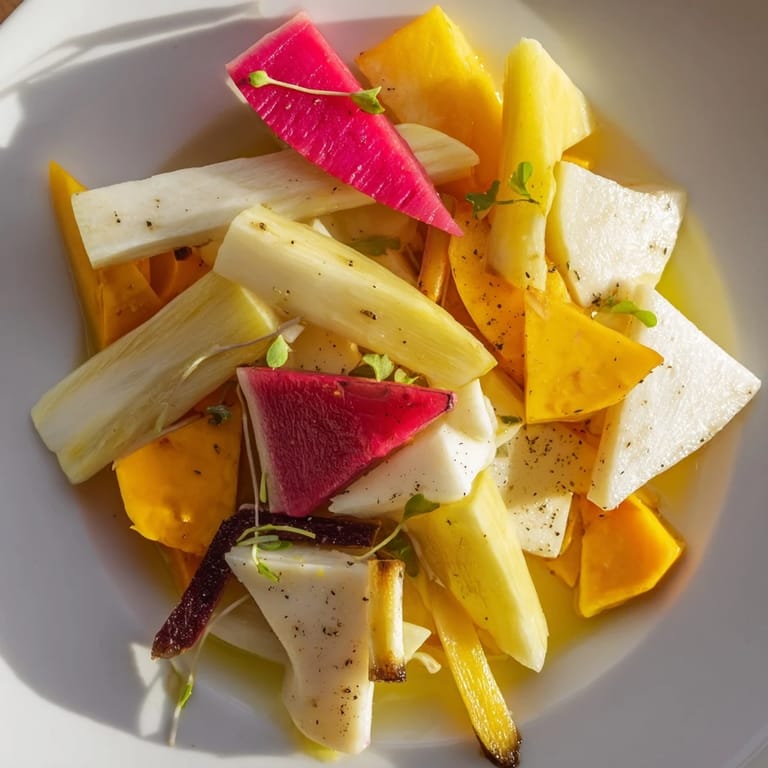
 I discovered this dish during a visit to a modern art gallery in the city, where I found myself staring at an abstract cubist painting for far too long. That evening, inspired by those geometric shapes and bold color blocks, I decided to bring that same artistic energy into my kitchen. What started as an experiment in plating became a meditation on how food could be both nourishment and art, a way to transform humble vegetables into something that made people pause before eating.
I remember making this for the first time when my friend Elena came over saying she needed something beautiful to look at. Her week had been gray and exhausting, and I wanted to give her something that would make her smile before she even tasted it. When I set down the platter with all those geometric shapes catching the light, she literally gasped. We didn't eat it immediately; we just looked at it for a moment, and that pause felt like the whole point.
Ingredients
- Cucumber: The pale, crisp contrast that grounds the whole composition, offering a cool, refreshing bite. Choose one small and firm, as watery cucumbers will weep over time.
- Golden beet: Earthy sweetness without the mess of regular red beets staining everything. Cook it ahead if possible, and always peel while still slightly warm for easier removal of the skin.
- Watermelon radish: Those hidden pink rings feel like a secret revealed with each slice. It's the surprise element that makes people lean in closer.
- Ripe avocado: Richness and butter-soft texture that contrasts beautifully with everything else. Only cut this right before serving so it doesn't brown.
- Feta cheese block: Use block feta, not crumbled, so you can cut it into your geometric shapes. The creamy, tangy presence ties everything together.
- Mango: Tropical sweetness and that golden color that catches light like nothing else. Choose one that yields slightly to pressure but isn't mushy.
- Extra virgin olive oil: The canvas that brings all the flavors together. Use something you actually like to eat, because you'll taste every drop.
- Lemon juice: The brightness that keeps everything fresh and prevents the avocado from browning. Fresh squeezed makes a real difference.
- Flaky sea salt and cracked black pepper: The final layer of flavor that makes each piece taste intentional, not accidental.
- Microgreens or fresh herbs: The last touch of color and life, added at the very last moment before serving.
Tired of Takeout? 🥡
Get 10 meals you can make faster than delivery arrives. Seriously.
One email. No spam. Unsubscribe anytime.
Instructions
- Prepare your canvas:
- Get your large flat platter ready and clear your counter space. You want room to work and a surface that will showcase your creation. This moment is like setting up your artist's palette.
- Cut with intention:
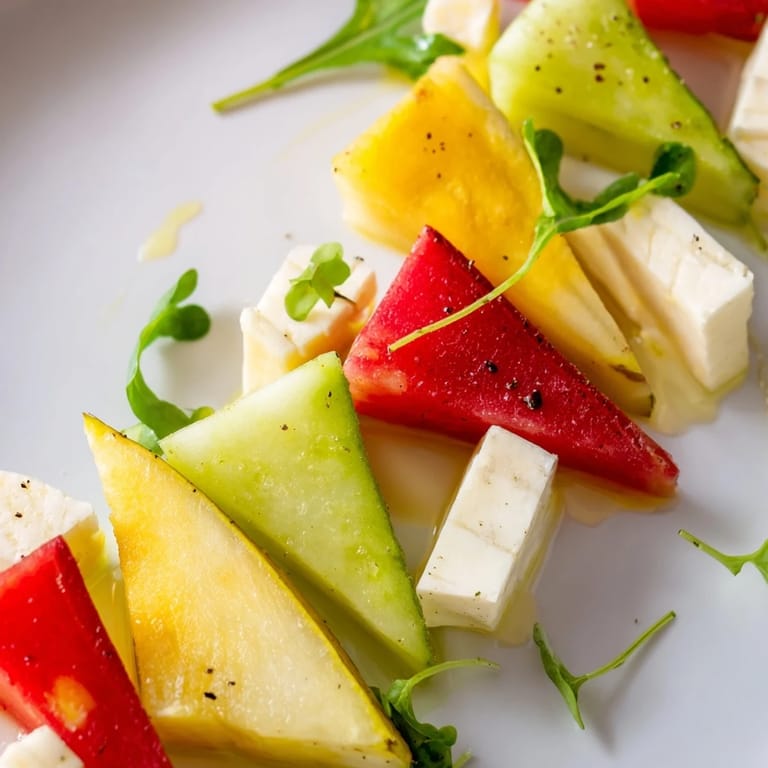
- Slice each vegetable and fruit into non-standard geometric shapes roughly the thickness of a pencil. Use triangles, parallelograms, even irregular polygons. A sharp knife is your best friend here, and small cookie cutters can help if you want perfect precision. Take your time; this is where the magic happens.
- Cube the feta:
- Cut your block of feta into geometric cubes or prisms that echo the shapes you've already created. The cheese should feel like it belongs in the same artistic world as everything else.
- Arrange like a mosaic:
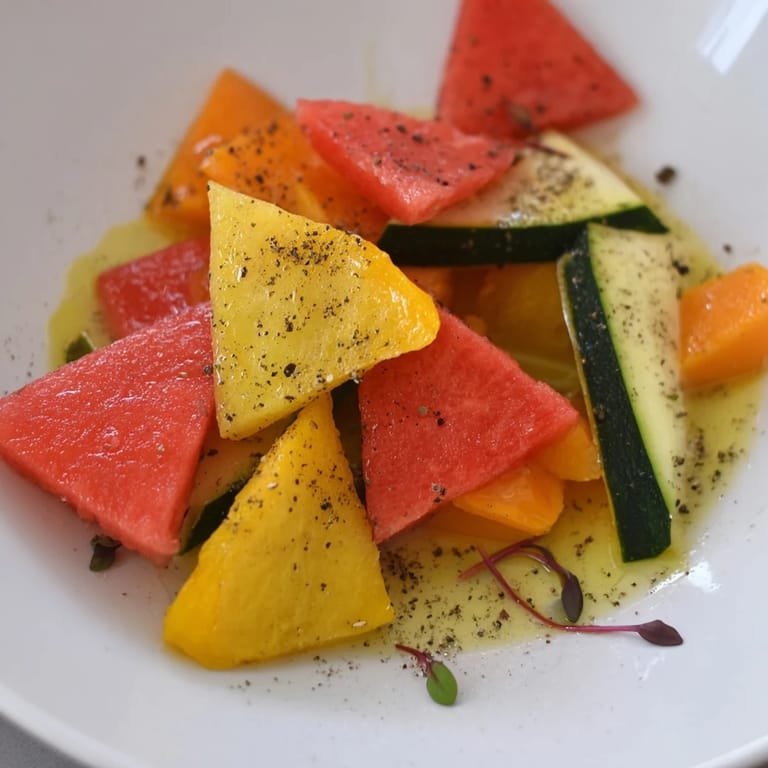
- This is the moment where you become the artist. Place each piece close together on your platter, but don't let them overlap. Think of it as a cubist painting come to life. Step back occasionally to see how the colors and shapes are speaking to each other.
- Dress with care:
- Drizzle the olive oil and lemon juice over the entire arrangement with a steady hand. This is about intention, not drowning everything. Feel the weight of the bottle, the flow of the oil.
- Season to taste:
- Sprinkle flaky sea salt and freshly cracked black pepper across the whole landscape. This is where you add the final seasoning that makes each bite sing.
- Garnish and serve:
- Crown everything with microgreens or fresh herbs. Then serve immediately, while those clean lines are still sharp and the colors are still vibrant.
 Save to Pinterest
 I made this dish for my mom on her birthday, and watching her face light up when she saw it was worth every careful slice. She said it was almost too pretty to eat, but then she took that first bite and smiled the kind of smile that meant she understood: food that nourishes both the eyes and the belly is the best kind of love language.
The Art of Cutting
The geometric shapes are not just for show; they change how you experience each ingredient. A long triangle of cucumber tastes different on your tongue than a cube of it does, and a hexagon of mango seems to dissolve differently in your mouth than a parallelogram would. I realized this is also about patience and presence. You can't rush cutting these shapes and expect them to look right. The knife needs to move with intention, with respect for the ingredient and the vision you're creating.
Pairing and Presentation
This dish speaks to a certain moment and mood. Serve it when you want to slow people down, when you want them to notice what they're eating before they eat it. A crisp Sauvignon Blanc cuts through the richness of the feta and avocado beautifully, and the acidity echoes the lemon in the dish itself. Offer cocktail picks so people can pick up individual pieces, which turns the meal into an interactive experience rather than a plated course.
Make It Your Own
The beauty of this recipe is that it's a framework for your own creativity. Any vegetables with good color and texture will work; I've used purple carrots, yellow bell peppers, and even thinly shaved radishes. For a vegan version, firm tofu cut into geometric shapes replaces the feta perfectly, offering the same textural contrast without the dairy. The point is not to follow this exactly, but to understand the principle: color, contrast, and care in the cutting. With those three things in mind, you can make this dish your own.
- Choose your vegetables based on what colors will create visual drama on your platter
- Cut everything slightly thicker than you think you need to so the pieces stay distinct and don't get lost
- Always prepare everything before you start arranging, so you can work quickly once you begin
 Save to Pinterest
 This dish taught me that food doesn't always have to be complicated to be memorable. Sometimes the most powerful meals are the ones where you slow down, pay attention, and let the simple ingredients speak for themselves. Serve this when you want to remind people that eating is an art form.
Recipe FAQs
- → What vegetables are best for creating geometric shapes?
Cucumber, golden beet, and watermelon radish work well due to their firm texture and vibrant colors, allowing precise cuts into triangles, hexagons, and other polygons.
- → Can I substitute feta cheese for a vegan option?
Yes, firm tofu can replace feta to maintain the texture and accommodate a dairy-free or vegan diet without altering the visual appeal.
- → How do I maintain the fresh look of the cut pieces?
Arrange and serve immediately after cutting, and drizzle with olive oil and lemon juice to preserve moisture and prevent discoloration.
- → What garnishes enhance this appetizer's appearance and flavor?
Microgreens or fresh herbs such as basil or cilantro add a burst of color and a fresh herbal note that complements the other elements.
- → Is this dish suitable for gluten-free diets?
Yes, all ingredients used are naturally gluten-free, making this appetizer a safe choice for gluten-sensitive individuals.