 Save to Pinterest
 There's something about a slate board that makes you stop and look twice. I discovered this when a friend casually dropped one on her kitchen counter, and suddenly everything placed on it looked intentional, architectural even. That's when I realized a charcuterie board didn't have to be cozy and scattered—it could be bold, geometric, almost defiant in its simplicity. The Industrial Slate was born from that moment, a deliberate flip of the script where precision and clean lines replaced the usual rustic sprawl.
I made this for a dinner party on a rainy November evening, and someone actually took photos before touching it. That's when I knew I'd stumbled onto something special—not because the ingredients were fancy, but because the presentation gave ordinary meats and cheeses a sense of occasion. The straight lines somehow made everyone eat more thoughtfully, pausing between bites instead of mindlessly grazing.
Ingredients
- Smoked prosciutto: Wispy and delicate, it needs to stay separated from the Manchego so the flavors don't blur together on the board.
- Soppressata: The peppery heat in every slice; slice it thick enough to hold its shape in a line.
- Coppa: Marbled and rich, it's the bridge between the lighter prosciutto and the heavier mortadella.
- Mortadella: Studded with fat and spice, it's the showstopper that makes people ask what it is.
- Aged cheddar: Buy it in a block and slice it yourself for cleaner edges; pre-sliced gets lost on the board.
- Manchego: Nutty and firm, it won't crumble under the knife like softer cheeses.
- Gruyère: A little salty, a little sweet—it's the diplomat between the sharp cheddar and the blue.
- Blue cheese: Crumble it slightly before arranging so guests aren't intimidated by a solid block.
- Seedless red grapes: They catch the light and add sweetness to balance the salt.
- Cornichons: Their acidity is essential; they're the palate cleanser that keeps people tasting each element separately.
- Whole grain mustard: A small dollop goes a long way; it's assertive and anchors the board visually.
- Mixed olives: The brine is part of the experience, so don't pat them too dry.
- Freshly cracked black pepper: This isn't decoration; it adds a whisper of heat and aroma.
Tired of Takeout? 🥡
Get 10 meals you can make faster than delivery arrives. Seriously.
One email. No spam. Unsubscribe anytime.
Instructions
- Set your stage:
- Place the slate board on your surface and take a breath. This is the foundation of everything, so make sure it's stable and centered. If you can, chill it for 10 minutes while you prep—cold stone keeps the meats from sweating.
- Map out the meats:
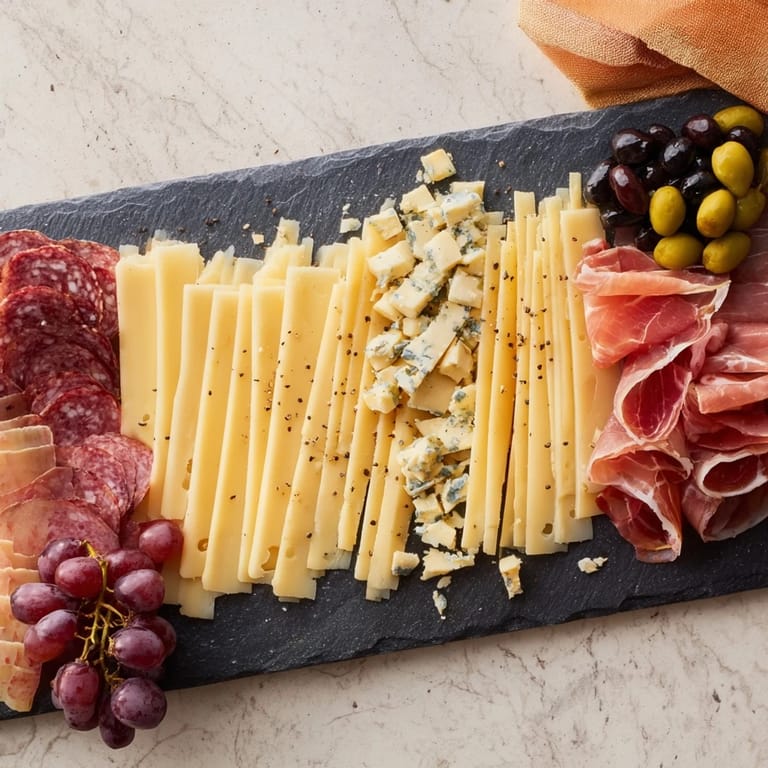
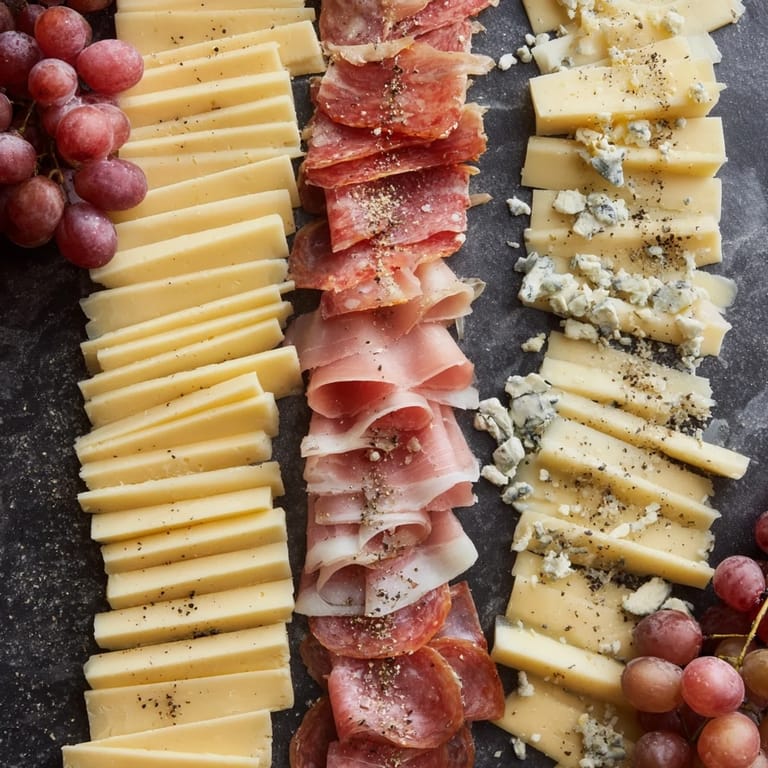
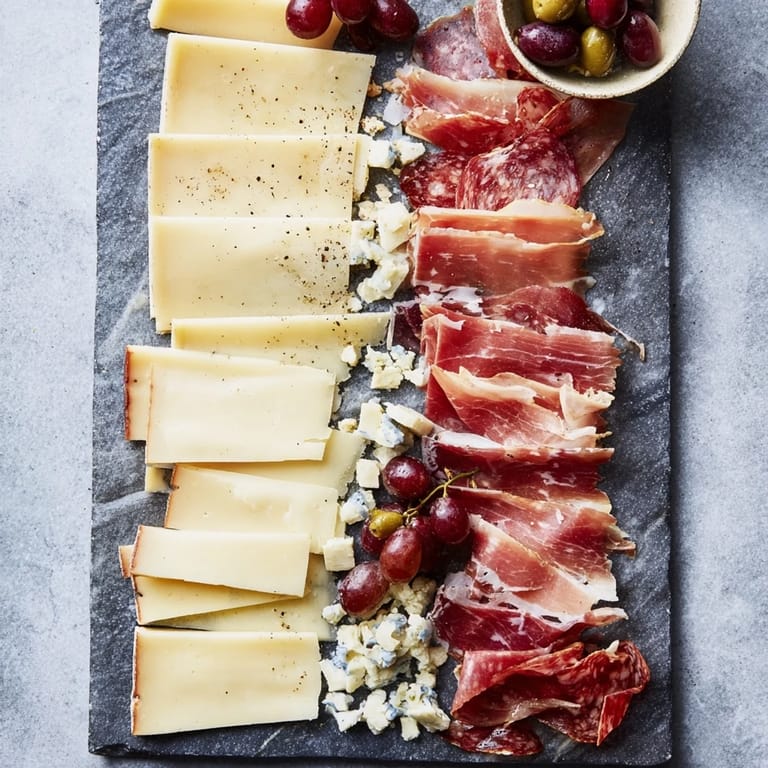
- Arrange prosciutto, soppressata, coppa, and mortadella in straight, parallel lines on one half of the board, leaving about half an inch between each type so they stay distinct. The lines should feel deliberate, like you're drawing with food.
- Mirror with cheeses:
- On the opposite half, create matching lines of aged cheddar, Manchego, Gruyère, and blue cheese, keeping each type grouped so the colors and textures create rhythm. The board should feel balanced, as if you could fold it in half.
- Fill the spaces:
- Nestle small grape clusters, cornichon bundles, and olive groups into the gaps, treating them like punctuation between the meats and cheeses. These small additions should feel scattered but intentional, not chaotic.
- Add the finishing touches:
- Place small dollops or a thin line of whole grain mustard along the board, and finish with a light, generous sprinkle of cracked black pepper. Step back and look—if it feels off, adjust until it feels right.
 Save to Pinterest
 I learned something unexpected watching people interact with this board. They didn't attack it like a typical spread; they paused, studied the lines, and ate with intention. It became a conversation starter about the difference between food as fuel and food as art, even though it's just meat and cheese arranged carefully.
Why Precision Matters Here
The straight lines aren't just aesthetic—they serve a purpose. When ingredients are organized rather than jumbled, each flavor stands alone before your palate decides to mix them. The geometric approach actually makes the board feel less overwhelming and more inviting, like there's a clear path through the experience. It's a small trick that changes everything.
Wine and Beverage Pairing
A crisp Sauvignon Blanc cuts through the richness of the cured meats, while a bold Cabernet Sauvignon echoes the peppery notes of soppressata and the earthiness of aged cheddar. If wine isn't your thing, sparkling water with lemon works beautifully, letting the flavors speak without competition.
Make It Your Own
The beauty of this board is its flexibility. Swap the cheeses for ones you love, replace mortadella with guanciale if you find it, add roasted nuts or marinated artichokes. The principle stays the same: arrange with intention, let each element breathe, and trust that simplicity—when done carefully—makes the biggest impact.
- For a vegetarian version, build the board with marinated artichoke hearts, roasted almonds, and additional cheeses to create similar lines and balance.
- Chill the slate 15 minutes before arranging everything to keep ingredients cool and looking their best throughout service.
- Make this up to 2 hours ahead, cover loosely with plastic wrap, and chill until guests arrive—the flavors only deepen.
 Save to Pinterest
 This board reminds me that sometimes the most elegant moments come from clarity and constraint, not abundance. It's food that trusts itself enough to stand still and be admired.
Recipe FAQs
- → What is the best slate or stone to use for serving?
A heavy, unpolished stone or slate board works best to maintain a rustic, industrial look and keep ingredients cool.
- → Can the platter be prepared ahead of time?
It's best to arrange just before serving to keep meats and cheeses fresh and grapes crisp.
- → Are there suitable vegetarian substitutions?
Yes, swap cold meats for marinated artichoke hearts and roasted nuts to maintain texture and flavor.
- → How should the cold meats and cheeses be arranged?
Place cold meats in straight, parallel lines on one side and arrange cheeses similarly on the opposite side.
- → What accompaniments enhance this platter?
Adding seedless grapes, cornichons, mixed olives, and whole grain mustard adds contrasting textures and flavors.