 Save to Pinterest
 Last Tuesday I stood in my kitchen staring at a package of pork chops, wondering how to make them feel exciting rather than routine. My partner mentioned missing creamy restaurant-style meals since we started eating keto, and something clicked—what if I could recreate that indulgent sauce without the carbs? Twenty minutes later, I had a skillet singing with aromatics and a cream sauce that tasted like pure comfort. This dish emerged from that moment of wanting to prove that low-carb cooking doesn't mean sacrificing richness or flavor.
The first time I made this for my in-laws, I was nervous about the plating—would it look restaurant-worthy or homemade? But when my mother-in-law took that first bite and closed her eyes, I realized it didn't matter. She asked for the recipe on the spot, and my father-in-law went back for seconds despite claiming he never eats Brussels sprouts. That's when I knew this wasn't just another weeknight dinner.
Ingredients
- Boneless pork chops (1-inch thick): Thickness matters here because thin chops dry out before the sauce even comes together; you want enough meat to stay juicy through searing.
- Sea salt and freshly ground black pepper: Don't skip the fresh grinding—pre-ground pepper tastes flat against the Dijon, and you'll notice the difference.
- Olive oil and unsalted butter: The combination gives you a higher smoke point plus rich flavor; butter alone would burn at these temperatures.
- Heavy cream: Full-fat is non-negotiable for that luxurious mouthfeel that makes this feel indulgent.
- Dijon mustard and whole grain mustard: The Dijon gives sharpness and subtle heat, while whole grain adds texture and a slightly milder tang.
- Garlic and fresh thyme: Minced garlic browns quickly and infuses the sauce, while thyme brings an earthy note that deepens as it simmers.
- Chicken broth: Low sodium is important so you control the saltiness; regular broth can overpower the delicate mustard notes.
- Brussels sprouts: Halving them flat-side down creates those crispy, caramelized edges that are honestly the best part.
Tired of Takeout? 🥡
Get 10 meals you can make faster than delivery arrives. Seriously.
One email. No spam. Unsubscribe anytime.
Instructions
- Heat your oven:
- Set it to 425°F and let it preheat while you prep—a fully heated oven gives the Brussels sprouts that immediate sizzle they need for caramelization.
- Prepare the Brussels sprouts:
- Toss them with oil, salt, and pepper, then lay them cut-side down on the sheet. This creates contact with the hot pan and develops those golden, crispy edges while the inside stays tender.
- Season and dry the pork:
- Pat each chop thoroughly with paper towels before seasoning; any surface moisture prevents proper browning. Season generously on both sides about a minute before they hit the pan.
- Sear the pork to golden:
- Heat your skillet over medium-high until a drop of water sizzles immediately, then add the oil-butter mixture and let it foam. The chops should hit the hot pan with an audible sizzle and develop a deep golden crust in 3-4 minutes per side.
- Build the sauce base:
- Once the pork rests on a plate, reduce heat to medium and add minced garlic with thyme. You'll know it's ready when the garlic softens and the kitchen smells irresistible—usually about 30 seconds.
- Deglaze and simmer:
- Pour in the chicken broth while scraping the bottom of the pan with a wooden spoon, pulling up all those browned bits that taste like pure umami. Let it bubble for a couple minutes to concentrate the flavors.
- Create the creamy finish:
- Stir in heavy cream and both mustards until smooth, then watch as the sauce gently thickens over 2-3 minutes of simmering. It should coat the back of a spoon but still pour easily.
- Bring it together:
- Nestle the pork chops back into the sauce with any juices that accumulated, then let everything warm through for 2 minutes so the flavors marry.
- Plate and serve:
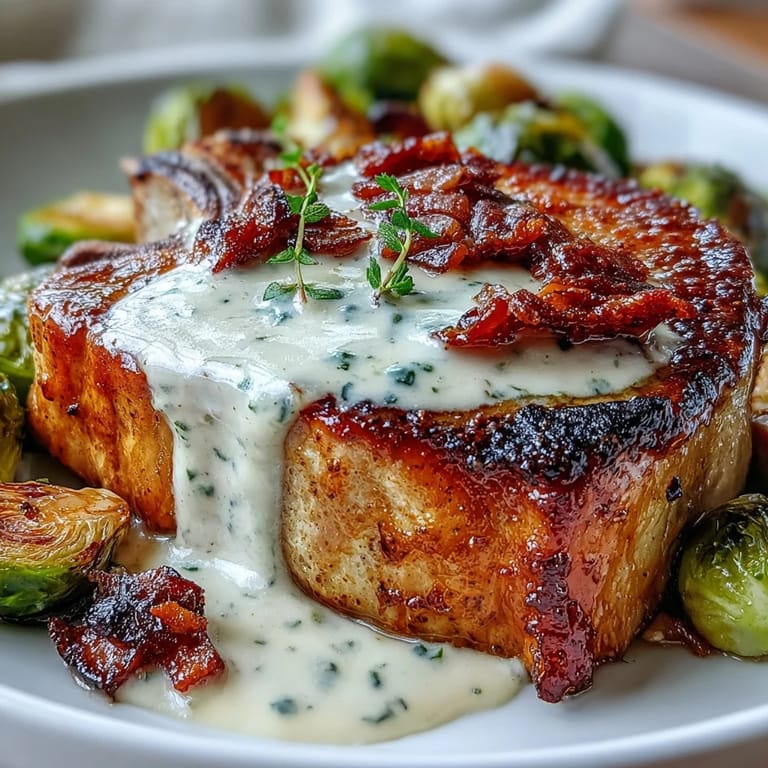
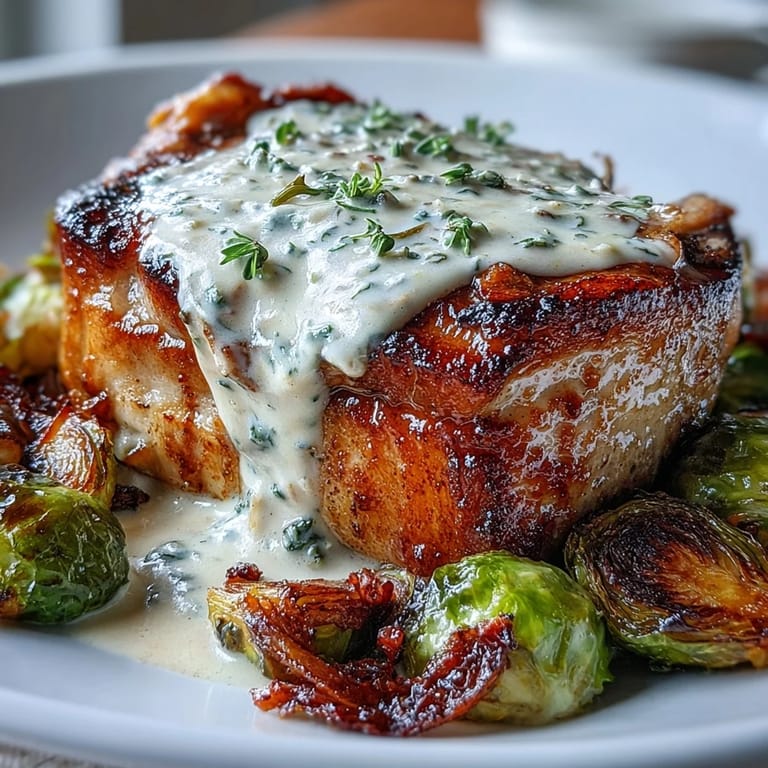
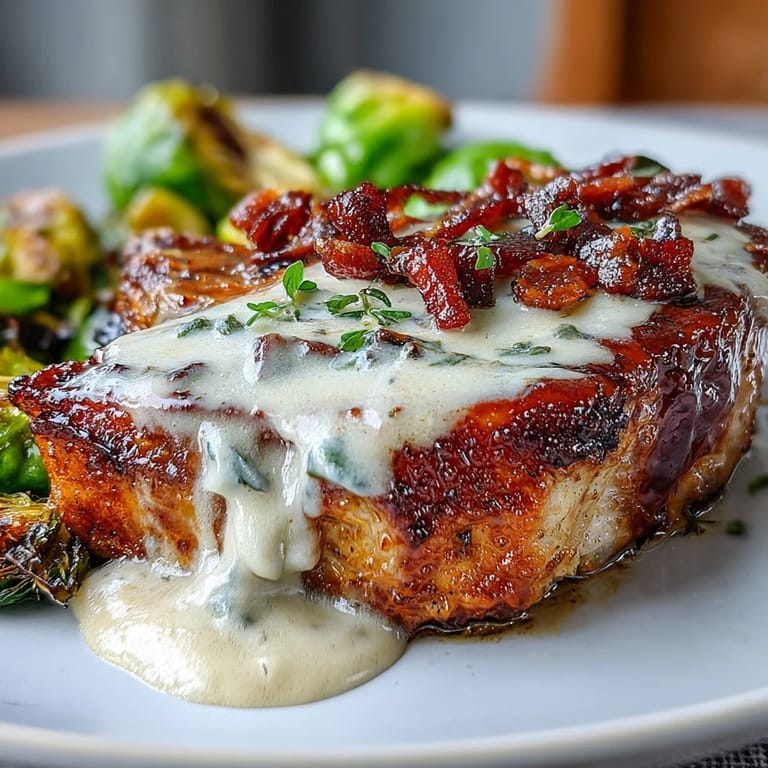
- Transfer a pork chop to each plate, spoon that glossy sauce over top, scatter the roasted Brussels sprouts alongside, and finish with a light dusting of fresh parsley.
 Save to Pinterest
 I discovered something unexpected while testing this recipe: my teenage daughter, who normally pushes vegetables around her plate, actually reached for more Brussels sprouts. She was so focused on the crispy edges that she stopped treating them like something she had to eat. That small moment reminded me why I love cooking—it's not really about the food.
The Science of the Sear
When you sear meat at high heat, the proteins on the surface undergo the Maillard reaction, creating hundreds of complex flavor compounds and that savory crust your brain finds irresistible. This only happens when the pan is hot enough and the meat is dry—moisture is the enemy of browning because it converts to steam and prevents direct contact with the hot surface. That's why I emphasize patting the pork completely dry; it's the difference between a golden exterior and a pale, steamed appearance.
Mustard as Your Secret Weapon
Mustard in a cream sauce does something subtle but powerful: it adds acidity and complexity without the harshness of lemon or vinegar. The sharpness of Dijon cuts through the richness of the cream while its emulsifying properties help the sauce coat everything evenly. Using both Dijon and whole grain gives you depth—the smooth heat of one plus the textural interest and slightly gentler tang of the other.
Making This Meal Your Own
While this recipe works beautifully as written, the framework invites experimentation. Some nights I add a splash of dry white wine after the garlic sautés, letting it reduce by half before the broth—it adds sophistication. Other times I'll squeeze fresh lemon juice into the finished sauce for brightness, or swap the thyme for tarragon for something more delicate.
- A pinch of smoked paprika adds depth if you want the dish to feel more complex.
- Fresh dill works beautifully instead of parsley if you're leaning into brighter flavors.
- If Brussels sprouts aren't your thing, this sauce is equally stunning over roasted cauliflower or green beans.
 Save to Pinterest
 This dish has become my reliable answer when I want to cook something that feels special without stress. It's the kind of meal that tastes like you spent hours in the kitchen but never leaves you frazzled.
Recipe FAQs
- → How do I cook pork chops to keep them juicy?
Pat pork chops dry and season well before searing over medium-high heat. Cook 3–4 minutes per side until golden and internal temperature reaches 145°F (63°C). Rest before serving to retain juices.
- → What makes the Dijon sauce creamy and flavorful?
The sauce combines heavy cream, Dijon and whole grain mustards, garlic, thyme, and chicken broth simmered until slightly thickened, creating a rich and tangy coating.
- → How can I get the Brussels sprouts crispy when roasting?
Toss halved sprouts with olive oil, salt, and pepper, then roast cut side down at 425°F (220°C) for 25–30 minutes, shaking halfway to ensure even crispiness.
- → Can I substitute any ingredients for dietary preferences?
Chicken breasts can replace pork chops, and lemon juice can be added to brighten the sauce. Be mindful of allergens like dairy and mustard.
- → Is it necessary to rest the pork chops after cooking?
Yes, resting the pork chops under foil helps redistribute juices, ensuring they stay moist and tender when served.