 Save to Pinterest
 I remember the exact moment I fell in love with this dish—it was at a small gallery opening where a chef friend served what she called her 'motion study on a plate.' I watched guests pause, genuinely mesmerized, before even tasting it. The way the vegetables seemed to dance from dense clusters into scattered wisps felt like something between art and food. I asked for the recipe that night, and after several kitchen experiments, I finally understood what she'd created: a dish that makes people slow down and really look at what they're eating.
The first time I served this to my book club, one friend literally gasped when I set it down. She said it looked too pretty to eat, but then she tasted it and asked for the recipe before dessert was even served. That's when I knew this wasn't just about the Instagram moment—it was about creating something that genuinely delights on every level.
Ingredients
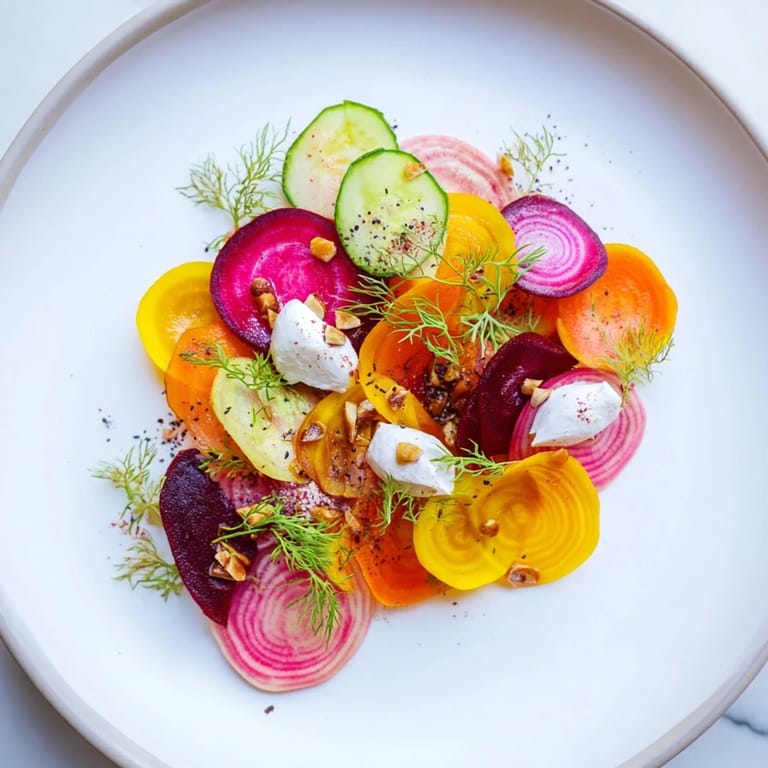
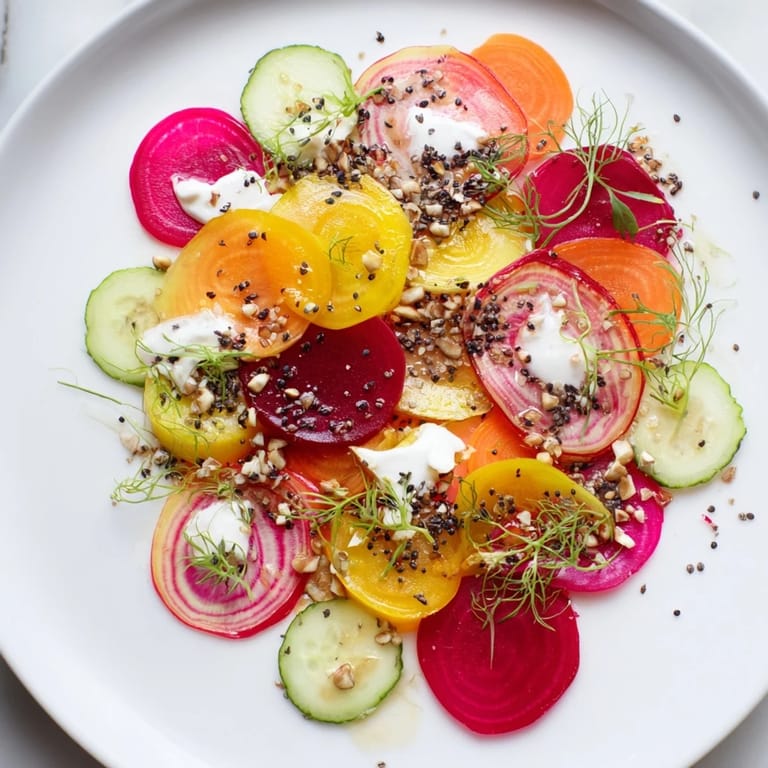
- Golden beet, red beet, and watermelon radish: These are your color story—the golden and red create warmth, while the watermelon radish with its surprise pink interior adds that element of discovery when guests taste it. I learned to slice them paper-thin with a mandoline; it's worth the investment
- Persian cucumber: Thinner-skinned and less watery than regular cucumbers, these stay crisp longer and have a delicate flavor that doesn't overpower the other vegetables
- Baby carrots on the bias: That diagonal slice isn't just for looks—it catches the light differently and the bias cut feels more intentional, more designed
- Creamy goat cheese: Room temperature is non-negotiable here; it should be soft enough to dollop easily, creating those beautiful irregular shapes that anchor each cluster
- Toasted hazelnuts: The toasting step matters more than you'd think—it deepens the flavor and gives you that satisfying crunch that makes people realize this is meant to be eaten, not just admired
- Black sesame seeds: They add a nutty depth and visual drama against the bright vegetables; white sesame would disappear
- Microgreens: Use whatever you can find—arugula adds peppery bite, radish adds even more sharpness—these are your flavor bridges
- Fresh dill fronds: Just the feathery tips; they're delicate enough to maintain the arrangement while adding herbaceous brightness
- Extra virgin olive oil and fresh lemon: The foundation of the dressing—good quality matters because there's nowhere to hide here; honey brings a whisper of sweetness that balances the lemon's punch
Tired of Takeout? 🥡
Get 10 meals you can make faster than delivery arrives. Seriously.
One email. No spam. Unsubscribe anytime.
Instructions
- Make your dressing first:
- Whisk together your olive oil, lemon juice, honey, salt, and pepper in a small bowl. Taste it—the lemon should sing without overwhelming, and the honey should be just a background note. This is your liquid gold, so set it aside where you won't forget it.
- Create the dense foundation:
- Start on one side of your platter and begin overlapping your vegetable slices tightly, like you're shingling a roof. Think of this as the heart of your composition—overlap the beets and radishes and cucumbers in a way that feels intentional. You're creating visual weight here, so don't be shy.
- Let it fade:
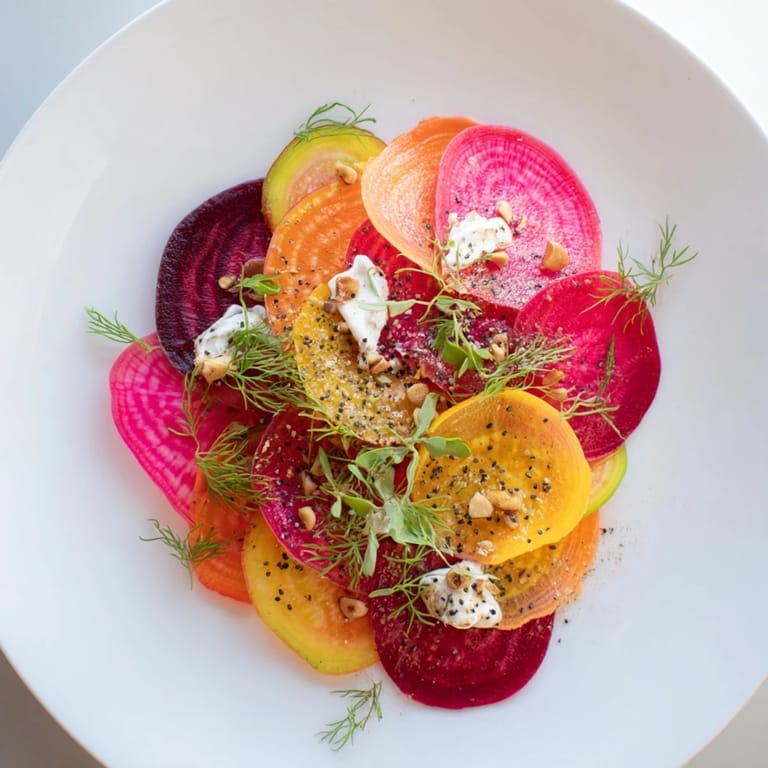
- As you move across the platter, gradually space the slices further apart, creating that beautiful sense of motion—like the vegetables are dancing away from the concentrated center. This is where the magic happens; the sparse side should feel almost like an afterthought, but a beautiful one.
- Anchor with cheese:
- While everything is still exposed, dot small spoonfuls of goat cheese throughout the dense area. Use less cheese as you move toward the sparse side, so the eye follows a natural visual path. The creaminess will anchor each bite.
- Add texture strategically:
- Sprinkle your toasted hazelnuts and black sesame seeds, concentrating them in the dense area and gradually trailing them off toward the edge. They should look scattered but purposeful, not random.
- Finish with greens:
- Scatter your microgreens and dill fronds as your final garnish, again honoring that dense-to-sparse progression. These should feel light and placed, not piled.
- Dress and serve immediately:
- Drizzle your dressing across the entire platter with a gentle hand—less toward the sparse side to maintain the visual effect. Serve right away while everything is crisp and that artistic arrangement is still fresh in everyone's mind.
 Save to Pinterest
 I'll never forget serving this to my partner on our anniversary—no special occasion, just a Tuesday when I wanted to make something that felt celebratory. They looked at it, smiled in a way that said they understood the effort, and then we ate it slowly, talking about flavor and texture like we were actual food critics. That's when I realized this dish does something most food doesn't: it makes the everyday feel ceremonial.
The Art of Arrangement
The kinetic blur isn't just a fancy name—it's the whole point of this dish. When I first attempted it, I arranged everything uniformly and it felt boring, just vegetables on a plate. Then I remembered a painting I'd seen where the artist used density and negative space to create movement, and it clicked. The dense cluster draws your eye and your fork, while the sparse side feels like an invitation to explore. That progression is what separates 'nice-looking salad' from 'did you just create that?' There's also something about how the human eye naturally follows this kind of visual rhythm; you're not just feeding people, you're guiding their experience before they even taste anything.
Why This Works as a Centerpiece
Most appetizers are either plated individually or served family-style in bowls. This one demands a big platter because the arrangement is part of the dish itself. When you bring it to the table, it commands attention in a way that individual plates never could. I've found that serving it on a large white or neutral-colored platter makes the colors absolutely pop—the jewel tones of the beets, the pale pink of the radish, the orange of the carrots. It's not about arrogance; it's about creating a moment. Everyone stops talking for a second when they see it, and that pause, that collective appreciation—that's worth the 25 minutes of prep.
Variations and Personal Touches
I love that this dish is flexible once you understand the principle. I've made it with different root vegetables depending on the season—in fall I use more golden beets and add some thin-sliced fennel, in spring I'll add shaved asparagus or radishes with their greens. The key is maintaining that color story and keeping everything crisp. One version I'm genuinely proud of includes very thin slices of smoked trout nestled among the vegetables—it adds protein and a smoky depth that pairs beautifully with the brightness of the greens. For vegan friends, cashew cream dolloped in place of goat cheese works surprisingly well, though it needs a pinch more lemon to keep it from feeling heavy. The point is: respect the arrangement principle and the structure of flavors, then make it yours.
- Edible flowers like pansies or nasturtiums can replace or complement the microgreens for even more visual drama
- A drizzle of aged balsamic reduction instead of plain olive oil adds complexity, though use it sparingly so you don't muddy the colors
- Swap the hazelnuts for toasted pine nuts or pumpkin seeds depending on what you have and what season you're cooking in
 Save to Pinterest
 This dish taught me that food doesn't have to choose between being beautiful and being delicious. The best moments in the kitchen are when something looks like art and tastes like love—and honestly, this recipe does both.
Recipe FAQs
- → How do I create the kinetic blur effect with vegetables?
Arrange the sliced vegetables densely on one side and gradually space them apart toward the opposite edge to evoke movement visually.
- → Can I substitute the goat cheese for a dairy-free option?
Yes, plant-based cheeses can be used to maintain creaminess while keeping it vegan-friendly.
- → What is the best way to toast hazelnuts and sesame seeds?
Toast them lightly in a dry skillet over medium heat until fragrant, about 2-3 minutes, stirring frequently to prevent burning.
- → How should I serve this dish for the best visual impact?
Arrange the components on a large, flat platter or individual plates right before serving to keep the fresh look and vibrant colors intact.
- → What beverages pair well with this dish?
Crisp Sauvignon Blanc or dry sparkling wines complement the fresh, tangy flavors and textural contrasts nicely.