 Save to Pinterest
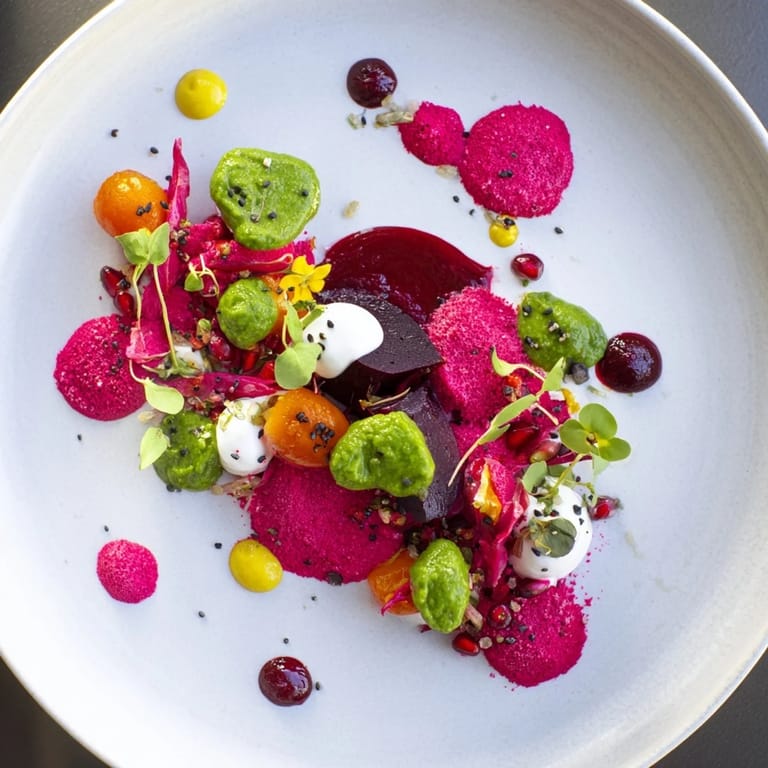
 I first discovered the magic of pointillism in the kitchen during a late-night dinner party when I realized I'd overcomplicated everything. Standing there with a handful of colorful vegetable purees and beautiful garnishes, I had a moment of clarity—what if I stopped arranging food and started painting with it instead? That night, I created dots and mounds across white plates like a chef-turned-artist, and watching my guests lean in to examine each tiny flavor treasure became the whole point. Every bite was different, every color told a story, and suddenly plating felt like the most honest form of cooking I'd ever done.
I remember making this for the first time at a friend's birthday dinner, nervous that the concept was too ambitious. As I piped tiny dots across the plate with shaking hands, my seven-year-old daughter wandered into the kitchen and said, "Mom, that looks like a painting." That single observation changed everything—I stopped worrying about perfection and started having fun. By the time I finished all four plates, I wasn't just cooking anymore; I was creating something that belonged in a gallery. When everyone gathered around the table and gasped, I knew I'd found something special.
Ingredients
- Beetroot puree (80 g): The deep magenta hero of the plate—it's earthy and slightly sweet, grounding all the brighter flavors. I've learned that cooking the beets until they're really tender gives you the smoothest puree, and a tiny splash of the cooking water helps it flow perfectly through a piping bag
- Carrot puree (80 g): Bright sunshine in vegetable form, offering natural sweetness that plays beautifully against sharper elements. Roasting instead of boiling brings out deeper caramel notes that make people ask what you did differently
- Green pea puree (80 g): Fresh, vibrant, and delicate—this is where you taste spring no matter the season. A pinch of mint stirred in right after blending keeps it tasting alive and bright
- Yellow bell pepper puree (80 g): The cheerful dot that catches light on the plate, naturally sweet and slightly buttery when roasted. I always remove the skin after roasting because it gives you that silky texture that makes each dot feel luxurious
- Greek yogurt (60 g): Your creamy anchor, tangy enough to balance sweetness without being aggressive. It pipes like a dream and creates those elegant swooshes between the vegetable dots
- Crème fraîche (40 g): Pure indulgence that adds richness and a subtle sourness that brightens everything. For vegan versions, this is the one thing I genuinely miss, though cashew cream comes surprisingly close
- Basil pesto (1 tbsp): Herbal intensity in a tiny pool—a reminder that sometimes the smallest amount of something bold is exactly right. Make it fresh if you can; the difference is remarkable
- Red pepper coulis (1 tbsp): A glossy, sophisticated accent that tastes more refined than it actually is. I learned that straining this through fine mesh gives it an almost liquid-silk quality
- Balsamic reduction (1 tbsp): Dark, syrupy sweetness that catches light beautifully and tastes like complexity in a single dot. The deeper it's reduced, the more dramatic the flavor
- Pickled red onions (20 g, finely diced): Sharp, vinegary bursts that remind your palate you're eating something fresh and alive. Making these a day ahead means they're ready when you need them
- Microgreens (20 g): Delicate flavor and impossible-to-ignore visual impact—these are what make people believe you're a real chef. Choose ones you actually like eating, not just looking at
- Toasted black sesame seeds (1 tbsp): Nutty, earthy texture that adds sophistication and crunch. Toasting them yourself changes everything, giving you that warm, almost caramel quality
- Pomegranate seeds (1 tbsp): Jewel-like jewels that burst with tart sweetness, adding surprise and visual drama. I always taste them first to make sure they're sweet enough for your plate
- Edible flower petals (optional): The final flourish that turns dinner into theater. Use them sparingly—they're about beauty more than flavor
- Sea salt flakes and black pepper: Your finishing touch, applied with restraint and intuition. This is where you taste and adjust, making the dish entirely your own
Tired of Takeout? 🥡
Get 10 meals you can make faster than delivery arrives. Seriously.
One email. No spam. Unsubscribe anytime.
Instructions
- Prepare your palette of purees:
- Blend each vegetable separately—beetroot, carrot, peas, and roasted peppers—until they're completely smooth. This is where patience matters; a few extra seconds in the blender makes the difference between creamy and grainy. Add just a pinch of salt and a few drops of olive oil to each, then transfer to piping bags or squeeze bottles. I line up mine on the counter in a rainbow, which feels like having my own set of paints ready
- Prepare your creams and sauces:
- Put the yogurt and crème fraîche into separate piping bags—these are your creamy whites and soft neutrals. Pour pesto, coulis, and balsamic reduction into squeeze bottles so you can control them with precision. Arrange everything within arm's reach of your plating station because once you start, you want to move without interruption
- Create your pointillist composition:
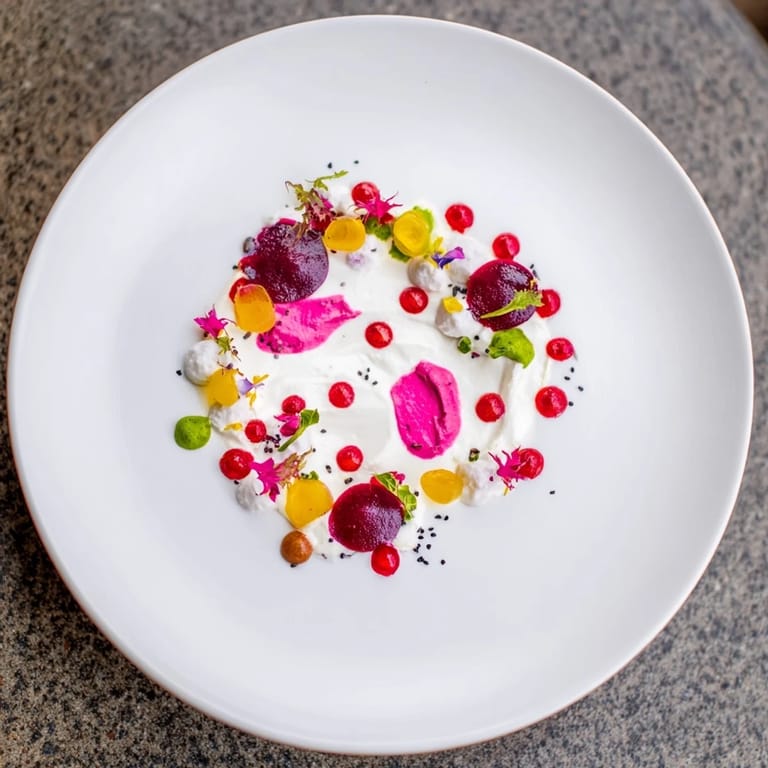
- On each cold white plate, imagine it as a canvas. Start piping tiny dots and small mounds of each puree and sauce in a scattered, non-touching pattern, letting the colors dance across the surface without a plan. Vary the sizes—some dots should be barely bigger than a pea, others the size of a fingertip. There's a freedom in this step that feels almost meditative; you're not following rules, you're making art
- Layer in texture and surprise:
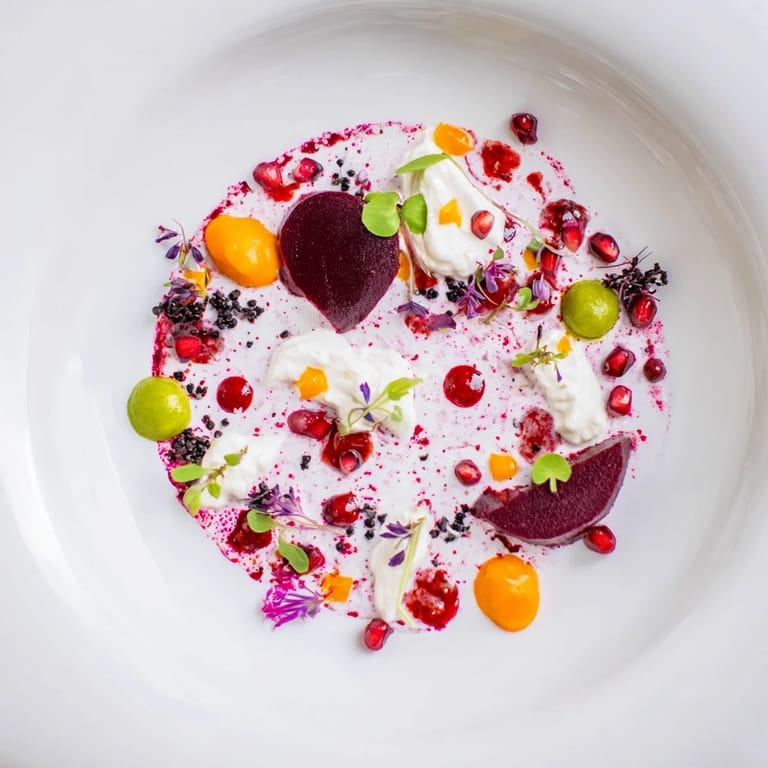
- Once your dots are down, sprinkle the pickled onions, sesame seeds, and pomegranate seeds around and over them. Add microgreens strategically, creating little pockets of green that guide the eye around the plate. Finish with a few edible flower petals if you're using them, placing them where they catch light. This is where the plate stops being food and becomes a moment
- Season and serve immediately:
- With a pinch of sea salt flakes and a whisper of black pepper, your plate is complete. The moment you finish is the moment to serve—the visual impact is everything here, and it fades with time. Watch people's faces when they see it; that's the real reward
 Save to Pinterest
 I'll never forget the moment when my partner, who usually just eats what I cook without much comment, looked at a plate of Pointillism Dot Matrix and said, "This is beautiful enough to frame." Suddenly it wasn't just about feeding people—it was about creating a moment of genuine surprise and delight. That's when I understood that plating isn't pretentious; it's a way of showing people you care enough to make their meal memorable.
The Art of Building Your Own Dots
One of my favorite things about this dish is that you're not constrained by my choices. Want to use purple sweet potato instead of beetroot? Go ahead. Love avocado? Make a puree. The structure is your guide, but the colors and flavors are your playground. I started adding roasted cauliflower puree one evening, and it became my favorite neutral to balance the brighter dots. The dish teaches you to think like a painter while cooking like a chef.
Pairing and Serving Moments
I learned early on that this dish transforms depending on what's around it. Serve it as a standalone appetizer, and it's sophisticated. Add crisp sourdough or delicate crackers beside it, and it becomes interactive—people start making their own combinations. A crisp Sauvignon Blanc changes everything too; the acidity cuts through the richness and makes each dot taste cleaner. I've also served this before a light pasta course, and it sets exactly the right tone for an elegant meal without feeling heavy.
Making It Your Own
The beauty of pointillism in cooking is that it's entirely forgiving. None of these dots need to be perfect. Your purees don't all have to be the exact same size. If a color runs into another, that's part of the charm—it's still beautiful. What matters is intention and care in the moment of plating.
- Try this with seasonal vegetables—spring peas and asparagus, summer beets and tomatoes, fall butternut squash and roasted mushrooms
- Make extra purees and freeze them in ice cube trays so you have them ready for impromptu beautiful moments
- Test your garnishes first and only use what actually tastes good to you; this is your plate, your rules
 Save to Pinterest
 Every time I make this dish, I'm reminded that cooking isn't always about technique or complicated flavors—sometimes it's about seeing your ingredients with fresh eyes and letting the plate become your canvas. This is the recipe that made me realize kitchen magic happens when you stop trying so hard and start having fun instead.
Recipe FAQs
- → What vegetables are used for the purees?
Beetroot, carrot, green pea, and yellow bell pepper are cooked and pureed separately to provide a range of vibrant colors and flavors.
- → How are the dots arranged on the plate?
The purees, sauces, and creams are piped into small, scattered dots and mounds, varying in size and color to achieve a pointillist effect.
- → Can this dish be adapted for vegan diets?
Yes, by substituting plant-based yogurt and omitting crème fraîche, it becomes suitable for vegan preferences.
- → What garnishes enhance the flavor and texture?
Pickled red onions, microgreens, toasted sesame seeds, pomegranate seeds, and edible flower petals add complexity and contrast.
- → What beverages pair well with this creation?
A crisp Sauvignon Blanc complements the fresh, vibrant vegetable flavors and enhances the overall tasting experience.