 Save to Pinterest
 I'll never forget the first time I arranged a cheese board like a landscape instead of just placing things on a plate. It was for my sister's engagement party, and I wanted to create something people would actually talk about. As I stacked those dramatic wedges of aged Manchego like mountains, something clicked—this wasn't just food anymore, it was an edible world begging to be explored. My guests didn't just eat that board; they discovered it, piece by piece, story by story.
I served this board at a dinner party last autumn, and what surprised me most wasn't the oohs and ahhs (though there were plenty). It was watching people—usually rushed, usually on their phones—slow down completely. They became explorers, carefully selecting what to pair together, debating whether the apricots went better with the Manchego or the Cheddar. That's when I realized: a beautiful cheese board does more than feed people; it gives them permission to be present.
Ingredients
- Aged Manchego, 150 g: Cut this into tall, irregular chunks to catch the light and create those dramatic peaks. Manchego has this wonderful nutty sweetness that anchors the whole landscape—it's your foundation cheese.
- Parmigiano-Reggiano, 150 g: Break it into rugged shards rather than slicing; the irregular edges look more mountain-like and the crystals catch beautifully in candlelight. This is the show-off cheese.
- Aged Cheddar, 150 g: Slice into tall triangles so it stands up proudly. The deeper color creates visual drama against paler cheeses and fruits.
- Brie, 100 g: Cut into thick wedges that nestle naturally around your mountains. It's your soft, approachable base layer.
- Gorgonzola, 100 g: Break into rustic pieces so the blue veining shows. This is your bold statement ingredient—use it intentionally for maximum impact.
- Red Grapes, 1 cup halved: These become jewels in your valleys. Halving them makes them look intentional, like clusters have been placed with purpose.
- Cherry Tomatoes, 1 cup halved: The red ones are crucial for color—they pop against the pale Brie and golden Manchego.
- Cucumber, 1 small: Slice into rounds while it's still cold from the fridge; crisp cucumbers stay fresher looking through the whole meal.
- Apple, 1 small thinly sliced: Use a mandoline and slice right before arranging to prevent browning. The slight sweetness bridges cheese and fruit beautifully.
- Dried Apricots, 1/2 cup: These add color warmth and a chewy sweetness that contrasts with hard aged cheeses perfectly.
- Roasted Almonds, 1/2 cup: Already roasted means no extra work, and they scatter like boulders throughout your landscape.
- Walnuts, 1/2 cup: Choose large pieces; they add visual texture and earthy depth.
- Thin Baguette Slices, 12: Toast lightly if you want them to stay crisp longer, or leave untoasted for softer, more rustic feel.
- Assorted Crackers, 12: Mix shapes and colors—this isn't about uniformity, it's about variety and discovery.
- Honey, 2 tbsp: This isn't decoration; it's flavor magic. A drizzle over aged cheddar or Gorgonzola creates a taste revelation.
- Fresh Rosemary Sprigs: Tuck these like little trees. They add forest-like aromatics and guests love the unexpected fresh herb element.
Tired of Takeout? 🥡
Get 10 meals you can make faster than delivery arrives. Seriously.
One email. No spam. Unsubscribe anytime.
Instructions
- Build Your Mountains First:
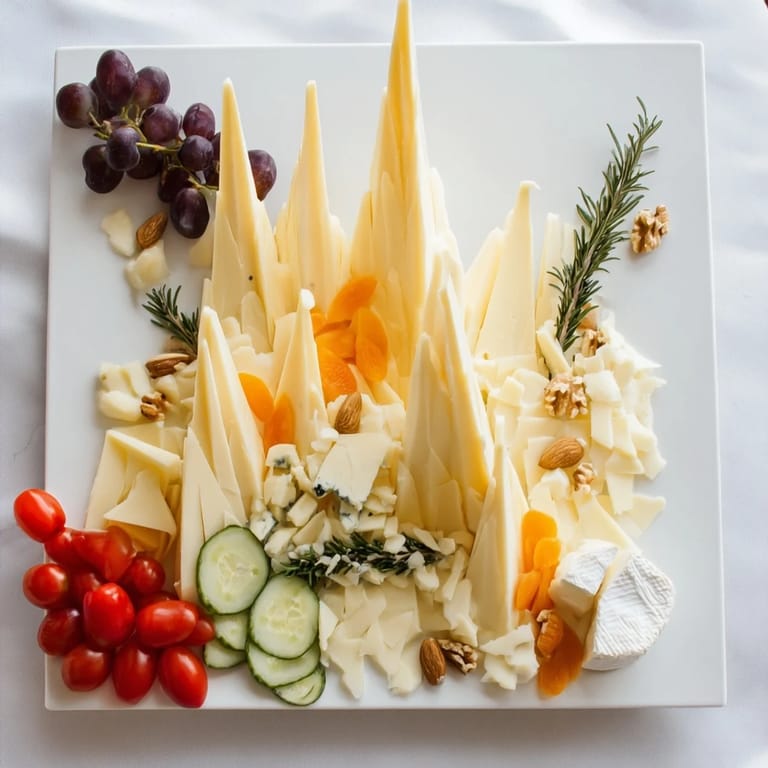
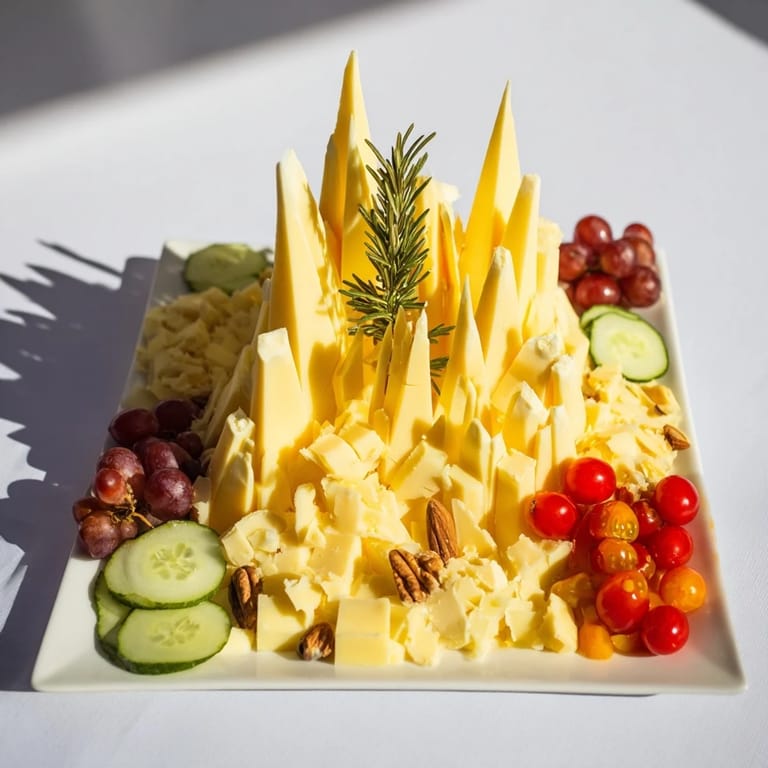
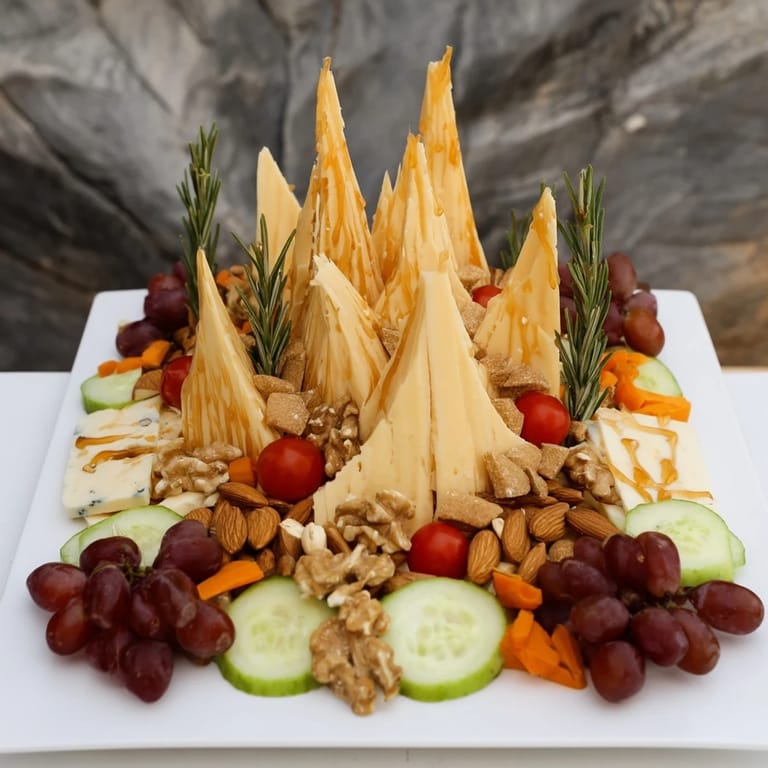
- Start with your largest pieces of hard cheese. Stand those chunks of Manchego and Cheddar upright on your board, leaning them against each other slightly. They should look dramatic and a little precarious, like real mountains. The Parmigiano shards can be positioned to catch light. This foundational step sets the entire tone—if your mountains are strong, everything else flows naturally around them.
- Create the Hills and Soft Base:
- Now place your Brie and Gorgonzola around the base of these mountains, nestle them into the spaces. These softer cheeses become the rolling hills that lead down from your peaks. They also create little pockets and valleys where other ingredients will eventually settle. This is like sculpting—you're creating topography with your hands.
- Fill the Valleys with Jewels:
- Here's where the landscape comes alive. Scatter your halved grapes, cherry tomatoes, cucumber rounds, and apple slices into the lower areas. Group same-colored items together in small clusters rather than spreading them out—berries here, tomatoes there, apples in another spot. This creates visual rhythm and makes the board look intentionally designed rather than random.
- Scatter the Texture Elements:
- Sprinkle almonds and walnuts across the entire board like boulders in a real landscape. Don't overthink this step; let them fall naturally into crevices and across flat areas. These nuts add necessary texture contrast and encourage guests to grab them as little flavor surprises.
- Create Your Pathways:
- Arrange baguette slices and crackers along the edges and through open spaces, creating actual paths that invite people to navigate the landscape. Angle them slightly, lean some against the cheese mountains—these aren't just vehicles for eating cheese, they're part of the design.
- Add the Final Magic:
- Drizzle honey in small pools on the board—some over the Gorgonzola where it pools beautifully, some over warmer-toned cheeses. Tuck fresh rosemary sprigs throughout like little trees dotting a landscape. Step back and look. Does it feel inviting? Does it tell a story? If yes, you're ready.
- Present with Intention:
- Serve immediately while everything is fresh and at its best temperature. Encourage your guests to explore—to build their own flavor combinations, to treat it like an adventure rather than just food.
 Save to Pinterest
 My favorite moment with this board happened unexpectedly. A guest who swore she didn't like blue cheese took one tiny piece of Gorgonzola-topped cracker with honey pooled beside it, and her whole face changed. She said, 'I've never tasted them together like that before.' That's what a beautiful board does—it creates moments of culinary discovery that people actually remember.
The Art of Cheese Selection
The magic of this board lives in the contrast between your hard and soft cheeses. The hard ones—Manchego, Parmigiano, Cheddar—they're your show-stoppers, your visual drama. They stand tall, catch light, create shadows. But the soft ones, the Brie and Gorgonzola, they're just as important. They fill spaces, they pair differently with fruits and bread, they offer a textural break that keeps the eating experience interesting. I learned this the hard way by making boards with only hard cheeses, which looked impressive but tasted one-dimensional. The soft cheeses are your secret ingredient for depth.
Flavor Pairing Wisdom from the Kitchen
Every time I arrange one of these boards, I'm reminded that cheese doesn't live alone—it's a conversation. The nutty Manchego whispers to dried apricots. The sharp Cheddar leans into the honey like they've always belonged together. The Gorgonzola and apple slices create a balance between bold and bright. When you're building your board, think about these conversations happening across the platter. You're not just placing ingredients; you're creating flavor relationships that invite exploration.
Making It Your Own
This landscape is a template, not a rule book. I've made versions with Spanish jamón instead of nuts for a non-vegetarian twist. I've swapped in fresh figs for apricots when they're in season. I've added edible flowers—pansies and nasturtiums—for extra color drama. The core idea stays the same: vertical mountains, nestled valleys, scattered textures, and intentional paths. Everything else is your creative choice, your kitchen story. The best versions are the ones that reflect what's in your market and what your guests love.
- Try local or artisanal cheeses instead of these classics—a really good aged Gruyère creates different drama than Manchego
- Add cured meats like prosciutto or soppressata for complexity and to mark this as a more substantial appetizer
- Swap honey for fig jam or quince paste if you want different sweet notes
 Save to Pinterest
 A beautiful cheese board feeds more than just hungry people—it feeds curiosity, connection, and the joy of discovery. This sculptural landscape is your invitation to slow down and savor.
Recipe FAQs
- → What cheeses are used as the mountain peaks?
Aged Manchego cut into tall chunks, rugged shards of Parmigiano-Reggiano, and tall triangles of aged Cheddar form the dramatic peaks.
- → How can I arrange the fruits and vegetables?
Place clusters of halved red grapes, cherry tomatoes, cucumber slices, thin apple slices, and dried apricots to fill the lower valleys and slopes.
- → What contributes to the crunchy textures?
Roasted almonds and walnuts are scattered to provide crunch and resemble natural boulders on the board.
- → How do bread and crackers complement the display?
Thin baguette slices and assorted crackers are arranged along the edges to form paths and plateaus for contrast and accessibility.
- → What accents enhance the flavor and look?
Drizzling honey and adding fresh rosemary sprigs introduce sweetness and an earthy, aromatic touch, enriching both taste and presentation.