 Save to Pinterest
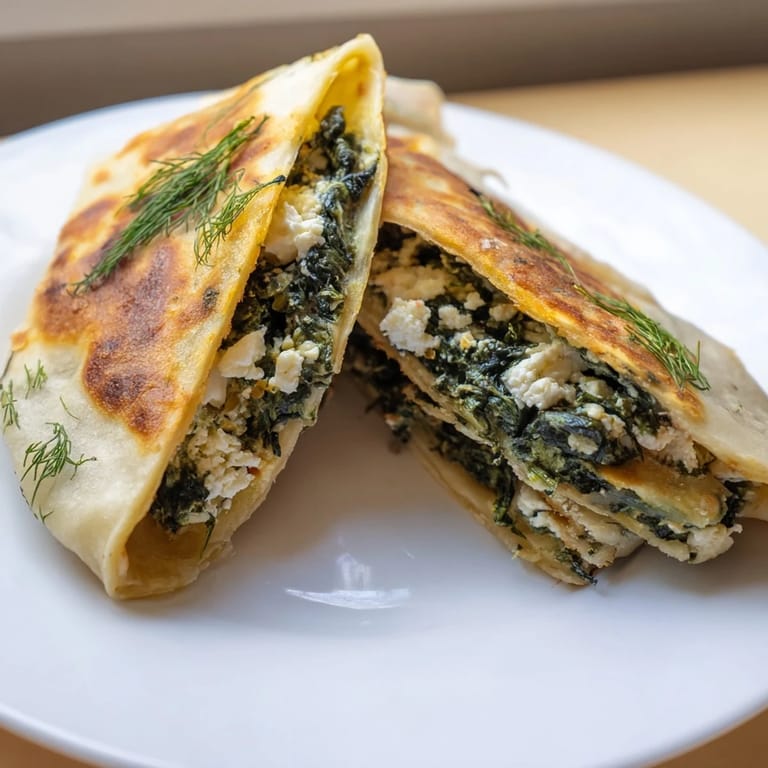
 There's something about the smell of spinach wilting in a hot pan that takes me straight to a tiny kitchen in Istanbul, though I've never actually been there. My neighbor Ayşe brought these over one afternoon with a stack still warm from her griddle, and I watched her fold each one with the kind of casual precision that comes from making them a hundred times. The way the feta cheese peeked through the golden edges made me forget whatever I was doing that day, and I asked for the recipe before she'd even set the plate down. Now whenever I make them, I think about how she laughed when I overthought the folding technique on my first try.
I served these at a small dinner party last spring when my herb garden was absolutely exploding with dill and parsley, and suddenly everyone wanted the recipe. One guest said they tasted like something she'd eaten on a trip years ago, which made the whole meal feel a little more special than it probably was. That's the thing about food that's both humble and generous—it connects people to their own memories while making new ones.
Ingredients
- All-purpose flour: The foundation of a tender, pliable dough that stretches without tearing; measure by weight if you can because it's more forgiving than scooping.
- Warm water: Not hot—use the inside-of-your-wrist temperature test, as it activates the gluten gently and keeps the dough silky.
- Olive oil: Good quality makes a difference in both dough and filling, adding a gentle fruity note that feta loves.
- Fresh spinach: Roughly chop it before cooking so it wilts faster and releases its water; frozen spinach works perfectly if you squeeze it completely dry.
- Feta cheese: Crumble it by hand if you have time—it distributes more evenly through the filling than pre-crumbled versions.
- Fresh dill and parsley: These aren't garnish here; they're the flavor backbone, so don't skimp or substitute with dried herbs.
- Garlic and onion: Cook them until soft and sweet before the spinach joins them, which mellows their sharpness.
Tired of Takeout? 🥡
Get 10 meals you can make faster than delivery arrives. Seriously.
One email. No spam. Unsubscribe anytime.
Instructions
- Make a dough that feels like soft skin:
- Combine flour and salt, then add olive oil and warm water gradually, mixing until shaggy bits come together. Knead for 5 to 6 minutes until the dough stops sticking to your hands and feels smooth and alive—you'll feel the difference. Cover it and let it rest for 20 minutes in a warm spot; this is when the gluten relaxes and makes rolling easier later.
- Wilt the spinach with aromatics:
- Heat olive oil in your skillet and let the onion soften for a few minutes before adding garlic, so the flavors build gently. When you add the spinach, watch it transform from a towering heap to something almost translucent, which takes about 3 to 4 minutes; drain off any excess liquid that pools at the bottom.
- Build the filling:
- Combine the cooled spinach mixture with crumbled feta, fresh herbs, and spices in a bowl; the feta adds a salty punch that ties everything together. Taste it if you want—the filling should taste boldly herbed and slightly salty because it's going into mild dough.
- Shape each flatbread with care:
- Divide the dough into 4 pieces and roll each into a thin oval about 8 inches long, flouring your surface lightly so nothing sticks. Spoon filling onto one half, leaving a half-inch border, then fold and pinch the edges sealed like you're protecting something precious.
- Pan-bake until golden:
- Heat your skillet dry over medium heat—no oil needed—and place a flatbread in to cook 3 to 4 minutes per side until the exterior is golden and crispy. You'll hear them sizzle and smell that toasted grain scent, which means they're perfect; they should feel slightly firm when pressed.
 Save to Pinterest
 There was a moment, after my third batch of these, when I finally understood why Ayşe made them look so effortless. It wasn't technique—it was confidence in the dough and trust in the heat of the pan. Now they're something I make when I want the kitchen to smell like fresh herbs and toasted grain, which turns out to be often.
The Dough's Secret Life
This dough is forgiving in a way that yeast-based breads aren't, which is partly why it's perfect for a weeknight. The warm water and olive oil create a tender crumb, and kneading develops just enough gluten to make stretching possible without becoming chewy. I've left the dough resting longer than 20 minutes by accident and it's only gotten better, more relaxed, easier to work with.
What Makes the Filling Sing
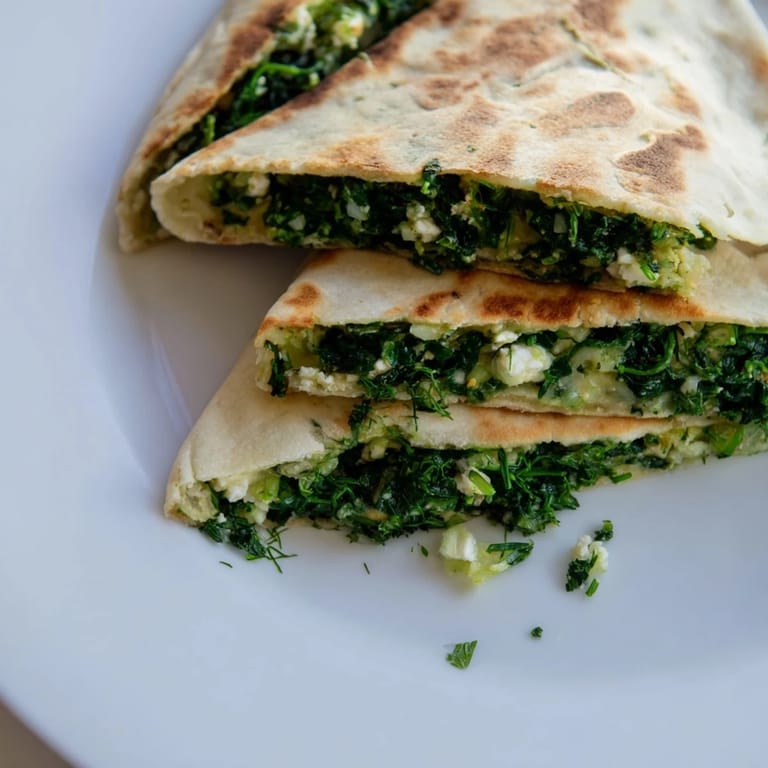
The combination of fresh herbs with salty feta and wilted spinach hits every flavor note at once: bright, earthy, salty, slightly bitter from the greens. The dill especially matters—it has a subtle anise note that lifts the whole thing into something more interesting than it sounds. I've tried versions with less dill and they feel flat by comparison, so I always use the full amount even though my friends joke about it.
Serving and Storage Wisdom
These are best warm or at room temperature, and they're actually nice to eat the next day if you reheat them gently in a dry pan for 30 seconds per side. I like to serve them with thick yogurt for dipping and maybe a simple salad of tomatoes and cucumbers to balance the richness of the feta. They also freeze beautifully after cooking—wrap them individually and reheat whenever hunger strikes.
- Brush the finished flatbreads with melted butter or good olive oil while they're still hot for extra richness.
- Make the filling the day before and store it in the fridge so all you have to do is cook flatbreads when you want them.
- If you don't have fresh dill, flat-leaf parsley alone works, though you'll lose that subtle herbal depth.
 Save to Pinterest
 These flatbreads became my answer to the question of what to make when I want something that feels special but doesn't require much fuss. They're the kind of food that makes people slow down and actually taste what they're eating.
Recipe FAQs
- → What kind of spinach works best?
Fresh spinach is ideal for the best texture and flavor, but baby spinach or well-drained thawed frozen spinach can also be used.
- → Can I substitute the feta cheese?
Try other crumbly cheeses like goat cheese or ricotta salata for a similar tang and texture.
- → How to ensure the flatbread stays soft?
Knead the dough until smooth and let it rest. Cooking on medium heat helps create a tender, golden crust.
- → What herbs enhance the filling's flavor?
Fresh dill and parsley complement the spinach and feta perfectly, adding aromatic freshness.
- → Can these flatbreads be reheated?
Yes, gently warm them in a skillet or oven to maintain softness without drying out.