 Save to Pinterest
 The first time I made crème brûlée, I was standing in my tiny apartment kitchen with a kitchen torch I'd just bought, hands shaking slightly as I held it over the sugar. My friend had challenged me to make something that felt fancy enough for her birthday dinner, and I'd chosen this—partly because it looked impressive, partly because the ingredient list seemed forgiving. Three ingredients, the recipe promised. When that sugar started crackling and turning golden, the sound alone made me understand why this dessert has captivated people for centuries. It felt like magic, even though I was just caramelizing sugar.
Years later, I made this for my grandmother, who had never asked for anything fancy in her life. She sat at my kitchen table watching me torch the sugar, and when she took that first spoonful, her eyes closed for just a second. She told me it reminded her of a restaurant she and my grandfather visited on their anniversary in Paris, fifty years ago. That's when I realized crème brûlée isn't really about three ingredients—it's about creating a moment that matters.
Ingredients
- Heavy cream: This is the soul of your custard, where all the richness comes from. Don't skip it or substitute it with whipped cream or milk, because the fat content is what makes the texture silky instead of thin.
- Egg yolks: They're the binder and thickener, but they're also temperamental—warm liquid needs to be added slowly, or you'll end up with scrambled eggs instead of custard.
- Granulated sugar: You'll use it twice: once in the custard for sweetness, and again on top for that essential crackle. The granulated kind melts more evenly than other types.
- Sugar for caramelizing: One tablespoon per ramekin, sprinkled thin and even, makes the difference between a crispy top and a soggy burnt mess.
Tired of Takeout? 🥡
Get 10 meals you can make faster than delivery arrives. Seriously.
One email. No spam. Unsubscribe anytime.
Instructions
- Heat the cream until it just steams:
- Watch it carefully in the saucepan—you want to see wisps of steam rising, but no bubbles breaking the surface. This is the moment right before boiling, and it's when the cream is hot enough to cook the egg yolks without actually scrambling them.
- Whisk egg yolks with sugar until pale:
- This takes about two or three minutes, and you'll actually see the mixture lighten in color. This whisking incorporates air and helps everything combine smoothly when the cream hits it.
- Temper the eggs by pouring slowly:
- This is the most important step and the one that scares people. Pour the hot cream into the yolks in a thin stream while whisking constantly—if you dump it all at once, you'll cook the yolks unevenly and end up with chunks.
- Strain through a fine sieve:
- This catches any scrambled bits or undissolved sugar, leaving you with a custard so smooth it feels like silk on your tongue. Don't skip this step thinking it's fussy—it's the difference between a good crème brûlée and a perfect one.
- Divide among ramekins and set up a water bath:
- The hot water around the ramekins keeps the heat gentle and even, so the custards cook through without the edges getting rubbery. The water should come halfway up the sides.
- Bake until just set with a slight wobble in the center:
- This takes 30 to 35 minutes, and it's easier to judge than you'd think—gently shake a ramekin, and the center should jiggle like it's alive but the edges should be firm. Overbake it, and you'll get a rubbery texture; underbake it, and you'll have warm liquid custard.
- Cool and chill for at least an hour:
- The custards need time to set properly and to develop flavor as they sit. You can make them up to two days ahead, which makes this dish perfect for entertaining.
- Caramelize the sugar just before serving:
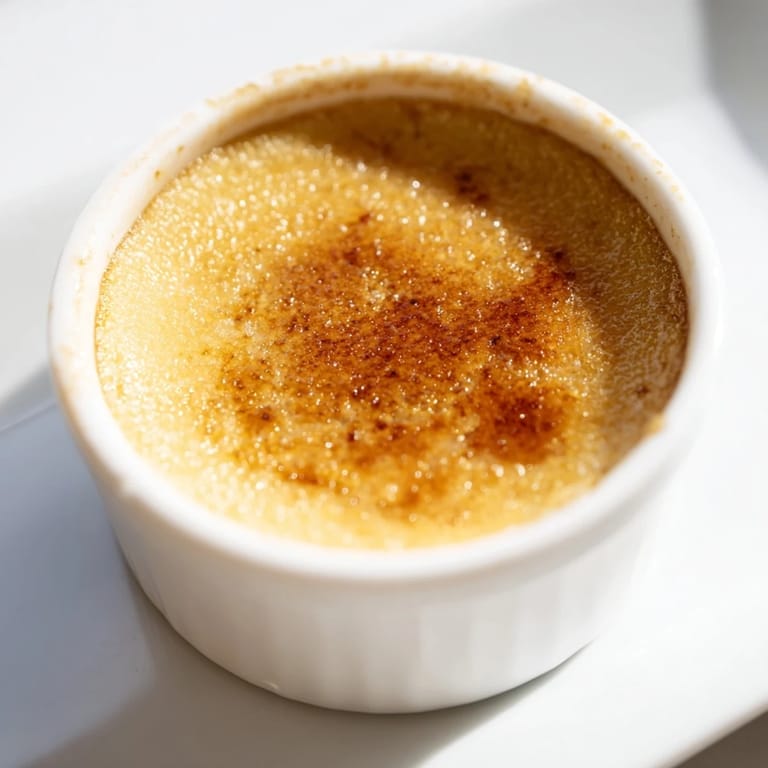
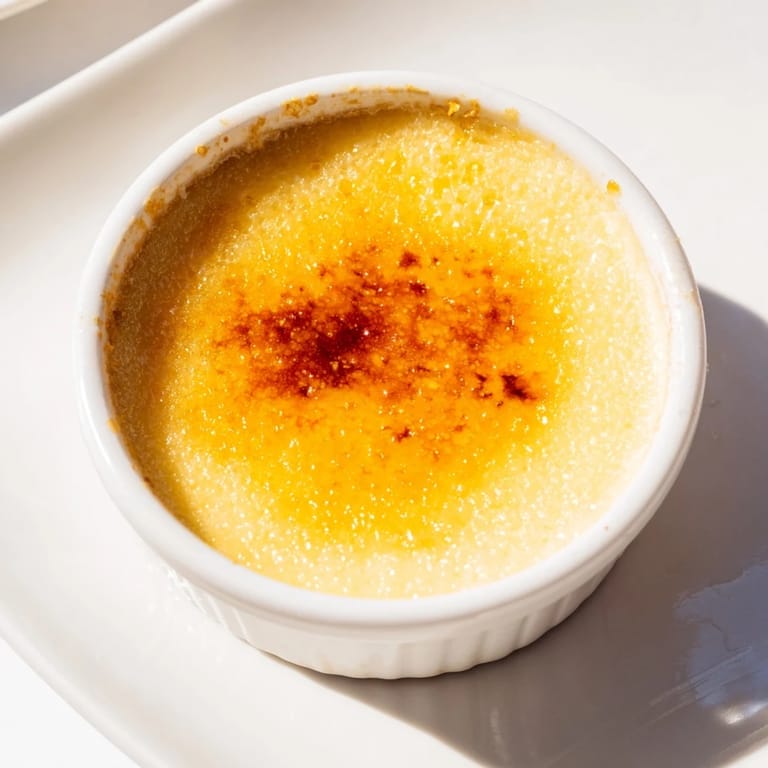
- Sprinkle an even, thin layer of sugar over each chilled custard, then hold the torch about an inch above the surface, moving it in circles until the sugar turns deep golden brown. Listen for the crackling sound—that's when you know it's ready.
 Save to Pinterest
 There's something almost ceremonial about standing over a crème brûlée with a torch, waiting for the sugar to crack and caramelize. My daughter now asks me to make it whenever she brings friends over, not because it's complicated, but because that moment when everyone hears the sugar crackling feels like a small celebration. It's taught me that sometimes the simplest things, done with intention, matter the most.
The Science of Silky Custard
The magic of crème brûlée is in how gently it's treated. The custard is essentially cooked eggs and cream, but it's not baked in a hot oven—it's baked in a water bath that keeps the temperature steady around 325°F. This slow, gentle heat means the proteins in the eggs set gradually without tightening up and squeezing out moisture. If you've ever had a baked custard that felt rubbery or grainy, it was probably baked too hot or too long. The key is understanding that the custard continues to cook even after you pull it from the oven, so stopping it just slightly underdone gives you that perfect texture.
Caramelizing the Top: Torch Versus Broiler
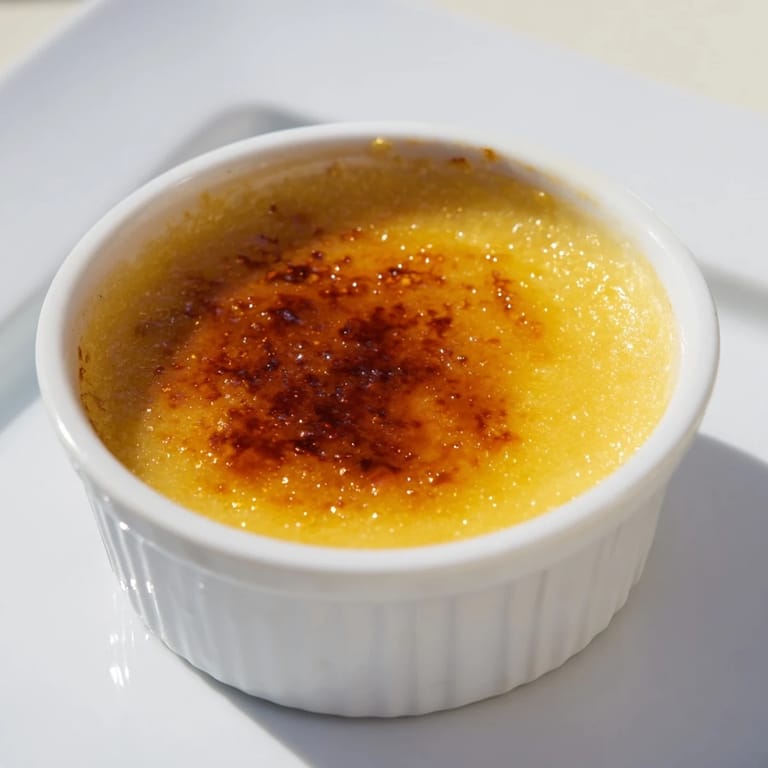
A kitchen torch is the ideal tool because you have total control over the heat and can watch the sugar color change as you go. If you don't have one, your broiler works too, but you have to be more careful—place the ramekins on a high rack, set the broiler to high, and watch through the oven window constantly. It takes only a minute or two before the sugar goes from golden to burnt, and there's no undo button once it's charred. I've had better luck with the torch because I can move it slowly and deliberately, watching the sugar bubbles form and darken. Either way, let the caramelized top cool for a minute or two before eating so it hardens into a proper crust instead of staying soft and sticky.
Why This Recipe Works With Just Three Ingredients
French pastry cooks built this dessert on the principle that a few high-quality ingredients, treated with respect, don't need much else to shine. The cream provides all the fat and richness, the eggs provide structure and richness again, and sugar provides sweetness and the caramelized top. You don't need vanilla or nutmeg or bourbon to make this good—though if you want to infuse the cream with vanilla bean or citrus zest, that's where you'd do it, by heating the cream with those additions and then straining them out. Many home cooks feel like they should add flavoring because dessert recipes often seem complex, but this one proves that restraint and purity are sometimes the better choice.
- If you want to flavor the cream, steep vanilla bean, lavender, or citrus zest in the hot cream for five minutes, then strain it out before mixing with eggs.
- Make sure your ramekins are oven-safe and that they fit comfortably in your baking dish with space around them for water to circulate.
- Invest in a small kitchen torch if you can—it makes this dessert actually fun to finish.
 Save to Pinterest
 Crème brûlée taught me that elegance doesn't require a long ingredient list or complicated techniques—just intention and patience. Make this when you want to feel like you've done something special, because you have.
Recipe FAQs
- → What ingredients are essential for this dessert?
The main ingredients include heavy cream, egg yolks, and granulated sugar, which create both the custard base and the caramelized topping.
- → How is the custard baked to achieve its silky texture?
The custard is baked in a water bath at a moderate temperature, which cooks it gently and evenly without curdling.
- → Can I use a substitute for the kitchen torch?
If a torch is unavailable, caramelize the sugar under a broiler, watching carefully to prevent burning.
- → What is the purpose of chilling the custard after baking?
Chilling allows the custard to firm up and develop a smooth, creamy texture before caramelizing the sugar topping.
- → Are there any suggested garnishes to enhance the presentation?
Fresh berries or a sprig of mint add a vibrant touch and complement the creamy custard and crisp topping.
- → Is this dessert suitable for special diets?
It’s vegetarian and gluten-free, but contains dairy and eggs, so those with related allergies should take caution.