 Save to Pinterest
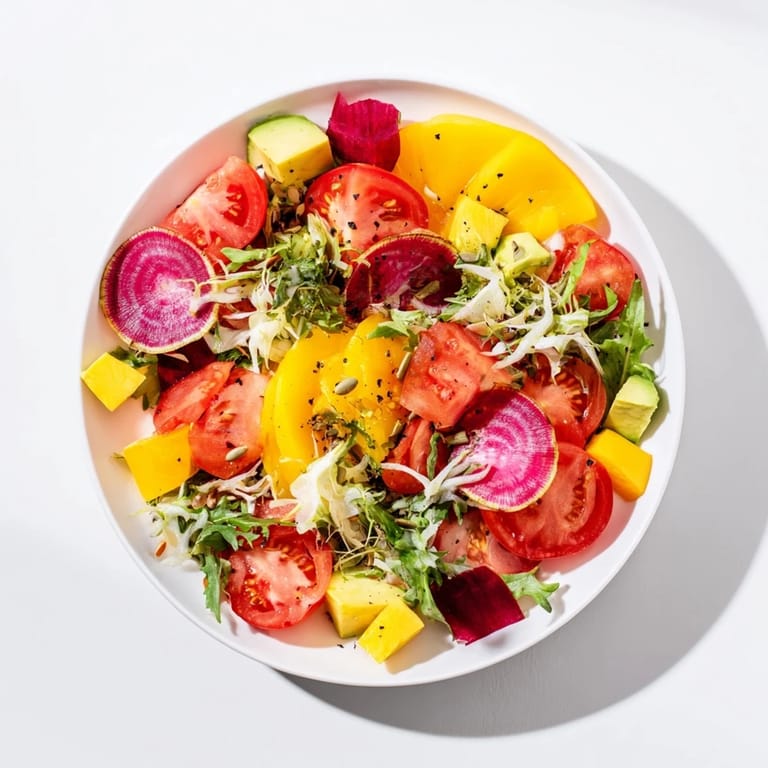
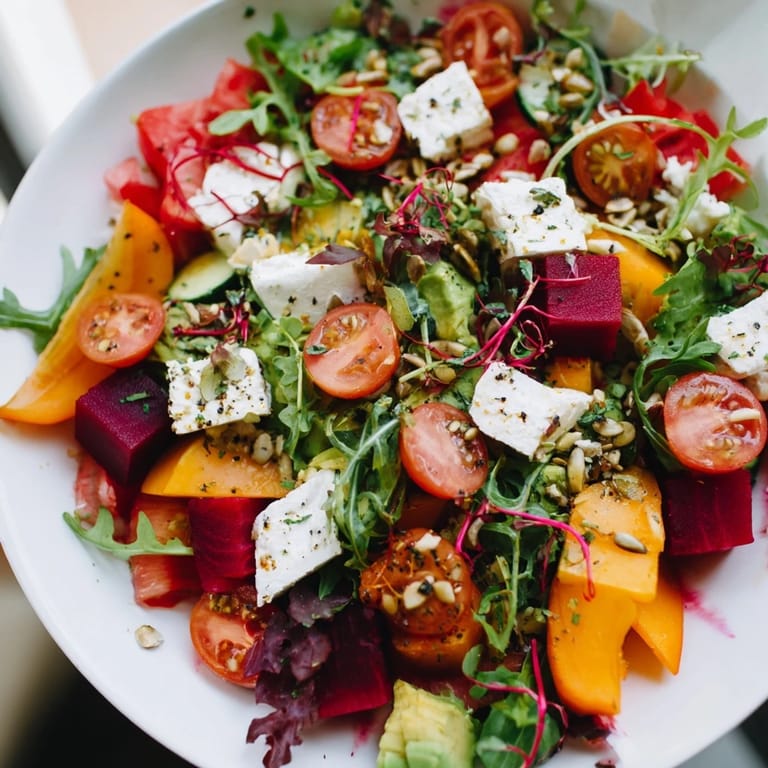
 I first created this salad on a rainy afternoon in my kitchen, inspired by a visit to an abstract expressionism exhibition the day before. Standing in front of those vibrant, chaotic canvases had left me mesmerized, and I found myself wanting to recreate that same energy on a plate. I pulled out every colorful vegetable I could find—reds, yellows, golds, purples—and started arranging them with the same freedom those artists used with their brushes. What emerged was less a traditional salad and more an edible artwork that made my guests gasp before they even took a bite.
I remember serving this at a dinner party where my friend's teenage daughter had just won an art competition. She walked in, saw the salad, and literally said, "You made edible art for me?" That moment perfectly captured what this dish is all about—it's not just nourishment, it's an experience, a conversation starter, a small celebration on a plate.
Ingredients
- Cherry tomatoes (red and yellow), 1 cup halved: These are the jewels of your salad—their sweetness and juicy burst anchor the dish. Pro tip: buy them on the vine if you can; they taste noticeably better and their natural sweetness makes the dressing lighter.
- Golden beet, 1 small peeled and shaved: The earthiness of beets grounds all the brightness around them. Use a vegetable peeler or mandoline to get them paper-thin so they're tender and integrate beautifully with the other vegetables.
- Cucumber, 1 small sliced into ribbons: These ribbons add a cool, crisp element and their mild flavor lets other ingredients shine. Slice them just before serving to keep them crisp.
- Red radishes, 1/2 cup thinly sliced: Radishes bring a peppery bite and brilliant color. Their crunch is irreplaceable, so don't skip them or substitute lightly.
- Watermelon, 1 cup cut into irregular cubes: This is the surprising element that catches people off guard. Its sweetness and juiciness create unexpected flavor harmony, and those irregular cuts mirror the artistic chaos of the composition.
- Avocado, 1 ripe cubed: Creamy and luxurious, avocado brings richness without heaviness. Cut it just before assembly so it doesn't oxidize and turn brown.
- Mixed baby greens (arugula, baby spinach, frisée), 1 cup: These form the base canvas for your artistic arrangement. Their delicate bitterness balances the sweet and bright flavors layered on top.
- Fresh mint leaves, 2 tbsp torn: Mint adds a cooling freshness and aromatic lift that ties everything together. Tear by hand rather than chopping to release the oils gently.
- Toasted pumpkin seeds, 1/4 cup: These provide essential crunch and a subtle nuttiness. Toasting them yourself (if you have time) deepens their flavor, but quality store-bought works beautifully too.
- Pomegranate seeds, 1/4 cup: Tart and jewel-like, pomegranate seeds are pure flavor and visual magic. They burst on your tongue and add a sophisticated tartness that brightens everything.
- Crumbled feta cheese, 1/4 cup: Feta's tang and crumbly texture add complexity and richness. Its saltiness means you can use less salt in your dressing, which lets other flavors sing.
- Extra-virgin olive oil, 3 tbsp: Quality matters here since it's one of only a few ingredients. Choose one with fruity notes that complement the vegetables.
- White balsamic vinegar, 1 tbsp: This vinegar is milder and slightly sweet compared to regular balsamic, so it won't overpower the delicate vegetables. If you only have regular balsamic, use slightly less.
- Honey, 1 tsp: A touch of honey balances the acidity and adds subtle sweetness that echoes the watermelon and tomatoes.
- Dijon mustard, 1/2 tsp: This emulsifies the dressing and adds a gentle complexity without sharp mustard flavor.
- Salt and freshly ground black pepper, to taste: Taste as you go—the feta is salty, so start conservatively.
Tired of Takeout? 🥡
Get 10 meals you can make faster than delivery arrives. Seriously.
One email. No spam. Unsubscribe anytime.
Instructions
- Prepare your canvas:
- Before you touch the platter, gather all your ingredients in separate bowls. This is the mise en place moment—it looks a little fussy, but it means you're never scrambling for a tomato while your greens are wilting. As you prep each vegetable, notice its colors and textures. The reds should be vivid, the yellows warm and glowing, the purples deep and rich. This is where you become the artist.
- Scatter the foundation:
- Take your large platter and create loose clumps of baby greens and torn mint across the surface. Don't arrange them neatly in sections—let them drift and pool naturally. Think of it like laying down base colors in a painting; you're creating movement and depth.
- Splash with color:
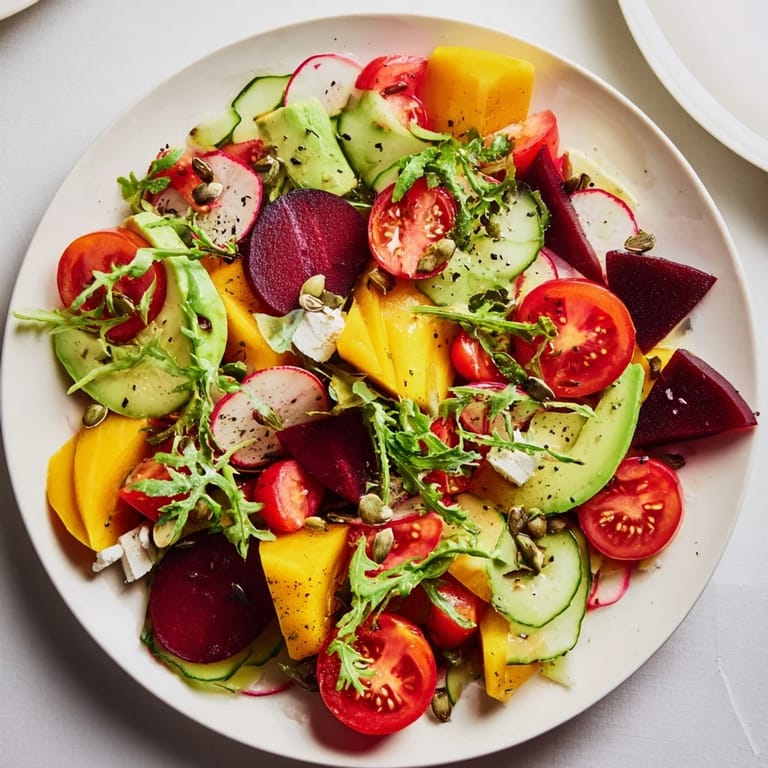
- Now comes the fun part. Starting with your red and yellow tomatoes, scatter them across the greens with joyful abandon. Follow with beet shavings, then cucumber ribbons, radish slices, and watermelon cubes. As you work, constantly step back and look at the composition. Are there areas of white space? Fill them with avocado. Is one corner too heavy with red? Balance it with golden beet or purple radish. The goal is controlled chaos—organized enough to be beautiful, wild enough to feel alive.
- Add texture and depth:
- Sprinkle your pumpkin seeds and pomegranate seeds across the surface in an irregular pattern, avoiding symmetry. Drop the feta crumbles in unexpected places. These textural elements catch light and create visual interest. Watch how they nestle between the vegetables, creating little pockets of contrast.
- Emulsify your dressing:
- In a small bowl, combine olive oil, white balsamic vinegar, honey, and Dijon mustard. Whisk steadily—you'll feel the mixture thicken slightly as the mustard emulsifies the oil and vinegar. This is the magic moment. Once it's combined, season with salt and pepper. Taste it. It should be balanced: tangy but not sharp, slightly sweet, with a whisper of mustard. Adjust to your preference.
- Paint with dressing:
- With your dressing ready, drizzle it across the salad in bold zigzags and irregular splatters, mimicking brushstrokes. Don't be shy—let the dressing pool in some spots and streak across others. It will settle into the greens and vegetables as people eat, coating everything in its bright flavor.
- Serve and celebrate:
- Bring this beautiful creation to the table immediately. Pause for a moment while people admire it. Let them take a photo if they want to. Then toss it together gently with tongs or two large spoons, allowing each person to get a mix of everything in their bowl. The transformation from art to salad is part of the pleasure.
 Save to Pinterest
 What I love most about this salad is watching people's faces when they first see it. There's always this pause, a moment where someone says, "It's too beautiful to eat." But then they taste it, and they realize it's not just pretty—it's genuinely delicious, balanced, surprising. That's when the salad stops being decoration and becomes a memory.
The Art of Vegetable Selection
Not all vegetables are created equal when you're trying to paint with produce. The best ones for this salad are those with naturally vibrant color and firm texture that holds up under light handling. When you're shopping, look for cherry tomatoes still attached to the vine, a beet that feels substantial and heavy for its size, crisp radishes with no soft spots, and an avocado that yields gently to thumb pressure—not rock-hard, not mushy. The quality of your raw ingredients shines through in this salad because there's nowhere to hide; cooking masks imperfections, but rawness reveals truth. Seek out farmers' markets when possible—the vegetables taste better, the colors are more saturated, and you're supporting people who care about their crops the way you care about your cooking.
Why This Dressing Works
The dressing is deliberately light and balanced, a supporting player rather than a lead character. It needs to coat the vegetables without weighing them down or obscuring their delicate textures and individual flavors. White balsamic vinegar is the secret ingredient here—it provides the acidity that ties everything together and prevents the salad from tasting too sweet (which is a real risk with watermelon and honey involved). The Dijon mustard acts as an invisible hand, emulsifying the oil and vinegar while adding depth that makes people wonder, "What's in this dressing that makes it taste so good?" The honey is barely there, just enough to echo the sweetness of the vegetables and create a subtle sense of harmony.
Making It Your Own
This salad is a framework, not a mandate. The beauty of abstract expressionism is that the rules are yours to break. If you can't find golden beets, use red ones or even candy-striped beets for extra visual drama. Watermelon not in season? Substitute with diced pear or fresh figs. Don't love feta? Try crumbled goat cheese, crispy chickpeas for vegan protein, or just skip the cheese entirely. The architecture stays the same—vibrant vegetables, fresh greens, textural elements, and bright dressing—but your personal palate and what's available in your market become the inspiration.
- Consider adding edible flowers like pansies or nasturtiums in the final moments before serving for extra botanical beauty and delicate flavor
- For fall versions, layer in roasted purple sweet potato cubes, crispy sage leaves, and toasted pecans instead of pumpkin seeds
- Make it substantial enough for lunch by adding grilled chickpeas, tofu, or tempeh as a protein anchor
 Save to Pinterest
 This salad reminds me that food is art, and art feeds the soul. Serve it when you want to say something without words, when you want people to slow down and pay attention to what's on their plate.
Recipe FAQs
- → What makes this salad visually unique?
The salad features a layered, artistic arrangement inspired by abstract expressionism, combining bold colors and varied textures for a striking presentation.
- → Can this dish accommodate dietary restrictions?
Yes, it is vegetarian and gluten-free; feta can be swapped for vegan cheese to suit dairy-free diets.
- → How should the dressing be prepared?
Whisk olive oil, white balsamic vinegar, honey, Dijon mustard, salt, and pepper until emulsified, then drizzle generously in zigzag patterns.
- → What texture elements are included?
Crunch comes from toasted pumpkin and pomegranate seeds, while creamy feta adds contrasting softness.
- → Are there suggested serving tips?
Serve immediately to preserve freshness and visual appeal; pair well with crisp white wine or citrus-infused sparkling water.