 Save to Pinterest
 My neighbor Linda brought over a pot of this soup on a gray January afternoon, and I realized I'd been missing something essential in my kitchen all winter. The first spoonful hit differently than expected—smoky, warm, deeply comforting without being heavy. She'd learned it from her grandmother in Georgia, but made it her own by adjusting the broth and letting the bacon fat do most of the flavor work. I've made it countless times since, tweaking nothing, because some recipes don't need improvement, just respect.
I made this for my book club once, nervous about serving soup in October when everyone expected something fancier. It sat on the stove, and somehow the aroma filled the whole house before anyone arrived. By the third bowl, people were asking for seconds, and I watched someone tear off a piece of cornbread to soak up the last bit. That's when I understood—this soup doesn't need to prove anything.
Ingredients
- Smoked bacon, 8 oz diced: Look for real smoked bacon, not the chewy thin-cut stuff, because those renderings are where half the flavor lives.
- Black-eyed peas, 2 cups dried (soaked) or 3 cans: Dried peas have better texture if you plan ahead, but canned won't disappoint you in a pinch—just rinse them well to avoid extra sodium.
- Yellow onion, 1 medium finely chopped: Yellow onions break down into sweetness as they cook, which balances the smoke from the bacon.
- Carrots, 2 medium diced: They soften into the broth and add natural sweetness without tasting like carrots, if that makes sense.
- Celery stalks, 2 diced: This is the quiet ingredient that makes people say the soup tastes like home, even if they can't identify why.
- Garlic, 3 cloves minced: Add it after the softer vegetables so it doesn't burn and turn bitter—timing matters here.
- Low-sodium chicken broth, 6 cups: Low-sodium lets you control the salt and taste the ingredients themselves, not just salt and broth.
- Bay leaf, 1: Removes at the end—it's a flavoring tool, not something to eat, and people sometimes forget.
- Dried thyme, 1/2 tsp: Dried works better than fresh here because the heat brings out its earthiness over time.
- Smoked paprika, 1/2 tsp: This is where the smoke deepens; regular paprika is pretty but doesn't have the same personality.
- Black pepper, 1/4 tsp freshly ground: Grind it yourself if you can—pre-ground tastes dusty by comparison.
- Salt, to taste: Add it at the end so you can taste what you're doing instead of guessing.
- Fresh parsley, 2 tbsp chopped optional: A garnish that adds brightness and makes the bowl look intentional.
Tired of Takeout? 🥡
Get 10 meals you can make faster than delivery arrives. Seriously.
One email. No spam. Unsubscribe anytime.
Instructions
- Render the bacon until it shatters:
- Dice the bacon and place it in a cold pot, then turn the heat to medium—this method lets the fat release slowly instead of splashing everywhere. Once it's golden and crisp after 6 to 8 minutes, fish it out with a slotted spoon and set it on a paper towel, but leave every bit of that rendered fat in the pot.
- Build the flavor base:
- Toss your onion, carrots, and celery into that bacon fat and listen to them sizzle—that sound means the Maillard reaction is happening, which is chemistry being delicious. Let them soften for 5 to 6 minutes, stirring occasionally so they toast evenly, then add the minced garlic for one more minute until your kitchen smells like a restaurant.
- Add the peas and aromatics:
- Stir in the drained black-eyed peas, chicken broth, bay leaf, thyme, smoked paprika, and black pepper, then bring everything to a boil—you'll see the surface bubble and shimmer. The paprika will turn the broth a warm golden color that hints at what's coming.
- Simmer until tender:
- Drop the heat to low, cover the pot, and let it bubble gently for 30 to 35 minutes if you used dried peas (20 minutes if using canned). You're not in a hurry—the peas soften, the flavors marry, and something magical happens in that quiet time.
- Finish and taste:
- Fish out the bay leaf with a fork, then taste a spoonful and adjust the salt—this is the moment to be honest about what the soup needs. Some batches need more salt than others depending on your broth and your palate.
- Serve with intention:
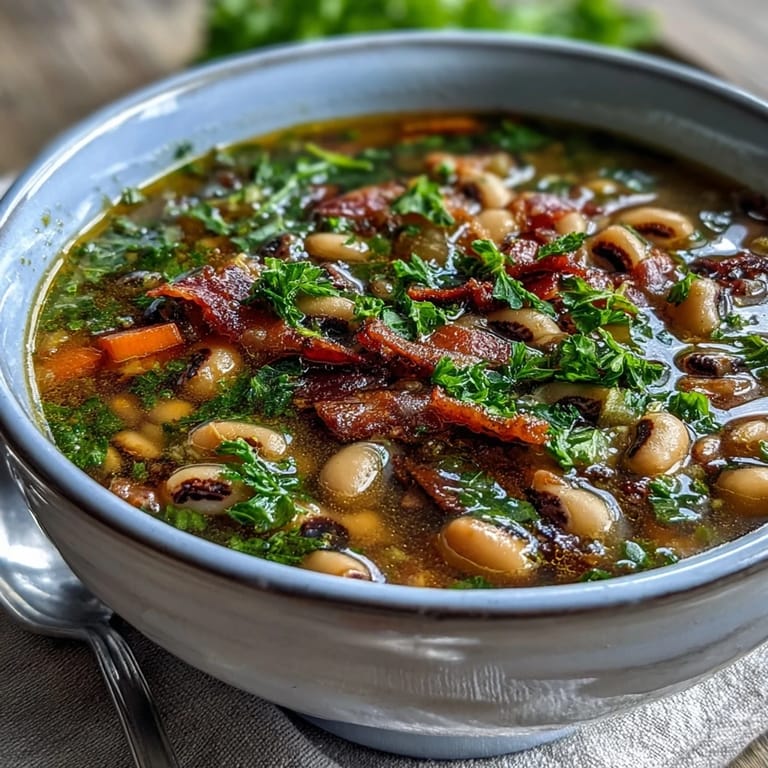
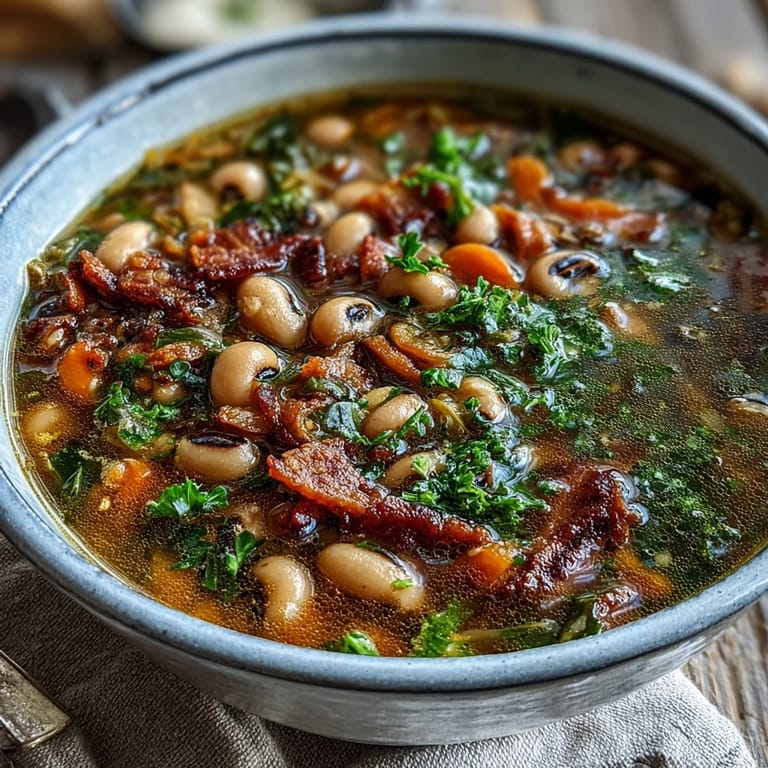
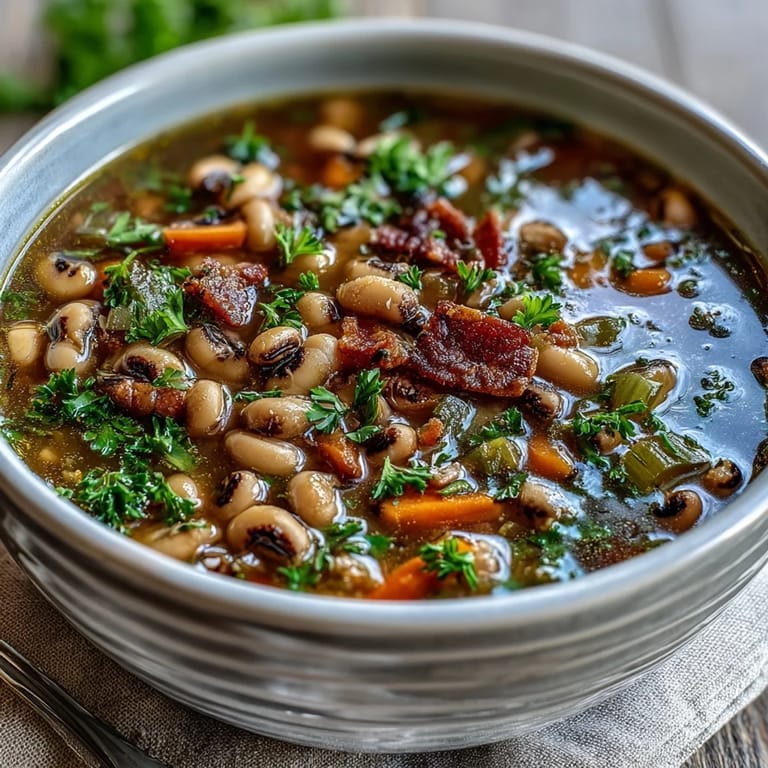
- Ladle the soup into bowls, scatter the reserved bacon and fresh parsley on top, and serve hot with cornbread or crusty bread alongside.
 Save to Pinterest
 My mother-in-law tasted this and said it reminded her of her childhood, which felt like I'd somehow unlocked a memory through soup. That's what this recipe does—it's humble enough to be honest, flavored enough to matter, and generous enough to feed both body and something harder to name.
Timing and Flexibility
The beauty of this soup is that it doesn't demand precision or stress. If your vegetables take eight minutes instead of six, the world doesn't end—soup is forgiving that way. The simmer time is where flexibility lives too; if your peas are tender in 25 minutes, you can stop there, or let them go longer if you prefer them softer and the broth more concentrated.
Variations That Actually Work
I've made this vegetarian by swapping bacon for a generous glug of liquid smoke and vegetable broth, and honestly, it's almost as good—different, but not lesser. Some versions include collard greens stirred in during the last ten minutes, which adds nutrition and a slightly bitter edge that plays beautifully against the smoke. A friend added diced sweet potato once, and while it wasn't traditional, it was warm and it was delicious, which is really all a soup needs to be.
Serving and Storage Wisdom
This soup actually improves a day or two after you make it, as the flavors continue to marry and deepen—it's one of those rare dishes that tastes even better as leftovers. Store it in the fridge for up to four days, reheat it slowly so it doesn't scorch, and add a splash of broth if it's thickened too much. The bacon garnish is best added fresh right before serving because nobody likes soggy bacon, even though the temptation to add it all at once is real.
- Cornbread or crusty bread is not optional—it's how you tell the soup you respect it.
- Freeze leftovers without the bacon garnish, thaw overnight in the fridge, and you'll have comfort food on standby for the kind of days that ask for it.
- A squeeze of hot sauce or a dash of vinegar at the table lets people customize their bowl without changing what you made.
 Save to Pinterest
 This soup has become my answer to a lot of questions—what to make when someone needs feeding, what to cook when the kitchen feels cold, what to offer when words aren't quite enough. It's honest food that doesn't apologize.
Recipe FAQs
- → Can I use canned black-eyed peas instead of dried?
Yes, you can substitute 3 cans of black-eyed peas (15 oz each) for the dried version. Rinse and drain them before adding to the soup, and reduce the simmering time to about 20 minutes since they're already tender.
- → How do I store leftovers?
Store cooled soup in an airtight container in the refrigerator for up to 4 days. The flavors often improve overnight. Reheat gently on the stove, adding a splash of broth if needed to thin consistency.
- → Can I make this vegetarian?
Absolutely. Omit the bacon and use vegetable broth instead of chicken broth. Add 1-2 teaspoons of liquid smoke to maintain the smoky flavor profile that bacon typically provides.
- → What goes well with this soup?
Cornbread is the classic Southern accompaniment. Crusty bread, dinner rolls, or crackers also work well. For a lighter option, serve with a simple green salad dressed with vinaigrette.
- → Can I freeze this soup?
Yes, this soup freezes well for up to 3 months. Cool completely before transferring to freezer-safe containers, leaving some space for expansion. Thaw overnight in the refrigerator before reheating.
- → Do I need to soak the peas?
If using dried black-eyed peas, soaking overnight reduces cooking time and ensures even tenderness. Quick-soak method: boil peas for 2 minutes, remove from heat, and let stand for 1 hour before draining and proceeding with the soup.