 Save to Pinterest
 Years ago, a friend invited me to a tiny bistro tucked away on a rainy Paris street, and I watched the chef tend a massive pot of onions like they were the most precious thing in his kitchen. The way they transformed from sharp and pungent to sweet and honeyed fascinated me so much that I went home determined to recreate that magic. It took me three attempts to understand that patience wasn't just suggested—it was the entire point. Now, whenever I make this soup, that quiet afternoon in France comes back to me, and I'm reminded that the best dishes are built on time, not shortcuts.
I made this for my roommate during his first winter with us, and he was genuinely skeptical—he'd never had French onion soup before and couldn't imagine plain onions could be interesting. When he tasted that first spoonful with the melted cheese and toasted bread, his whole face changed. He asked for seconds immediately and then asked if I could teach him how to make it. That's when I realized this recipe does something special: it converts people who think they know soup into believers.
Ingredients
- Large yellow onions (6 total): Yellow onions caramelize beautifully and develop a deep sweetness that red or white onions won't quite match—slice them thin and don't rush this part.
- Unsalted butter and olive oil: The combination gives you the richness of butter without burning, and the olive oil adds a subtle depth that pure butter alone can't achieve.
- Beef broth (6 cups): Use good quality broth here since it's the foundation; weak broth makes weak soup, and you'll taste the difference.
- Dry white wine (1/2 cup, optional): This cuts through the richness and adds a brightness that balances the deep caramel notes beautifully.
- Garlic (2 cloves, minced): Just a touch to enhance without overpowering—add it after the onions are caramelized so it doesn't burn.
- Sugar and salt (1 teaspoon each): The sugar helps jumpstart the caramelization process and brings out the onions' natural sweetness.
- Fresh thyme and bay leaf: These aromatics build layers of flavor—fresh thyme is ideal, but dried works if that's what you have on hand.
- Crusty French bread (4 slices): The bread needs to be sturdy enough to hold up to hot soup without falling apart; day-old bread actually works best.
- Gruyère cheese (2 cups grated): This cheese has a nuttiness that ordinary cheddar just can't replicate—it's worth seeking out for the final result.
Tired of Takeout? 🥡
Get 10 meals you can make faster than delivery arrives. Seriously.
One email. No spam. Unsubscribe anytime.
Instructions
- Melt your fat and soften the onions:
- In a large heavy-bottomed pot, melt the butter with olive oil over medium heat until it's foamy, then add those thinly sliced onions. Stir occasionally for about 15 minutes until they lose their raw edge and turn soft and translucent—you're not looking for color yet, just surrender.
- Coax out the sweetness through caramelization:
- Sprinkle the onions with sugar and salt, then keep stirring frequently for 30 to 40 minutes as they gradually deepen to golden, then amber, then a rich brown. This is where the magic happens—the onions break down completely and concentrate into something almost jam-like and deeply sweet.
- Build the aromatic base:
- Add the minced garlic and cook just for a minute until fragrant, being careful not to let it brown. If using white wine, pour it in now and scrape up all those browned bits stuck to the bottom of the pot (they're liquid gold).
- Simmer with broth and herbs:
- Pour in the beef broth and add the thyme sprigs and bay leaf along with black pepper. Bring everything to a boil, then drop the heat and let it simmer gently uncovered for 30 minutes to meld all the flavors together.
- Prepare your bread and cheese:
- While the soup simmers, preheat your broiler and toast the bread slices until they're golden and crispy on both sides. Don't skip this step—soggy bread ruins the whole experience.
- Assemble and broil:
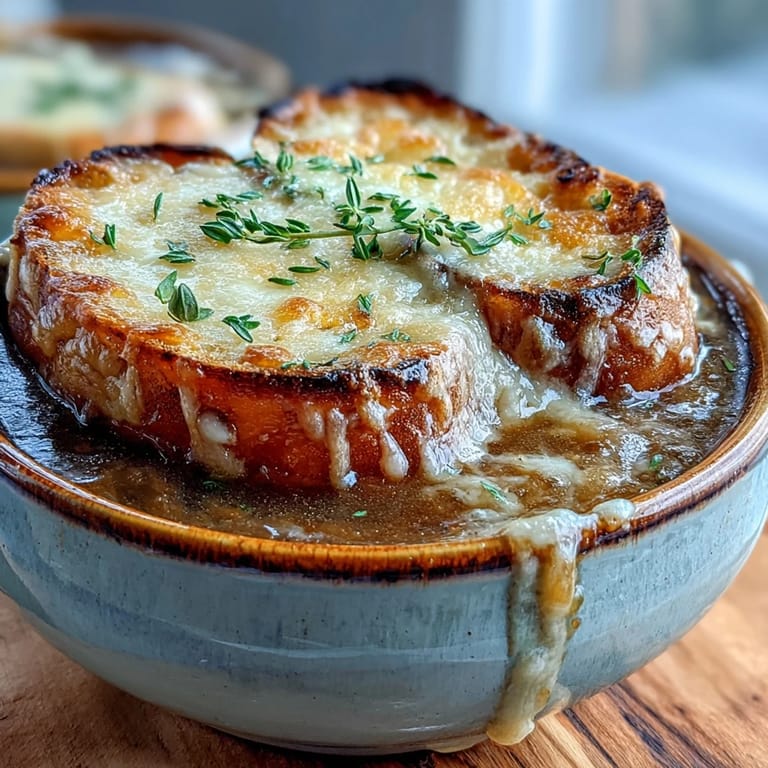
- Ladle the hot soup into oven-safe bowls, top each with a slice of toasted bread, and pile Gruyère generously on top. Slide the bowls under the broiler for 2 to 3 minutes until the cheese is melted, bubbling, and just starting to brown at the edges.
 Save to Pinterest
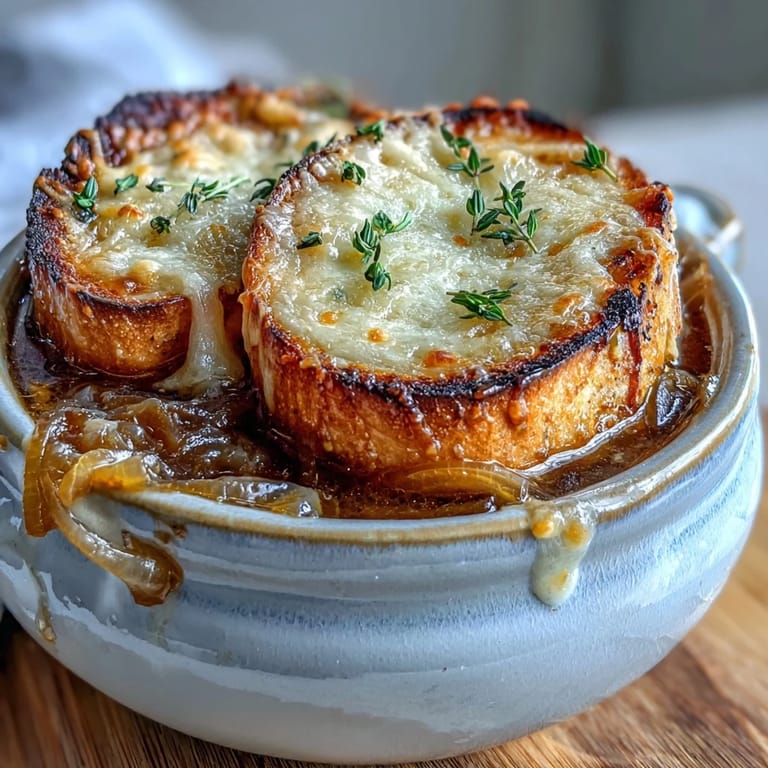
 There's something about serving this soup that makes people slow down and actually taste what's in front of them. The cheese pulls in long, molten strands, the bread soaks up the rich broth, and suddenly a kitchen full of chattering voices goes quiet. That moment—when food does what it's supposed to do and brings people together—is why I keep making this.
The Magic of Caramelization
The entire soul of this soup lives in those 35 to 40 minutes when you're standing at the stove stirring onions. It feels tedious at first, like nothing is happening, but if you pay attention you'll notice the color shift happen in waves—pale gold, then deeper amber, then a rich mahogany brown. The onions go from tasting sharp and raw to almost fruity and sweet, which is pure chemistry happening right in your pot. This isn't a step to delegate or rush through; it's the whole point.
Cheese Choice and Substitutions
Gruyère is my first choice because it melts smoothly and brings a subtle nutty complexity that elevates the whole dish, but I've had excellent results with Emmental and Swiss cheese too. The key is choosing a cheese that actually melts well and tastes good rather than just turning into a weird rubbery layer. If you're vegetarian, make sure your cheese is made without animal rennet, and if you need dairy-free options, just test your substitute on a practice bowl first.
Wine, Timing, and Wine Pairings
The white wine is optional but honestly, it adds a brightness that elevates the whole soup from good to memorable—it cuts through the richness and adds complexity. If you skip it, add an extra tablespoon of butter to compensate for the missing acidity. As for what to drink alongside, a crisp dry white wine or a light-bodied red makes perfect sense, but honestly, this soup is so satisfying that sometimes I just want water and good conversation with it.
- Prep your mise en place (all ingredients prepped and measured) before you start cooking so you're not scrambling when things move quickly.
- If your broth is particularly salty, taste before you add the full teaspoon of salt—better to add more later than have it oversalted.
- This soup actually tastes better the next day after the flavors have had time to marry, so don't hesitate to make it ahead.
 Save to Pinterest
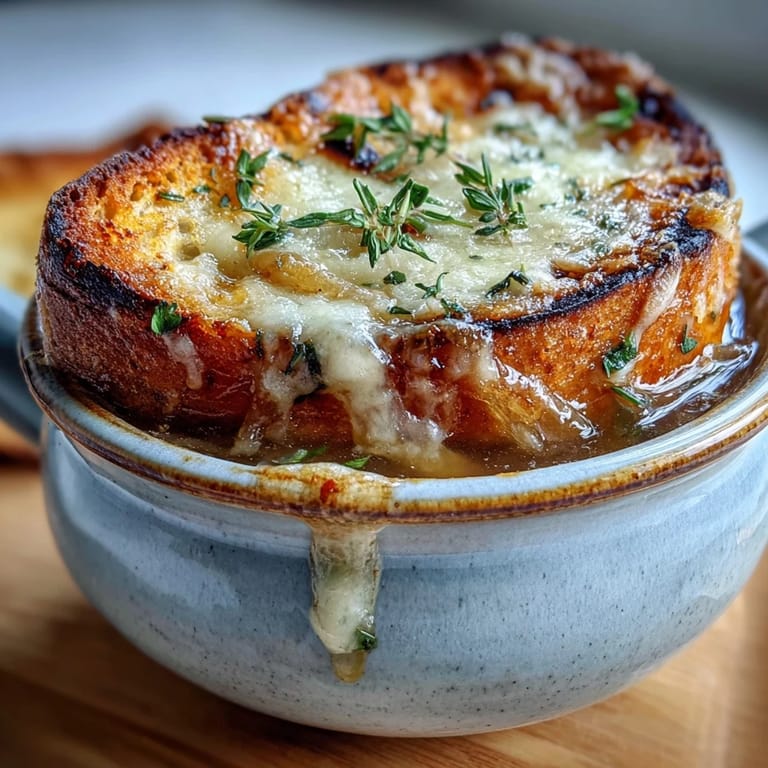
 Make this soup when you want to prove to yourself that some of the best dishes come from simple ingredients and a willingness to wait. It's the kind of meal that lingers in memory long after the bowl is empty.
Recipe FAQs
- → Why does caramelizing onions take so long?
Proper caramelization requires 30–40 minutes of cooking time to break down the onions' natural sugars and develop that deep, rich brown color and sweet flavor. This slow transformation is what gives the soup its signature depth and complexity.
- → Can I make this vegetarian?
Absolutely. Simply substitute the beef broth with vegetable broth. The rest of the ingredients remain the same, and you'll still achieve a deeply flavorful result thanks to the caramelized onions and aromatic herbs.
- → What type of onion works best?
Yellow onions are ideal because they have a perfect balance of sweetness and pungency. Their higher sugar content helps them caramelize beautifully. Sweet onions work too, but white onions tend to be too sharp.
- → Can I prepare this in advance?
The soup actually tastes better when made ahead. Prepare it up to 3 days in advance and refrigerate. The flavors meld and deepen over time. When ready to serve, reheat gently and complete the broiling step with bread and cheese just before serving.
- → What cheese alternatives work well?
Gruyère is traditional for its nutty flavor and excellent melting properties. Emmental, Swiss cheese, or a combination of provolone and Parmesan are delicious alternatives. Avoid pre-shredded cheese as it doesn't melt as smoothly.
- → Why add sugar to the onions?
A small amount of sugar helps the onions brown evenly and encourages caramelization. It enhances the natural sweetness of the onions without making the soup taste sweet—the result is a deep, savory complexity typical of this classic dish.