 Save to Pinterest
 My neighbor Maria handed me a steaming bowl of black-eyed peas one winter evening, and I realized I'd been missing something essential in my kitchen all along. She explained it was how her grandmother made it in Athens, nothing fancy but honest—just letting time and olive oil do the work. That first spoonful tasted like warmth and story, and I knew I had to learn the recipe myself. Now it's become the kind of dish I turn to when I want something that feels both nourishing and deeply comforting.
I made this for a potluck on a gray Sunday, wondering if anyone would actually eat it when there were fancier dishes around. By the end of the night, my slow cooker was nearly scraped clean, and someone asked for the recipe written down. That's when I knew it wasn't about impressive technique—it was about honest flavors that remind people why they love eating in the first place.
Ingredients
- Black-eyed peas: Rinse and pick through them first, even though it feels tedious—a stray pebble once found its way into a bite and taught me why this step matters.
- Onion, garlic, carrots, and red bell pepper: The vegetable base that creates depth; chop them fairly uniform so everything softens at the same pace.
- Diced tomatoes and tomato paste: Together they bring acidity and richness that balances the earthiness of the peas and makes the broth taste intentional.
- Vegetable broth: Quality matters here since it's one of the main flavors—use something you'd actually drink on its own.
- Extra virgin olive oil: This isn't the time for a lesser oil; the good stuff contributes a fruity note that makes every spoonful taste Mediterranean.
- Oregano, smoked paprika, cumin, and bay leaf: Dried oregano is your anchor, paprika adds gentle smoke, and the bay leaf whispers in the background until you remember to fish it out.
Tired of Takeout? 🥡
Get 10 meals you can make faster than delivery arrives. Seriously.
One email. No spam. Unsubscribe anytime.
Instructions
- Get everything into the slow cooker:
- Toss the rinsed peas, chopped vegetables, tomatoes with their juices, tomato paste, broth, olive oil, and all your spices into the slow cooker at once. Stir it together so nothing gets stuck at the bottom, and you'll see how the tomato paste slowly dissolves into something beautiful.
- Let time do the heavy lifting:
- Cover and set to low for 6 to 7 hours—the exact time depends on how old your peas are, but you'll know they're ready when they're tender enough to break with a spoon. The longer it simmers, the more the flavors marry into something that tastes like it took all day to make, even though you barely did anything.
- Finish and taste:
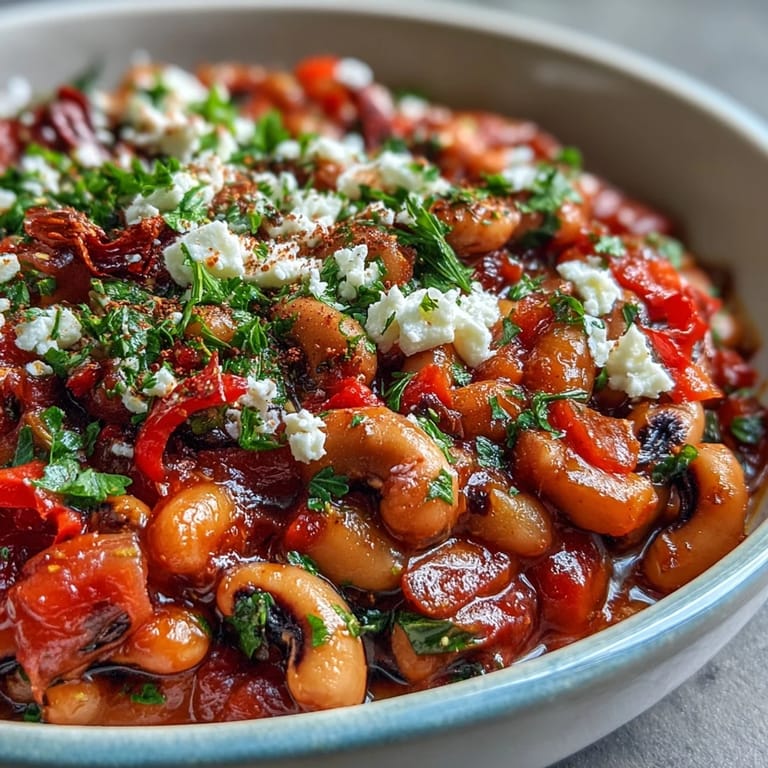
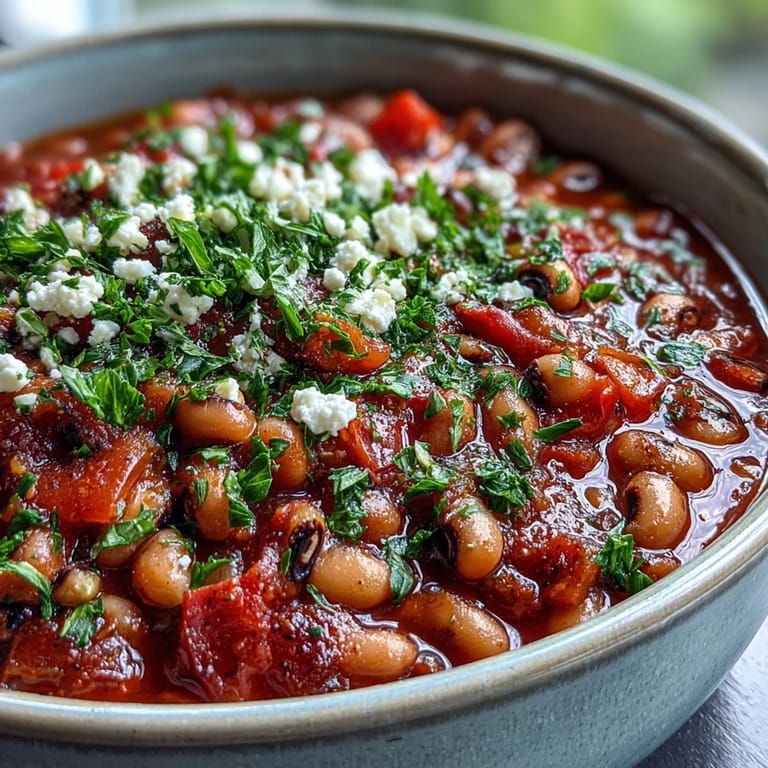
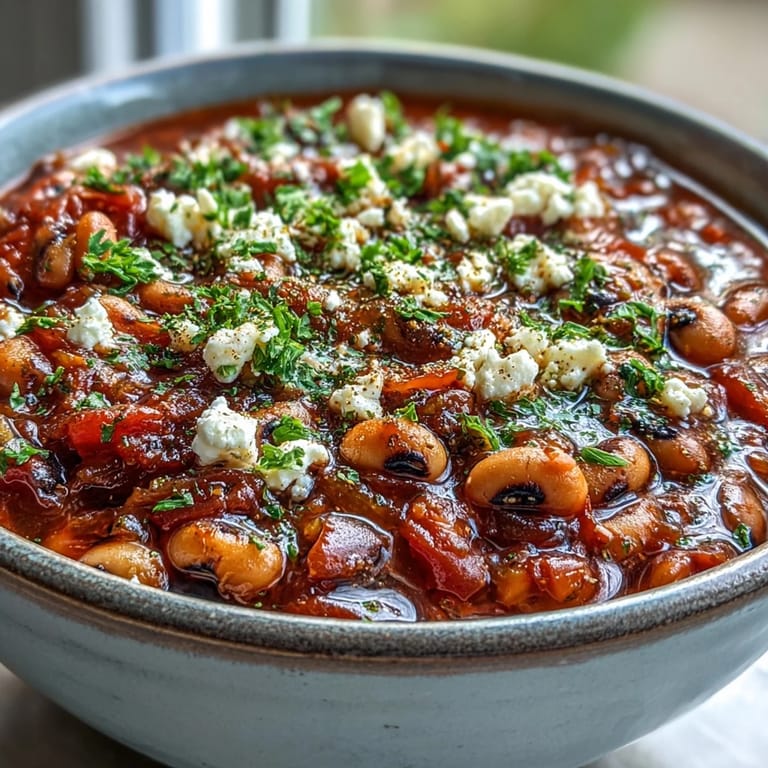
- Remove the bay leaf, then taste the broth and adjust salt and pepper to your preference—remember that the flavors will intensify slightly as it cools. Serve it hot in bowls with parsley, a crumble of feta if you like, and a squeeze of fresh lemon to brighten everything up.
 Save to Pinterest
 I served this to my partner on a night when neither of us felt like talking much, and somehow the quiet bowl of warm peas said everything we needed. There's a kind of peace that comes from simple, honest food eaten slowly together.
Why Black-Eyed Peas Matter
Black-eyed peas have been feeding people for centuries, and they're not trendy—they're just reliable and deeply nourishing. Once you understand how they absorb flavors in a slow cooker, you'll start seeing them as a canvas rather than a side dish, perfect for whatever spices and vegetables call to you.
Making It Your Own
The beauty of this recipe is how flexible it is without ever losing its character. I've added spinach near the end, switched in white beans when I was short on black-eyed peas, and once used fennel instead of some of the carrot because that's what needed using up. The framework stays solid while you play around with what's in your kitchen.
Serving and Storage Wisdom
This dish tastes even better the next day when the flavors have had time to settle and deepen, so don't hesitate to make it ahead. It keeps well in the refrigerator for up to five days and freezes beautifully, thawing gently on the stovetop over medium heat.
- Serve it with crusty bread to soak up the broth, or spoon it over rice if you want something more substantial.
- A squeeze of fresh lemon at the table brightens everything and keeps it from feeling too heavy, even though it's deeply comforting.
- If you're going vegan, skip the feta and let the herb-forward broth be the star instead.
 Save to Pinterest
 This recipe is a reminder that the best meals don't always require skill or stress, just patience and good ingredients working together. Make it once and it becomes the kind of dish you return to whenever you need something that feels like coming home.
Recipe FAQs
- → Do I need to soak black-eyed peas before cooking?
No soaking is required for this slow cooker method. The extended cooking time allows the dried peas to become perfectly tender without pre-soaking. Just rinse them thoroughly before adding to the slow cooker.
- → Can I use canned black-eyed peas instead?
Yes, you can substitute canned beans. Reduce the cooking time to 2-3 hours on low since canned peas are already cooked. You may need slightly less broth—about 3 cups instead of 4.
- → What can I serve with this dish?
Crusty bread is perfect for soaking up the flavorful broth. You can also serve it over rice, quinoa, or with a simple green salad. For a complete Greek spread, pair with tzatziki and grilled vegetables.
- → How long will leftovers keep?
Store in an airtight container in the refrigerator for up to 5 days. The flavors continue to develop and improve over time. It also freezes well for up to 3 months.
- → Can I make this on the stovetop?
Certainly. Simmer covered over low heat for 1.5 to 2 hours, or until the peas are tender. Add more broth if needed during cooking as stovetop evaporation is faster than slow cooking.
- → Is the smoked paprika necessary?
Smoked paprika adds a subtle depth and warmth, but regular sweet paprika works fine too. The smoked variety pairs beautifully with the Mediterranean herbs and adds complexity to the final dish.