 Save to Pinterest
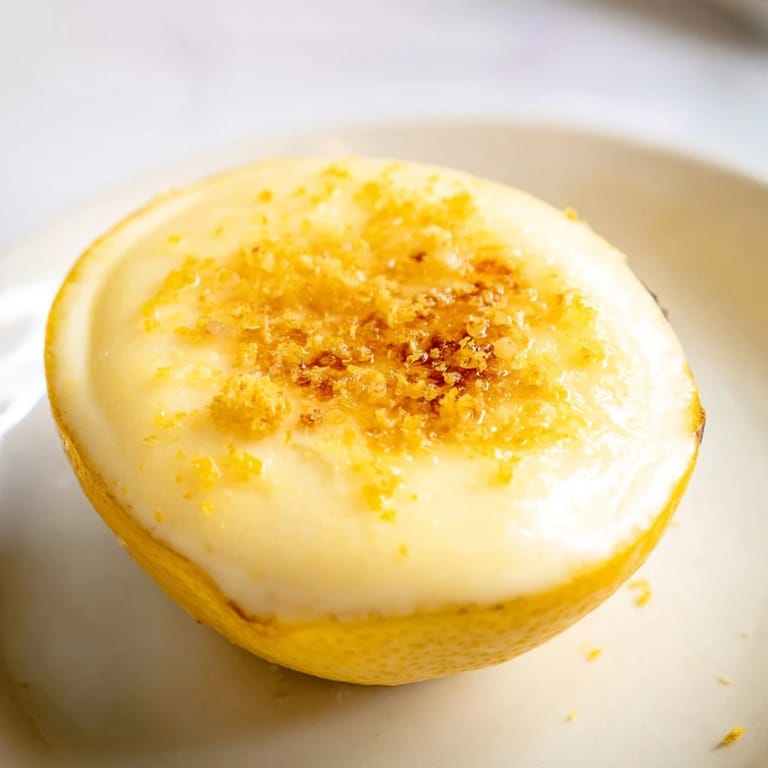
 The first time I made a posset, I was struck by how something so elegantly simple could feel like an act of culinary theater. I'd inherited a passion for British desserts from a friend who'd lived in London, and she'd casually mentioned this cream-based wonder over coffee one afternoon. What captivated me wasn't just the silky texture or the bright lemon flavor, but the idea of serving it in the lemon shell itself—a detail that felt both whimsical and purposeful, like the dish had been designed to surprise and delight in equal measure.
I remember serving this for the first time at a dinner party on a warm June evening, and watching my friend's face light up when she bit through that caramelized sugar crust. She'd closed her eyes for a moment, and when she opened them again, she simply said, 'This is what I was missing.' That single reaction made all the careful shell-scooping and patience worthwhile.
Ingredients
- Double cream (500 ml): This is the soul of the posset—use the best quality you can find, preferably with a high fat content, because it's what gives the dessert that impossibly silky mouthfeel.
- Caster sugar (140 g plus 6–8 tsp for topping): The fine grains dissolve seamlessly into warm cream, and the extra sugar for brûléeing should be sprinkled with a generous, even hand.
- Lemon zest (from 2 lemons): Microplane it finely so you get those bright flavor bursts without grittiness, though you'll strain it out later for ultimate smoothness.
- Freshly squeezed lemon juice (90 ml): This is where the magic happens—the acidity causes the cream to thicken in a way that feels almost like alchemy.
- Large lemons (6 for shells): Choose lemons that sit flat and have thick skin; they're sturdier vessels and more forgiving when you're scooping.
Tired of Takeout? 🥡
Get 10 meals you can make faster than delivery arrives. Seriously.
One email. No spam. Unsubscribe anytime.
Instructions
- Hollow out your lemon vessels:
- Halve your lemons lengthwise and use a small spoon or melon baller to gently scoop out the insides, being careful not to puncture the shell. Trim a thin slice from the bottom of each half so it sits flat and sturdy, then refrigerate them while you work on the cream—cold shells help the posset set faster.
- Heat the cream gently:
- In a medium saucepan, combine the cold cream, sugar, and lemon zest over medium heat, stirring occasionally until the sugar dissolves completely. Bring it to a gentle boil, let it bubble softly for 3 minutes, then remove from the heat—this slight cooking melds the flavors without breaking the cream.
- Create the magic with lemon juice:
- Stir in the fresh lemon juice slowly and watch as the mixture transforms into something thicker and silkier. Let it cool for about 10 minutes, then strain through fine mesh to remove the zest, leaving you with pure, elegant cream.
- Fill your lemon shells:
- Carefully pour the still-warm posset into each chilled lemon shell, filling nearly to the rim. This moment feels like you're capturing sunshine in a shell.
- Chill with patience:
- Place them in the refrigerator for at least 3 hours, until the mixture is completely set and has that custard-like consistency. You can make these a full day ahead if you'd like.
- Brûlée just before serving:
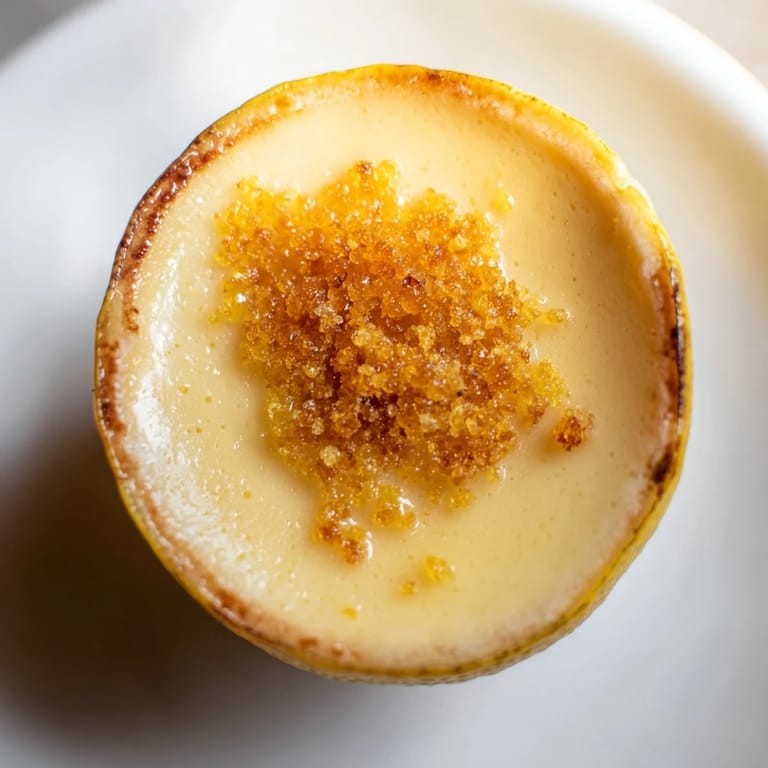
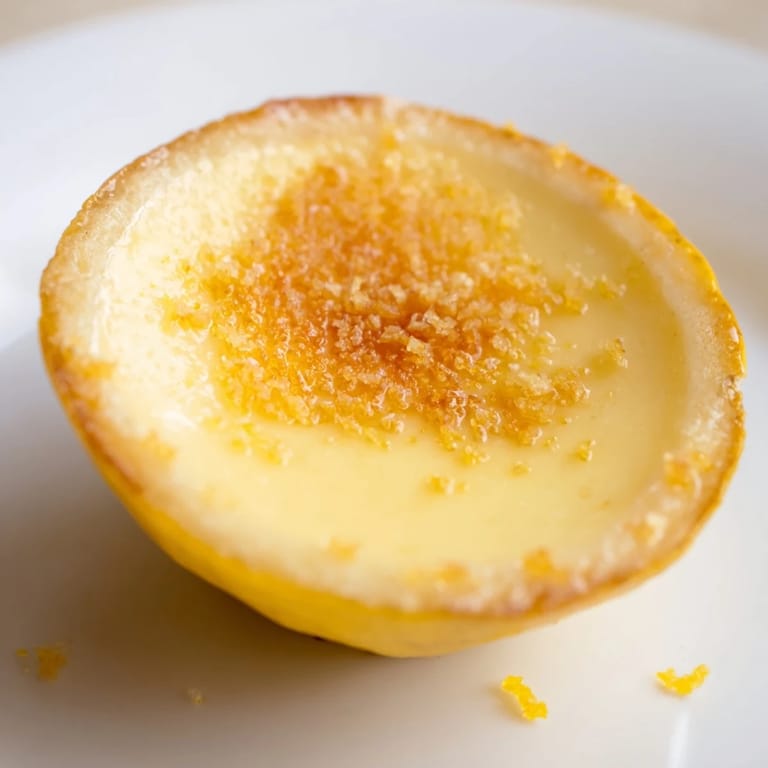
- Sprinkle about a teaspoon of caster sugar evenly over each posset, then use your kitchen blowtorch to caramelize it to a deep golden brown. Let it cool and harden for 2–3 minutes—the sound of the spoon cracking through that sugar crust is pure satisfaction.
 Save to Pinterest
 There's something almost meditative about making possets—the ritual of preparing the shells, the careful heating of cream, the anticipation of that first spoonful. It's a dessert that makes you slow down and savor, which might be why it's stayed in my rotation ever since.
The Lemon Shell Moment
Using the lemon itself as a serving vessel isn't just clever presentation; it actually keeps the posset cold longer and adds an extra layer of acidity if guests want to squeeze a bit more juice over the top. I've learned to choose lemons with thicker skins, as they're less likely to crack when you're hollowing them out, and a quick trim on the bottom makes all the difference in stability. The shells are completely edible, and some guests do eat theirs, which feels delightfully wasteful in the best way.
Flavor Variations Worth Exploring
While lemon is the classic, I've experimented with infusing the cream with a sprig of thyme or basil during the simmering stage, removing it before the lemon juice goes in. The herbal notes add a sophisticated whisper without overpowering the brightness. I've also tried a touch of elderflower cordial or even a hint of Prosecco for different occasions, though the straightforward lemon version remains my gold standard for its elegant simplicity.
Make-Ahead Strategy and Serving Suggestions
One of the best things about possets is that they're forgiving dinner party desserts—you can prepare them up to a day in advance and simply brûlée them moments before serving, which takes the pressure off your evening. I've found that pairing them with crisp shortbread or almond biscuits adds a textural contrast that guests genuinely appreciate, and a small sprig of fresh mint or a candied lemon slice on top feels like a final flourish. If you don't have a kitchen blowtorch, a very hot grill or broiler works in a pinch, though you'll need to watch closely to avoid burning the shells.
- Make the possets up to 24 hours ahead, but brûlée the sugar no more than 5 minutes before serving.
- A thin slice of candied lemon or a tiny sprig of mint adds visual elegance without fussiness.
- Serve these straight from the fridge on warm days—the cold, silky texture is part of their charm.
 Save to Pinterest
 Making lemon brûlée possets has taught me that some of the most impressive desserts are born from simplicity and patience. They feel special enough for the fanciest dinner but approachable enough to make whenever the mood strikes.
Recipe FAQs
- → How do I prepare the lemon shells for serving?
Halve large lemons lengthwise, scoop out the flesh carefully to keep the shells intact, then trim the bottoms to help them stand upright before chilling in the fridge.
- → What is the best method to achieve a smooth cream texture?
After simmering the cream mixture and adding lemon juice, let it cool slightly then strain to remove zest and any pulp for a silky, smooth consistency.
- → How can I create the crisp caramelized topping without a blowtorch?
If you don't have a kitchen blowtorch, use a very hot grill or broiler, watching closely to caramelize the sugar evenly without burning.
- → Can the cream be infused with herbs for added flavor?
Yes, adding a sprig of thyme or basil during simmering can infuse subtle herbal notes; just remove before stirring in lemon juice.
- → How long should the lemon cream chill before serving?
Refrigerate the filled lemon shells for at least 3 hours, allowing the cream to set firmly before adding the caramelized sugar topping.