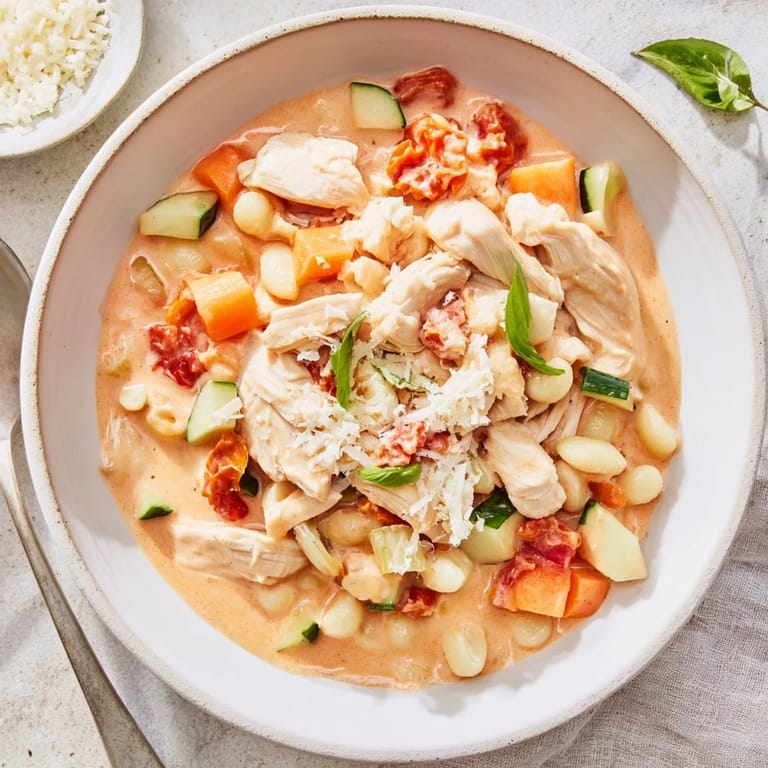
 Save to Pinterest
 I threw this together on a Wednesday night when I had leftover sun-dried tomatoes and no plan for dinner. The kitchen smelled like garlic and cream within minutes, and my partner wandered in asking what I was making that smelled so good. It turned out to be one of those accidental wins that ends up in regular rotation.
The first time I made this, I served it to friends who were coming over after a long day. Everyone went quiet after the first spoonful, which is always a good sign. One of them asked for the recipe before they even finished their bowl, and I realized Id stumbled onto something worth keeping.
Ingredients
- Boneless, skinless chicken breasts: Searing them first adds a layer of flavor to the broth, but if youre in a rush, you can poach them directly in the liquid.
- Olive oil: Just enough to get a golden crust on the chicken without making the soup feel heavy.
- Yellow onion: The base of almost every good soup, it adds sweetness as it softens.
- Garlic cloves: Fresh garlic makes all the difference here, the jarred stuff just doesnt hit the same.
- Carrots and celery: Classic aromatics that give the broth body and a subtle earthiness.
- Sun-dried tomatoes: These bring a tangy, concentrated burst of flavor that makes the soup feel special.
- Chicken broth: Low-sodium is key so you can control the saltiness, especially once the Parmesan goes in.
- Heavy cream: This is what makes the broth silky and rich without being too thick.
- Parmesan cheese: Freshly grated melts smoothly and adds that nutty, salty finish.
- Ditalini pasta: These little tubes are perfect for soup because they catch the broth in every bite.
- Dried oregano and thyme: They bring warmth and an herbal backbone that ties everything together.
- Red pepper flakes: Optional, but a pinch adds just enough heat to wake up your taste buds.
- Bay leaf: Toss it in while simmering and fish it out before serving, it adds a subtle depth you cant quite name.
- Fresh basil: A handful torn on top makes the whole bowl feel bright and alive.
Tired of Takeout? 🥡
Get 10 meals you can make faster than delivery arrives. Seriously.
One email. No spam. Unsubscribe anytime.
Instructions
- Sear the chicken:
- Season the chicken breasts with salt and pepper, then heat olive oil in a large pot over medium heat. Sear each side for 3 to 4 minutes until golden brown, then set them aside.
- Soften the vegetables:
- Add the onion, carrots, and celery to the same pot and let them cook for 4 to 5 minutes, stirring occasionally. Stir in the garlic and let it cook for another minute until it smells amazing.
- Build the flavor base:
- Toss in the sun-dried tomatoes, oregano, thyme, and red pepper flakes. Stir everything together so the herbs coat the vegetables.
- Add the liquids and chicken:
- Pour in the chicken broth and water, then drop in the bay leaf. Nestle the seared chicken breasts back into the pot.
- Simmer until tender:
- Bring the pot to a gentle boil, then lower the heat and let it simmer uncovered for 15 to 20 minutes. The chicken should be cooked through and the vegetables soft.
- Shred the chicken:
- Remove the chicken breasts and use two forks to shred them into bite-sized pieces. Return the shredded chicken to the pot.
- Cook the pasta:
- Stir in the ditalini and let it cook for 8 to 10 minutes, stirring occasionally, until the pasta is al dente.
- Finish with cream and cheese:
- Lower the heat to a gentle simmer and fish out the bay leaf. Stir in the heavy cream and Parmesan cheese until everything is melted and smooth.
- Adjust and serve:
- Taste the soup and add more salt or pepper if needed. Ladle it into bowls and top with fresh basil.
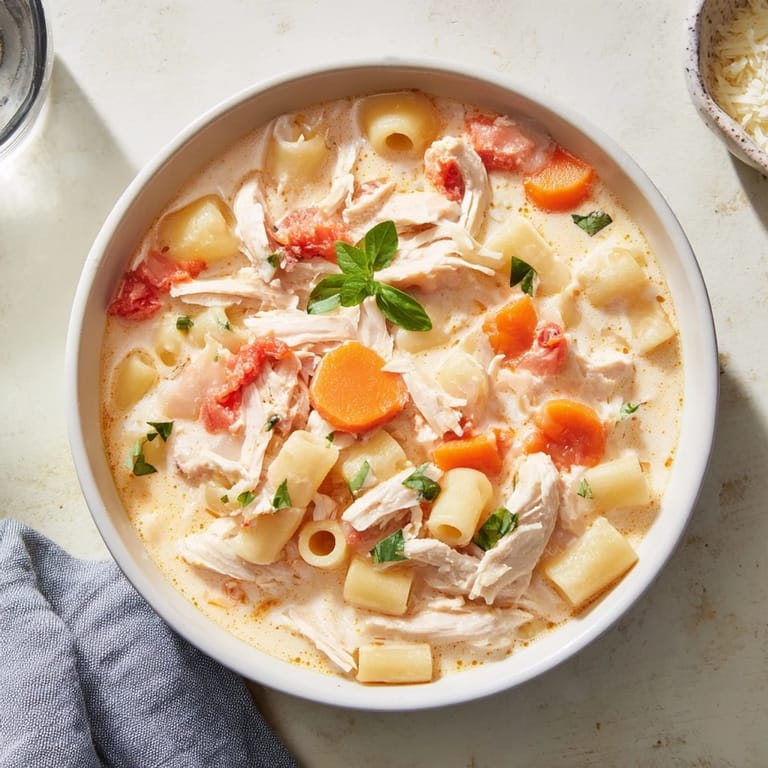 Save to Pinterest
 There was a rainy Sunday when I made a double batch of this and froze half for later. When I reheated it a few weeks later, it tasted just as good, maybe even better because the flavors had time to settle. It felt like a gift from my past self, and I remember thinking I should do that more often.
How to Store and Reheat
Let the soup cool completely before transferring it to an airtight container. It keeps in the fridge for up to four days, though the pasta will absorb more broth as it sits. When reheating, add a little extra broth or water to bring it back to the right consistency, and warm it gently on the stove over medium-low heat.
Swaps and Variations
If you want to make this lighter, swap the heavy cream for half-and-half or even whole milk, just know the broth wont be quite as rich. You can also toss in a handful of fresh spinach or kale at the end for some greens, or use orzo or small shells instead of ditalini. Rotisserie chicken is a great shortcut, just shred it and add it when you stir in the pasta.
What to Serve It With
This soup is hearty enough to stand on its own, but it pairs beautifully with crusty bread for dipping or a simple side salad with lemon vinaigrette. If youre feeling fancy, pour a glass of chilled Pinot Grigio or Sauvignon Blanc alongside.
- Garlic bread or focaccia for soaking up every last drop of broth.
- A crisp green salad with arugula, shaved Parmesan, and a squeeze of lemon.
- A light white wine that wont compete with the creamy, garlicky flavors.
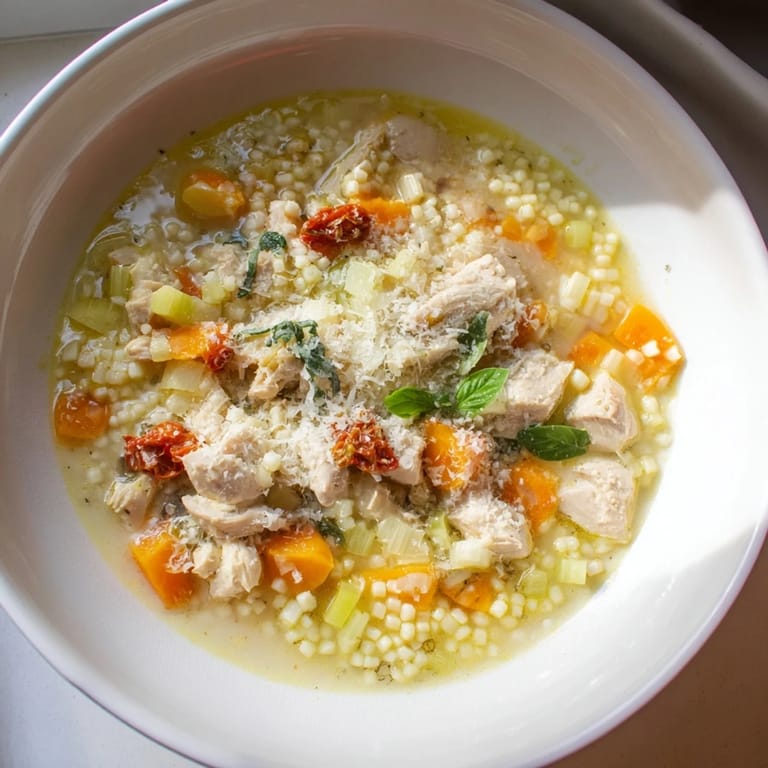 Save to Pinterest
 This soup has become one of those recipes I turn to when I want something warm and satisfying without a lot of fuss. It feels like a hug in a bowl, and I hope it does the same for you.
Recipe FAQs
- → Can I substitute ditalini pasta with another type?
Yes, small pasta shapes like orzo or small shells can be used as alternatives to ditalini for similar texture and cooking times.
- → How do I prevent the chicken from overcooking?
Sear the chicken breasts briefly, then simmer gently until fully cooked. Removing and shredding before returning helps maintain tenderness.
- → Is it possible to make this dish dairy-free?
You can replace heavy cream with coconut milk or a plant-based cream alternative, and omit Parmesan or use a dairy-free cheese substitute.
- → What can I add for extra flavor?
Adding a squeeze of lemon juice or extra Parmesan before serving enhances brightness and richness in the broth.
- → Can I prepare this using rotisserie chicken?
Yes, pre-cooked rotisserie chicken can be shredded and added, reducing cooking time while preserving flavor.