 Save to Pinterest
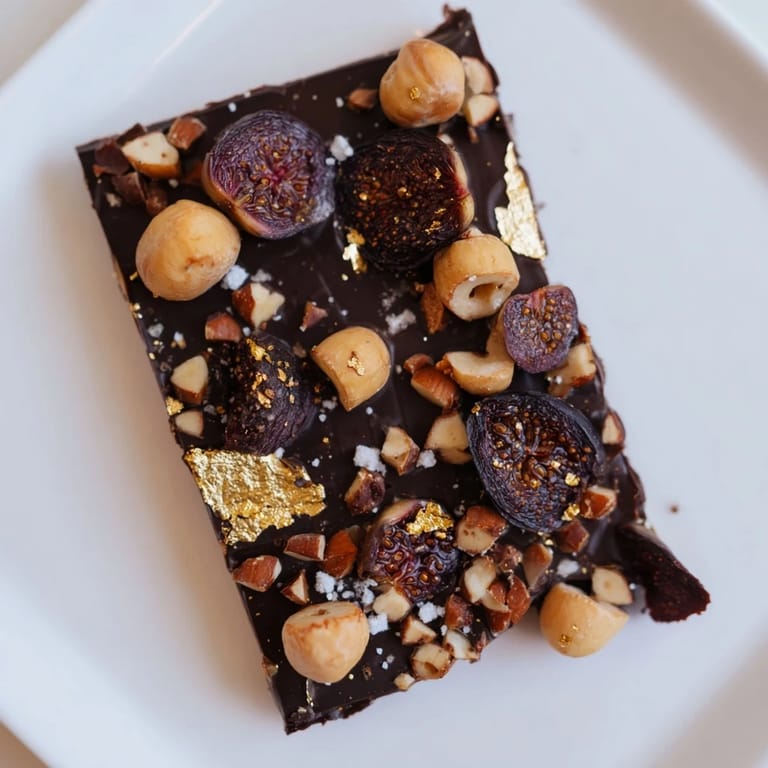
 There's a moment that stays with me from a dinner party last autumn when a guest bit into something I'd nervously assembled just hours before—this dark, mysterious square of chocolate studded with figs and briny olives. The reaction wasn't polite nods; it was genuine surprise, followed by "what is this?" in that tone that makes you realize you've created something memorable. I'd been inspired by a late-night scroll through food images, struck by the audacity of combining sweet and savory in ways that shouldn't work but absolutely do. That night taught me that the best recipes often come from curiosity rather than tradition.
I remember standing at my kitchen counter with a friend who insisted sweet and savory never belonged together, handing her one of these squares. She paused mid-chew, her skepticism visibly melting, then immediately asked for the recipe. That moment of watching someone's mind change through taste alone—that's what this dessert does best.
Ingredients
- Dark chocolate (70% cocoa), 200 g chopped: The backbone of this whole thing; go for quality because you can taste every percent of cocoa, and the bittersweet depth plays beautifully against the figs.
- Unsalted butter, 60 g cubed: Keeps the chocolate silky rather than brittle, and tempering the salt yourself means you control the seasoning completely.
- Honey, 1 tbsp: A whisper of sweetness that rounds out the chocolate without making it cloying; if you swap it for maple syrup or agave, the flavor shifts slightly but still works.
- Sea salt, pinch: This tiny amount is the secret—it amplifies every other flavor and makes people wonder what they're tasting.
- Dried figs, 120 g stems removed and finely sliced: The chewiness here anchors the mosaic; buy them fresh-looking and plump, not rock-hard.
- Pitted black olives (oil-cured preferred), 80 g thinly sliced: Oil-cured olives have more complexity than brined ones; they're briny but also slightly sweet, which is the whole point.
- Roasted hazelnuts, 50 g chopped: Their subtle earthiness bridges the gap between sweet and savory; if you can't find roasted, buy raw and toast them yourself for five minutes in a dry pan.
- Cocoa nibs, 30 g: These little bursts of pure chocolate add texture and prevent the whole thing from feeling too soft or one-note.
- Flaky sea salt, for garnish (optional): If you use this, do it sparingly—you're not seasoning fries.
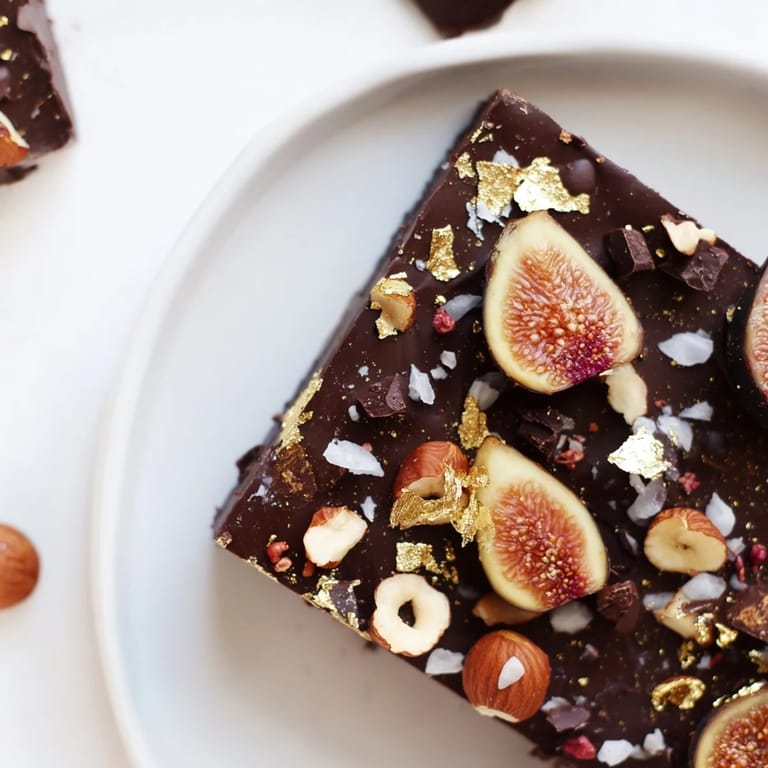
- Edible gold leaf or dried rose petals (optional): Purely for drama, but honestly, this dessert is beautiful enough without them.
Tired of Takeout? 🥡
Get 10 meals you can make faster than delivery arrives. Seriously.
One email. No spam. Unsubscribe anytime.
Instructions
- Prepare your canvas:
- Line a 20x20 cm square tin with parchment paper, letting the edges hang over the sides like curtains—this is how you'll lift the whole thing out later without it crumbling. It feels like such a small detail, but it changes everything about how smoothly the next steps go.
- Melt the chocolate together:
- Set a heatproof bowl over barely simmering water (not touching the water itself) and add your chopped chocolate and butter together. Stir gently until completely smooth, watching for that moment when the last few chunks disappear. Remove it from heat, stir in the honey and salt, and let it cool for exactly one minute—no longer, or it'll start to set before you pour it.
- Spread and flatten:
- Pour the chocolate mixture into your lined tin and use a spatula to spread it into an even layer, paying attention to the corners because they tend to get thin. Smooth it out firmly but not aggressively; you're creating a base, not compressing it into concrete.
- Build the mosaic:
- This is where the magic happens—scatter your sliced figs, olives, hazelnuts, and cocoa nibs across the chocolate surface in no particular pattern, letting them fall where they want. Then gently press everything down with your fingertips or the back of a spoon, working your way across the whole surface to make sure nothing is sitting loose and there are no big gaps showing chocolate.
- Final touches:
- Sprinkle a small pinch of flaky sea salt across the top (if using), and add gold leaf or rose petals if you're feeling fancy. This is your moment to make it look intentional.
- Chill until set:
- Refrigerate for at least two hours; I usually leave mine overnight because it gives the flavors time to meld and the chocolate becomes perfectly snappy when you cut into it. You'll know it's ready when it feels firm to a gentle press.
- Cut and serve:
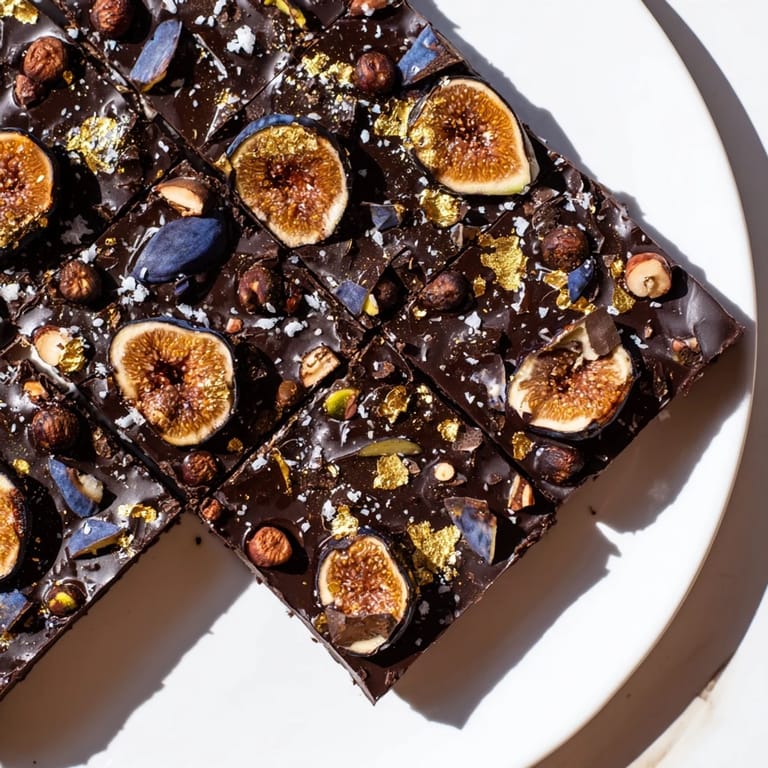
- Use the parchment handles to lift the whole slab out of the tin, then slice it into small squares with a sharp knife (wipe the blade between cuts if it gets sticky). Serve it chilled, or let it sit out for a few minutes to soften slightly.
 Save to Pinterest
 The first time I made this for a New Year's gathering, someone took a bite and actually closed their eyes, which is the kind of reaction that makes all the precision worthwhile. That's when I realized this wasn't just a recipe; it was a conversation starter, a small edible puzzle that makes people think about what they love and what surprises them.
Why This Combination Works
There's a principle in cooking that opposites create excitement, and this dessert is built on it—dark chocolate provides richness and depth, while the figs add a subtle sweetness and chewiness. The olives aren't there to make it taste salty; they're there to introduce a briny complexity that wakes up your palate and makes the chocolate taste more intense by comparison. The hazelnuts and cocoa nibs fill in the texture landscape, so every bite feels textured and intentional rather than flat. It's the kind of dessert that makes sense the moment it touches your tongue, even though it sounds impossible on paper.
Timing and Flexibility
The actual hands-on time is shockingly short—maybe twenty minutes of prep and cooking, with the waiting happening in the fridge. I've made this for spontaneous dinner guests by prepping it in the morning and cutting it just before they arrive, which gives it that fresh, almost-still-soft quality that's somehow more luxurious than something made days ahead. You can also refrigerate it for up to three days in an airtight container, though it's best enjoyed within the first two days while the chocolate still has that subtle snap. The bittersweet chocolate doesn't turn grainy or develop bloom easily, so it's forgiving in that way—it actually improves slightly as it sits and the flavors deepen.
Variations and Substitutions
One of the things I love most about this recipe is how adaptable it is without losing its identity. The nuts are completely flexible—I've used pistachios for a purple-green aesthetic and almonds for a subtler flavor, and both were wonderful. If you're vegan, plant-based butter and maple syrup make an almost identical result; the only difference is the maple adds a whisper of woodsmoke that's actually quite nice. For a spicier version, add a tiny pinch of cayenne to the melted chocolate, which sounds wild but creates this beautiful tension between heat and richness. If figs aren't your thing, dried apricots or dates work beautifully, though they'll shift the sweetness slightly. The one ingredient I wouldn't change is the olives—that brine is non-negotiable to the whole concept.
- Try swapping in oil-cured Kalamata olives for a slightly more robust, fruity brine.
- Add a small pinch of espresso powder to the chocolate mixture for depth without making it taste like coffee.
- If you want it even more luxurious, crumble a tiny bit of fleur de sel on top just before serving rather than adding it before chilling.
 Save to Pinterest
 This is the kind of dessert that reminds you why you cook in the first place—not out of obligation, but because the process of creating something unexpected and delicious for people you care about is its own reward. It's sophisticated enough to impress, simple enough to repeat, and strange enough that people will ask you for the recipe long after they've finished eating.
Recipe FAQs
- → What ingredients create the mosaic topping?
Sliced dried figs, pitted black olives, chopped roasted hazelnuts, and cocoa nibs form the mosaic layer.
- → How is the base mixture prepared?
Dark chocolate and butter are gently melted together, then combined with honey and a pinch of sea salt for depth.
- → Can this dessert be made vegan?
Yes, by substituting plant-based butter and maple syrup in place of butter and honey, respectively.
- → What is the chilling time for the mosaic?
Allow at least two hours in the refrigerator to ensure the chocolate is fully set and firm.
- → Are there suggested pairings for serving?
It pairs exquisitely with vintage port or a rich dark-roast espresso to complement its complex flavors.
- → What allergens are present in this dish?
The dish contains tree nuts (hazelnuts) and dairy from butter and chocolate, with possible gluten traces.