 Save to Pinterest
 My neighbor knocked on my door one evening with a container of potstickers from her favorite dumpling spot, and we ate them standing in my kitchen talking about how we wished we could eat them guilt-free more often. That conversation stuck with me, and a few weeks later I found myself experimenting with lettuce leaves instead of wrappers, keeping all that savory, gingery, umami magic intact. The first batch was chaotic—I overfilled the leaves and sauce went everywhere—but by the third try, something clicked. Now this is what I make when I want that potsticker craving without the carbs, and honestly, it feels lighter and fresher without sacrificing any of the flavor.
I served these to my family during a casual Sunday dinner when someone mentioned wanting to eat lighter, and watching my dad—who grew up on traditional potstickers—dig into his third boat without hesitation told me everything I needed to know. He kept saying the ginger and sesame oil made it taste even more vibrant than the fried version, which felt like validation that you don't need a crispy wrapper to make something crave-worthy.
Ingredients
- Ground chicken: This is your protein canvas, and using good quality meat makes a noticeable difference in the final flavor and texture.
- Toasted sesame oil: Don't skip the toasting step or buy the pale kind—the dark, nutty variety is what gives this its signature potsticker soul.
- Garlic and ginger: These two are your flavor foundation; mince the garlic fine and grate the ginger fresh for the brightest results.
- Green onions, cabbage, and carrot: The vegetable trio that makes this feel substantial and adds the textural contrast that keeps you coming back.
- Soy sauce or tamari: Choose based on your dietary needs, but know that tamari tends to taste slightly deeper and less salty.
- Rice vinegar: This brings brightness and cuts through the richness; regular vinegar will overpower, so stick with rice.
- Cornstarch or arrowroot powder: Just a teaspoon thickens everything perfectly without making it gluey or weird.
- Butter or Bibb lettuce: These leaves are sturdy enough to hold the filling without tearing, unlike more delicate varieties.
- Sesame seeds: Toast them yourself if you can; it takes two minutes and completely transforms their flavor from bland to nutty and magnetic.
Tired of Takeout? 🥡
Get 10 meals you can make faster than delivery arrives. Seriously.
One email. No spam. Unsubscribe anytime.
Instructions
- Wake up your aromatics:
- Heat your sesame oil in the skillet until it's shimmering and fragrant, then add the garlic and ginger and let them bloom for just 30 seconds—you want that perfumy signal that says everything is about to taste amazing.
- Build the chicken base:
- Add your ground chicken and resist the urge to stir it constantly; let it sit for a minute or two so it gets golden and slightly crispy at the edges, which is where all the flavor lives. Break it up with your spatula and keep cooking until it's no longer pink.
- Incorporate the vegetables:
- Toss in the green onions, cabbage, and carrot and cook until they're just softened but still have a whisper of crunch—this usually takes about 3 minutes. The carrot will soften faster than the cabbage, so keep that in mind.
- Season and thicken:
- Pour in your soy sauce, rice vinegar, and optional chili-garlic sauce, then sprinkle the cornstarch over everything and stir until the mixture thickens and the chicken is fully cooked through, which takes another 2 to 3 minutes. You'll see it go from wet and loose to cohesive and glossy.
- Make your dipping sauce:
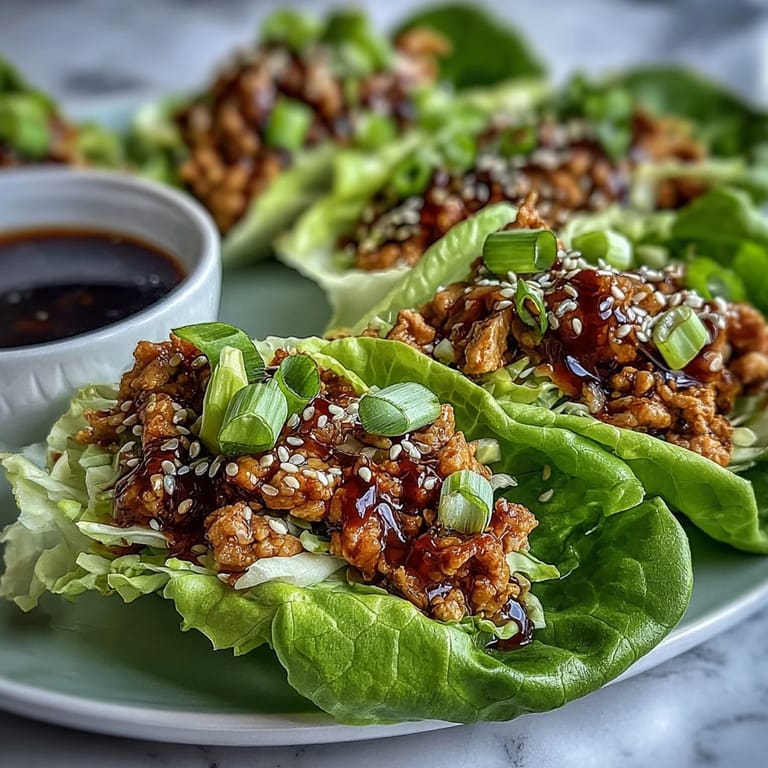
- In a small bowl, whisk together the soy sauce, rice vinegar, sesame oil, honey, and chili-garlic sauce if you're using it; taste and adjust because this is what ties everything together.
- Assemble with purpose:
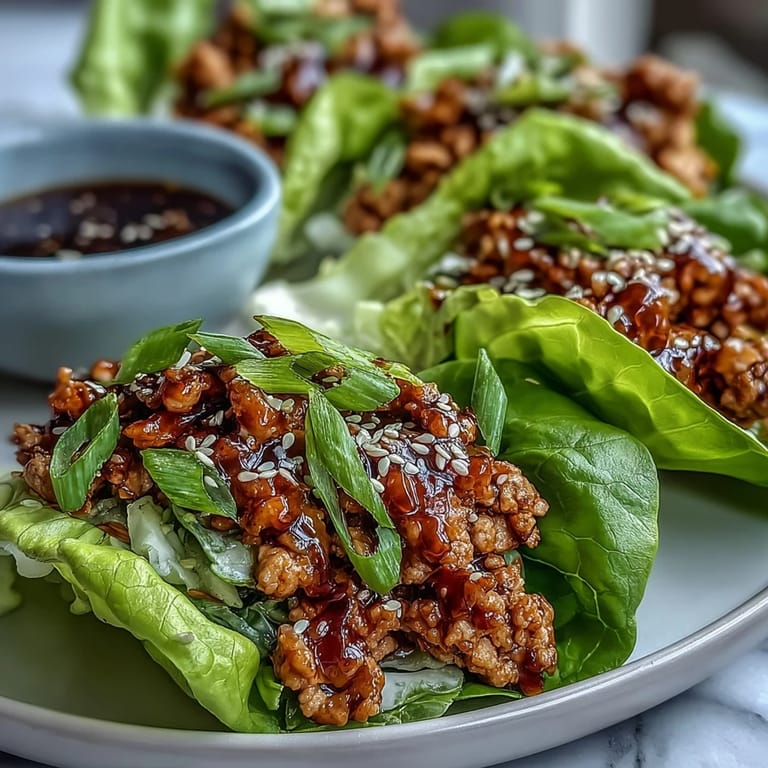
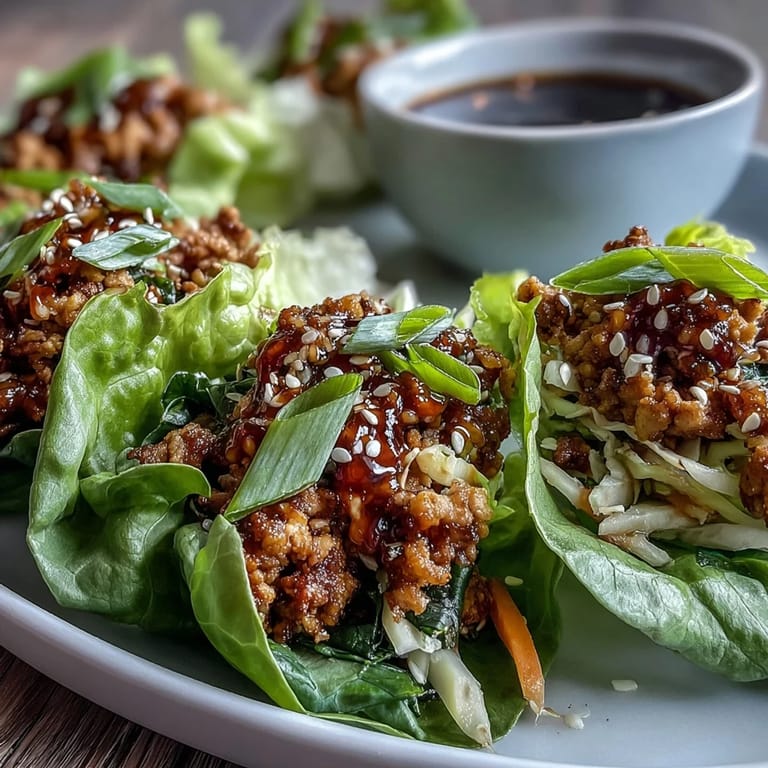
- Lay out your lettuce leaves, spoon the warm filling into each one, and top with a sprinkle of toasted sesame seeds and fresh green onions; the warmth of the filling will slightly soften the lettuce, which is exactly what you want.
- Serve immediately:
- These are best eaten right away while the filling is still warm and the lettuce leaves are cool and crisp, creating that temperature contrast that makes them so satisfying.
 Save to Pinterest
 There's something unexpectedly joyful about serving food that lets people eat with their hands and feel like they're being indulgent without actually being heavy. My sister, who's usually strict about her diet, came back for seconds and kept talking about how it felt both decadent and clean at the same time.
The Flavor Profile That Changed Everything
The magic of this dish lives in the tension between the deep, toasted sesame oil and ginger warmth against the brightness of fresh lettuce and rice vinegar. Once you taste how these elements play off each other, you realize the wrapper was never really the star—it was always the filling and its balance of savory, spicy, and tangy that made potstickers addictive.
Customization Without Losing Your Way
This recipe is forgiving in the best way; you can swap ground turkey or pork for chicken, add water chestnuts or shiitake mushrooms for extra crunch, or play with the heat level by adjusting the chili-garlic sauce. I've made it with ground lamb, and it shifted the whole vibe into something almost Mediterranean while keeping that same satisfying structure.
Pairing and Timing Thoughts
These lettuce boats work beautifully as a light main course or an impressive appetizer that doesn't require any last-minute fussing once the filling is made. Pair them with a dry Riesling for wine or jasmine tea if you want something nonalcoholic; both complement the ginger and sesame without fighting for attention.
- Prep all your ingredients before you start cooking so you're not scrambling when the chicken is halfway done.
- If you're cooking for a crowd, make the filling ahead and gently reheat it just before serving so you can focus on assembly.
- Keep extra dipping sauce on the side because people always want more than you think.
 Save to Pinterest
 These lettuce boats have become my go-to when I want to cook something that feels both indulgent and intentional. They're proof that the best dishes don't need to be complicated—they just need good technique, fresh ingredients, and a willingness to reimagine the classics.
Recipe FAQs
- → Can I make the chicken filling ahead of time?
Absolutely. The chicken filling keeps well in the refrigerator for 3-4 days. Store it in an airtight container and reheat gently in a skillet before serving. Just add the fresh lettuce leaves and toppings when ready to eat.
- → What lettuce varieties work best for these boats?
Butter lettuce and Bibb lettuce are ideal because their leaves form natural cups and hold fillings beautifully. Iceberg lettuce works too but offers less flavor. Romaine hearts can suffice in a pinch, though they're less pliable.
- → How can I add more crunch to the filling?
Consider adding finely diced water chestnuts, jicama, or fresh bean sprouts during the last minute of cooking. Toasted chopped cashews or almonds also make excellent toppings for extra texture contrast.
- → Is this dish suitable for meal prep?
The chicken filling meal preps perfectly. Portion it into containers and store separately from washed lettuce leaves. The filling actually develops more flavor after sitting overnight. Just reheat and assemble when ready to serve.
- → Can I make this dish spicier?
Increase the chili-garlic sauce in both the filling and dipping sauce, or add sriracha and red pepper flakes. Sambal oelek works wonderfully too. Consider serving with additional hot sauce on the table so guests can adjust heat to their preference.
- → What other ground meats can I substitute?
Ground turkey, pork, or beef all work beautifully in this dish. For a vegetarian option, use crumbled firm tofu, tempeh, or plant-based ground meat alternatives. Adjust cooking time slightly as different meats may brown at different rates.