 Save to Pinterest
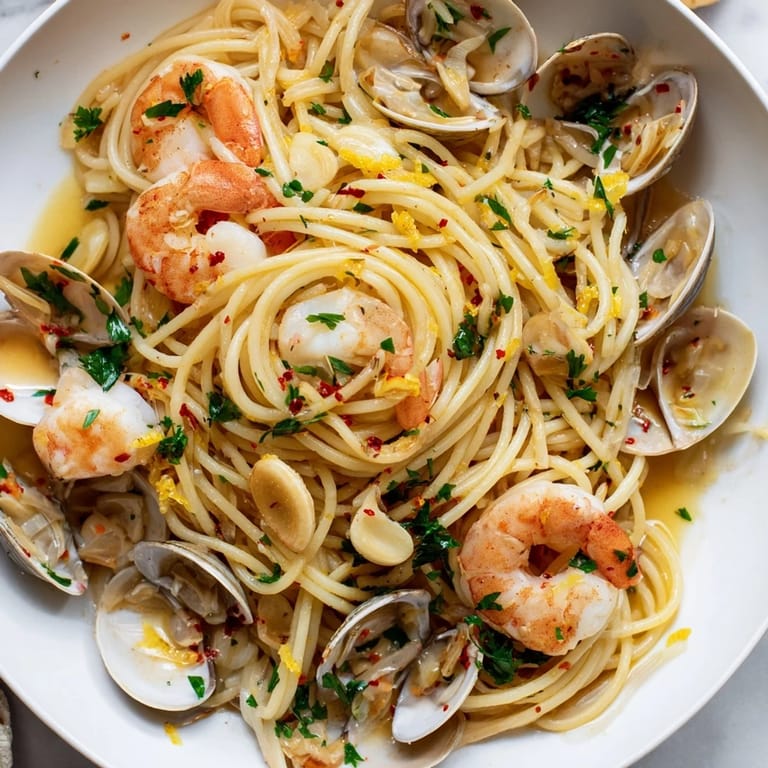
 There's something about the smell of garlic hitting hot olive oil that makes everything feel possible in the kitchen. I discovered this seafood pasta aglio e olio on an unplanned evening when a farmer's market trip yielded the most beautiful shrimp and clams I'd seen in months. Instead of following a recipe, I found myself working from memory and instinct, layering those briny clams with golden garlic and finishing with lemon juice that seemed to wake up every flavor at once. It became the kind of dish I'd make again and again, not because it's complicated, but because it tastes like the best version of simplicity.
I made this for my sister on her birthday, and she sat down expecting fanciness but found something honest instead—a bowl of pasta that tasted like I'd put thought into it without fussing. She asked for the recipe three days later, then called me from her own kitchen asking why her garlic kept burning. That conversation taught me that timing here is everything, and that sharing a meal with someone who actually wants to cook it back at home is better than any compliment.
Ingredients
- Shrimp (250 g): Look for wild-caught if you can—they have a cleaner, brighter flavor than farmed, and their sweetness cuts through the richness of the oil beautifully.
- Fresh clams (500 g): The briny juice they release becomes your sauce, so buy them the day you're cooking and keep them cold until the moment you cook them.
- Spaghetti (400 g): Al dente is non-negotiable here; any softer and you lose the contrast against the tender seafood and silky oil.
- Extra virgin olive oil (6 tbsp): This is the star, so use something you'd taste on its own—aggressive heat will ruin it, so watch carefully.
- Garlic (5 cloves, thinly sliced): Slice it by hand rather than mincing; those thin slices toast evenly and won't scorch as easily as tiny pieces.
- Red chili flakes (1/2–1 tsp): Start with less and taste as you go—the heat builds, especially after sitting for even a minute.
- Dry white wine (1/2 cup): Pinot Grigio, Sauvignon Blanc, or Vermentino all work; avoid anything you wouldn't drink, because the flavor concentrates as it reduces.
- Lemon (1, zested and juiced): The zest adds brightness, the juice adds acid that pulls everything into focus—don't skip either one.
- Fresh flat-leaf parsley (1/4 cup, chopped): Add most of it into the pasta, save a handful for garnish so you get that fresh green color and a final herbal lift.
Tired of Takeout? 🥡
Get 10 meals you can make faster than delivery arrives. Seriously.
One email. No spam. Unsubscribe anytime.
Instructions
- Set your pasta water to boil:
- Fill a large pot with water, salt it generously so it tastes like the sea, and get it to a rolling boil before you do anything else. The salt seasons the pasta itself, not just the water.
- Build your garlic oil:
- Heat the olive oil in a large skillet over medium heat, then add those thin garlic slices and chili flakes together. Watch it constantly for about one minute until the garlic turns pale gold and smells absolutely alive—that moment when your kitchen fills with that aroma is your signal to pull it off the heat before it burns.
- Sear the shrimp first:
- Slide the shrimp into the warm oil and let them cook undisturbed for about two minutes until they just flush pink on one side. They'll finish cooking later, so don't let them get that deep coral color yet—pull them out while there's still translucency to them.
- Steam open your clams:
- Pour the white wine into the skillet, nestle the clams in there, and cover it with a lid. Shake the pan every minute or so, listening for the clams to pop open—this usually takes three to five minutes depending on their size. Discard any that stay stubbornly closed; they're done with this dish.
- Cook the spaghetti to al dente:
- While the clams are working, drop the spaghetti into your boiling water and cook according to package directions until you can bite through it but still feel resistance. Before you drain it, scoop out about half a cup of that starchy water and set it aside—you'll use it to create a silky sauce.
- Bring everything together:
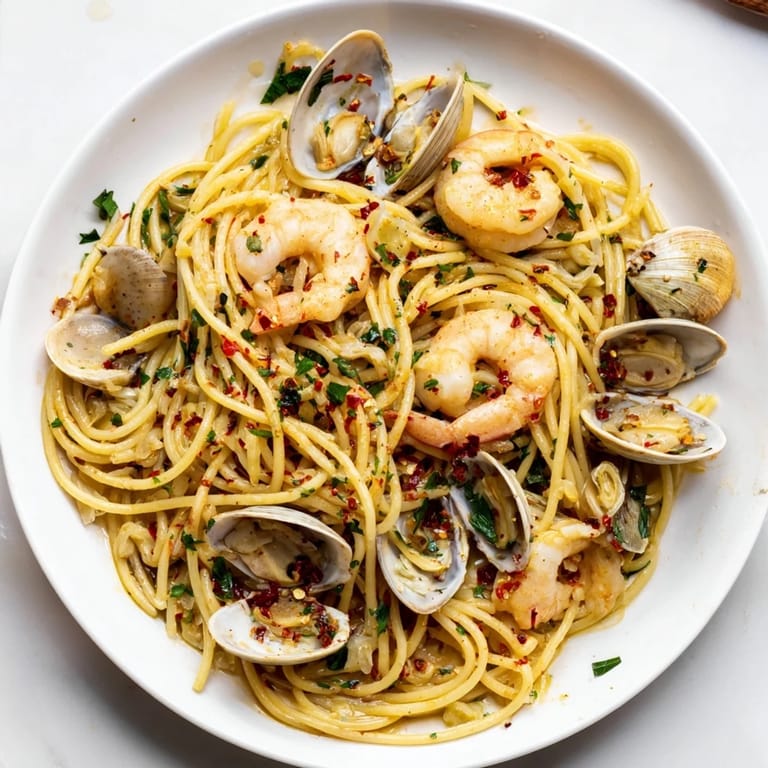
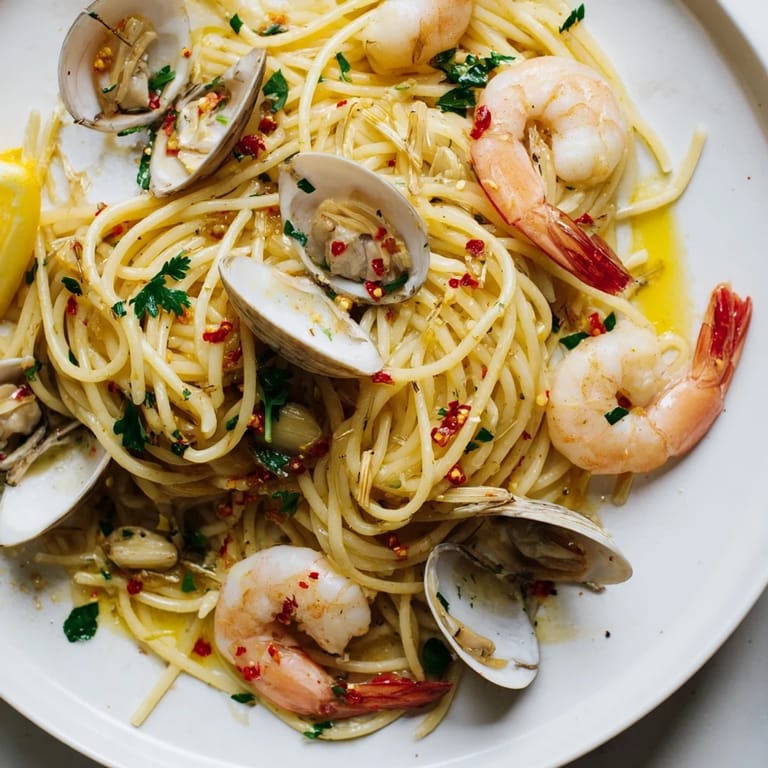
- Return the shrimp to the skillet with the clams, add the drained hot pasta, the lemon zest, lemon juice, and most of the parsley. Toss everything together gently, adding the reserved pasta water a few tablespoons at a time until the oil emulsifies into something creamy and clings to every strand of pasta.
- Taste and serve:
- Finish with a grind of black pepper and salt if needed, then plate it immediately while the pasta is still hot and the flavors are singing. Garnish with that reserved parsley and lemon wedges.
 Save to Pinterest
 I think the moment this dish became more than just dinner was when I realized I could cook it without looking at notes, when my hands knew when to listen for the clams to open and my nose knew when the garlic was perfect. It stopped being a recipe and became a conversation between me and the ingredients, each one trusted to do exactly what it's supposed to do.
Why Clams and Shrimp Together
The sweetness of shrimp and the brininess of clams balance each other perfectly—one is generous, the other is assertive, and together they create a flavor that's bigger than either alone. I've tried making this with just one or the other, and it always feels incomplete, like a conversation where someone's missing. That juice that escapes from the clams while they steam becomes your sauce, which is why you can't skip either protein.
The Importance of Pasta Water
This is the secret that changed everything for me—that starchy water isn't just for thinning sauce, it's for transforming the whole dish. When you emulsify that water with the olive oil, garlic, and seafood juices, you get something silky and coating that tastes richer than any cream. I learned this the hard way by trying to make the dish with just the oil, and it was flat and greasy; the moment I added those tablespoons of pasta water, it came alive.
Making It Your Own
This recipe is a template, not a prison, and the most satisfying versions I've made are the ones where I listened to what the market gave me that day. Sometimes I add a handful of squid, sometimes I use mussels instead, sometimes I'm generous with the lemon and other times I hold back. The bones of the dish—garlic, oil, wine, seafood, acid—stay the same, but everything else is negotiable.
- If clams feel expensive or hard to find, mussels work beautifully and are usually cheaper and easier to source.
- A pinch of anchovy paste in the oil before the garlic hits adds umami depth without tasting fishy—start with just a teaspoon and see if you want more.
- Serve this with a side of crusty bread to soak up every last drop of that golden oil.
 Save to Pinterest
 This is the kind of dish that tastes like you've been cooking it forever, even the first time you make it. It's honest, direct, and it trusts the ingredients to carry the whole story.
Recipe FAQs
- → Can I use other seafood instead of shrimp and clams?
Yes, mussels or calamari can be substituted or added for variety, maintaining the dish's seafood essence and texture.
- → How do I prevent the garlic from burning during sautéing?
Cook garlic over medium heat just until it turns golden and fragrant, approximately one minute, to avoid bitterness.
- → What can I substitute for white wine in the sauce?
A light vegetable broth or seafood stock can be used to replace white wine, preserving moisture and flavor depth.
- → How do I achieve a silky sauce with the pasta water?
Reserve some pasta cooking water and add it gradually while tossing pasta to combine the oil and liquids, forming a smooth, glossy sauce.
- → Is this dish suitable for gluten-free diets?
Use gluten-free pasta to adapt the dish, ensuring it remains accessible for gluten-sensitive individuals.