 Save to Pinterest
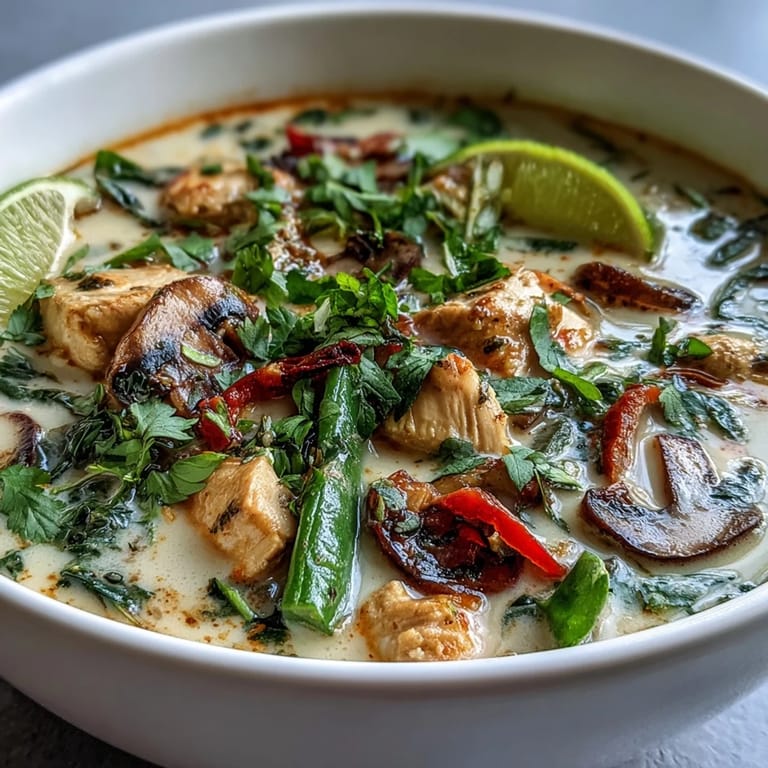
 One afternoon, my kitchen filled with the kind of steam that makes you close your eyes and just breathe—that's when I knew this Thai curry soup was doing something right. A friend had mentioned craving something warm and comforting but also bright, and I remembered a version I'd tasted years ago at a small restaurant in Bangkok, where the soup arrived impossibly fast yet tasted like it had been simmering for hours. The secret, I learned that day, wasn't time but intention: good aromatics, real curry paste, and coconut milk that actually coated your mouth. Now whenever I make it, people ask if I've been secretly taking cooking classes.
I made this for my partner on a gray November evening when neither of us felt like ordering takeout, and watching their face light up with that first spoonful reminded me why cooking for people matters. The kitchen smelled like a Thai market—ginger, garlic, curry—and suddenly the whole apartment felt warmer than the actual soup.
Ingredients
- Chicken thighs or breasts (400 g): Thighs stay more tender and flavorful, but breasts work if that's what you have—just don't overcook them past the initial 2-3 minute sear.
- Fresh ginger (1 tbsp grated): The grater releases oils that whole slices can't match, and that's what makes your kitchen smell incredible.
- Garlic and shallots: Three cloves and two shallots might seem modest, but they're just enough to whisper in the background rather than shout.
- Red curry paste (2 tbsp): This is your flavor foundation—buy it in a tube or jar from the Asian section and don't substitute with powder, which tastes flat by comparison.
- Coconut milk (400 ml, full-fat): The full-fat version is non-negotiable here; lite coconut milk will leave you wondering where the richness went.
- Chicken broth (750 ml): Use good quality broth or even make your own—watery broth makes watery soup, and that defeats the purpose.
- Fish sauce and soy sauce (1 tbsp each): These aren't optional flavor add-ons; they're the umami backbone that makes people ask for your recipe.
- Brown sugar (1 tsp): Just a touch to balance the heat and salt without making it sweet.
- Lime juice: Fresh squeezed, always—bottled lime juice tastes tired by comparison.
- Vegetables (bell pepper, mushrooms, snow peas): Cut them all to similar sizes so they cook evenly and look intentional in the bowl.
- Fresh cilantro and Thai basil: These aren't garnishes pretending to matter; they're the final note that makes people remember the soup.
Tired of Takeout? 🥡
Get 10 meals you can make faster than delivery arrives. Seriously.
One email. No spam. Unsubscribe anytime.
Instructions
- Build your aromatics base:
- Heat oil in a large pot over medium heat and add shallots, ginger, and garlic together—they should sizzle gently and fill your kitchen with that unmistakable Thai aroma within 2 minutes. Don't rush this step; let them get to know each other.
- Wake up the curry paste:
- Stir in the red curry paste and let it cook for a full minute, which releases all those layered flavors locked inside. You'll see the paste darken slightly and smell something almost spicy and floral at once.
- Coat the chicken:
- Add your chicken pieces and stir constantly for 2-3 minutes so every piece gets touched by that fragrant paste and oil. This is where the chicken starts its journey from raw to tender.
- Introduce the broth and coconut milk:
- Pour everything in slowly, stirring gently, and watch as the coconut milk swirls into the broth like clouds forming. Bring it to a gentle simmer—not a rolling boil, which would toughen the chicken.
- Season with intention:
- Add fish sauce, soy sauce, and brown sugar now, tasting as you go because every brand of these ingredients is slightly different. This is where you start adjusting the soup to your own preference.
- Add the vegetables:
- Slide in the bell pepper, mushrooms, and snow peas and let them simmer for 10-12 minutes until the chicken is completely cooked through and the vegetables are tender but still have a slight brightness to them. Don't walk away—watch how the soup transforms into something unified and whole.
- Finish with citrus:
- Squeeze in the lime juice and taste again, because that acid is what brings everything into focus. You might want more lime, or a touch more fish sauce, or maybe a pinch of brown sugar—trust yourself here.
- Serve with ceremony:
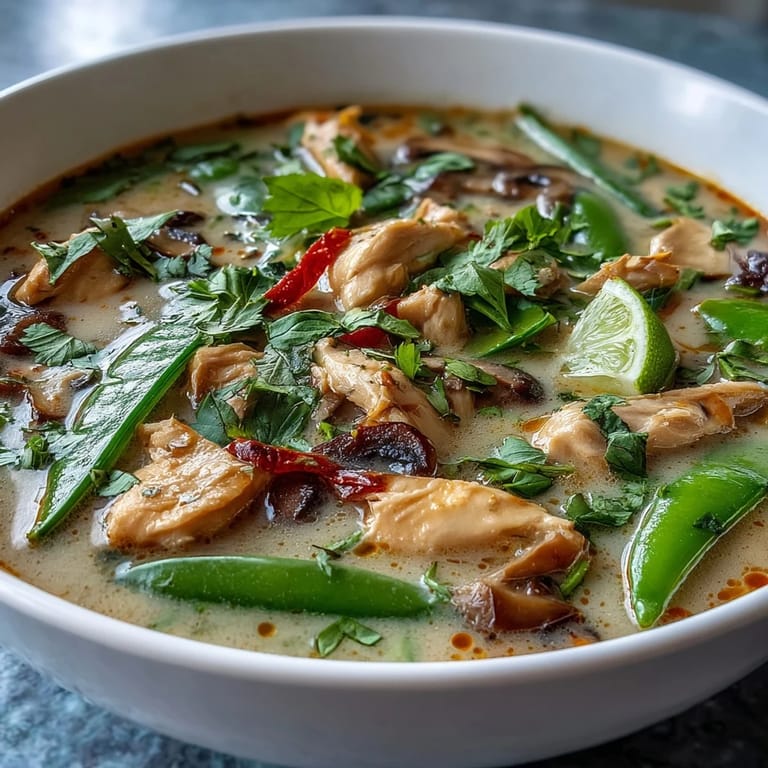
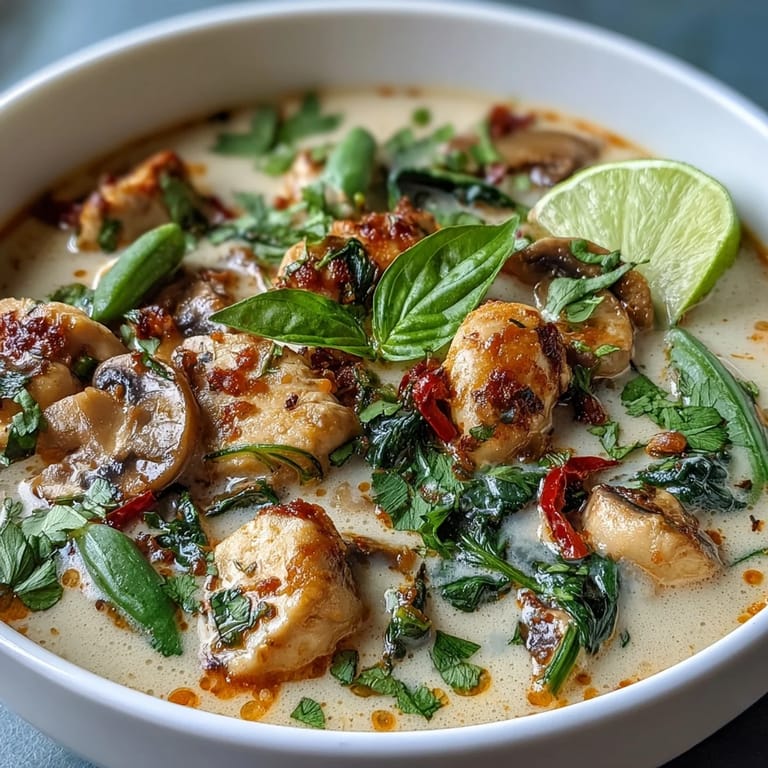
- Ladle into bowls and top with fresh cilantro, Thai basil, a thin slice of red chili if you want heat, and a lime wedge for people to squeeze in as they eat. This final step transforms soup into an experience.
 Save to Pinterest
 There's a moment in making this soup when the broth shifts from looking like separate ingredients to becoming something cohesive and beautiful—suddenly it smells like a restaurant and tastes like care. That's when you know you've done it right, and honestly, that moment is worth every bit of the prep work.
When to Use Chicken Thighs vs Breasts
I've made this soup both ways, and while chicken breasts are leaner and slightly less rich, thighs give you a soup that feels more indulgent and forgiving—they're harder to overcook. If you go with breasts, keep your eye on the clock during that final simmer so they don't turn rubbery.
The Art of Adjusting Seasoning
This soup teaches you something about taste if you let it: one person's perfect balance is another person's too salty or too sour. The lime juice, fish sauce, and brown sugar are all adjustable, so taste thoughtfully as you go and don't be shy about tweaking.
Making It Your Own
The beauty of this soup is that it's flexible without being vague—you can swap in shrimp or tofu, add rice noodles to make it heartier, or even throw in different vegetables depending on what's in your fridge. Just remember that the aromatic base and the coconut milk are non-negotiable; everything else is fair game.
- Try adding a handful of spinach or bok choy in the last minute if you want more vegetables and more nutrition.
- If you make it vegetarian, use vegetable broth and skip the fish sauce, but bump up the soy sauce and add a squeeze more lime to compensate.
- Leftover soup keeps for 3 days in the fridge and actually tastes better the next day as the flavors settle and deepen.
 Save to Pinterest
 This soup has become my go-to when someone needs comfort or when I want to feel like I'm cooking something special without the fuss. It's proof that good food doesn't have to be complicated—it just has to be made with attention.
Recipe FAQs
- → Can I make this soup spicier?
Yes, increase the heat by adding extra red curry paste during cooking or garnish with sliced fresh chilies. You can also include dried Thai chilies while sautéing the aromatics.
- → What protein alternatives work well?
Shrimp cook beautifully and only need 3-4 minutes of simmering. Firm tofu cubes absorb the curry flavors wonderfully. For vegetarian versions, use vegetable broth and omit fish sauce, substituting with soy sauce or salt.
- → Can I prepare this in advance?
The flavors actually deepen when made ahead. Prepare up to 2 days in advance, refrigerating separately from garnishes. Reheat gently over medium-low heat, adding splash of water or broth if needed. Add fresh lime juice just before serving.
- → Is this soup freezer-friendly?
Yes, it freezes well for up to 3 months. Cool completely before transferring to airtight containers. Thaw overnight in refrigerator and reheat gently. Note that coconut milk may separate slightly but will emulsify again when reheated with stirring.
- → What vegetables can I substitute?
Baby corn, bamboo shoots, bok choy, or snap peas all work beautifully. For heartier versions, add sweet potato cubes or butternut squash during the initial simmer. Adjust cooking time accordingly for harder vegetables.