 Save to Pinterest
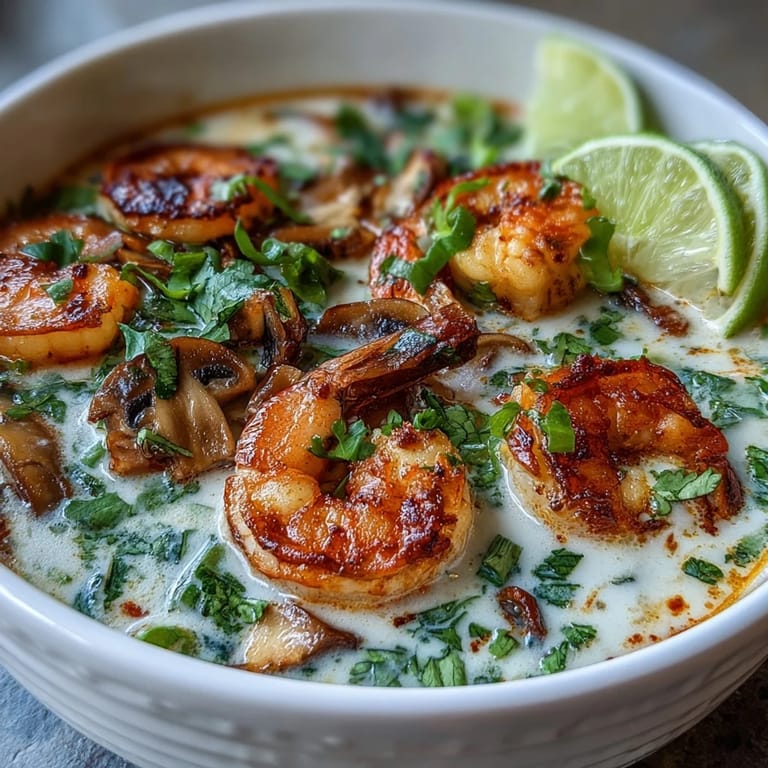
 My neighbor brought a container of this soup to my door one rainy afternoon, still steaming, and I remember the smell hitting me before I even opened the lid—coconut, lime, that mysterious warmth of curry paste. She'd learned it from her mother in Bangkok, she said, and watching her make it later became one of those kitchen moments where you realize how quickly something so fragrant and complex can come together. The first spoonful was like tasting Thailand itself, creamy and bright and just spicy enough to make you sit up straighter. That's when I understood why she made it so often.
I made this for my partner during a week when everything felt rushed and overwhelming, and there was something about the ritual of it that mattered more than the eating—the way the kitchen filled with that distinctive lemongrass-and-garlic perfume, how the broth turned silky gold as soon as the coconut milk hit it. By the time we sat down with bowls of it, something in both of us had already settled. He asked for seconds immediately, which rarely happens, and then he asked how I'd learned to make Thai food. I told him the truth: I'd learned it by watching someone care.
Ingredients
- Large raw shrimp (350 g): Buy them still in their shells if you can find them, then peel and devein yourself—the shells become extra flavor if you're making stock later.
- Lemongrass (2 stalks): Trim the pale bottom part, smash it hard with the side of your knife to wake up the oils, and don't skip this step even though it seems like an extra thing.
- Kaffir lime leaves (4): Optional but genuinely transformative if you can source them—they taste bright and floral in a way nothing else does, though fresh lime zest works as a substitute.
- Garlic and ginger or galangal (3 cloves and 1 thumb-sized piece): Slice the ginger rather than mince it so you can remove it easily later, and don't be shy with either one.
- Onion and mushrooms: A small onion keeps the soup from becoming overshadowed, and sliced mushrooms add earthiness that balances all the brightness.
- Coconut milk (400 ml): Full-fat is non-negotiable here—it's what makes this soup feel luxurious, and it's the whole point.
- Chicken or vegetable broth (500 ml): Use homemade if you have it, but good quality store-bought works perfectly well.
- Thai red curry paste (2 tbsp): This is where the depth comes from, so find a brand you like and keep it in your fridge.
- Fish sauce (2 tbsp): It smells aggressive in the bottle, but this is what gives Thai soup its distinctive savory backbone.
- Lime juice, sugar, and fresh cilantro: The lime is brightness, the sugar is balance, and the cilantro is the final note that makes everything sing.
Tired of Takeout? 🥡
Get 10 meals you can make faster than delivery arrives. Seriously.
One email. No spam. Unsubscribe anytime.
Instructions
- Wake up your aromatics:
- Heat a splash of oil in a large pot over medium heat, then add the onion, garlic, smashed lemongrass, sliced ginger, and chili if you're using it. Listen for the sizzle and let it go for 2-3 minutes until your kitchen smells like a Thai restaurant—this is when you know the flavor is building.
- Toast the curry paste:
- Stir in the red curry paste and cook it for just one minute, stirring constantly so it doesn't burn. This single minute transforms it from a raw-tasting paste into something aromatic and deep.
- Build the broth:
- Pour in the coconut milk and chicken broth, add the kaffir lime leaves if you have them, and bring everything to a gentle simmer. Don't let it boil hard—you want it to bubble quietly and release its flavors slowly.
- Cook the mushrooms:
- Add the sliced mushrooms and let them soften for about 5 minutes until they've absorbed some of the broth and surrendered their earthiness to the pot.
- Add the shrimp:
- Slide in the raw shrimp and cook for 2-3 minutes, just until they turn pink and curl slightly. Overcooked shrimp becomes rubbery, so watch them closely and trust your timing.
- Season with intention:
- Stir in the fish sauce, sugar, and lime juice, then taste it. This is the moment to adjust—maybe it needs more lime for brightness, more fish sauce for depth, or more sugar if the spice is overwhelming. There's no wrong answer here, only preference.
- Strain and finish:
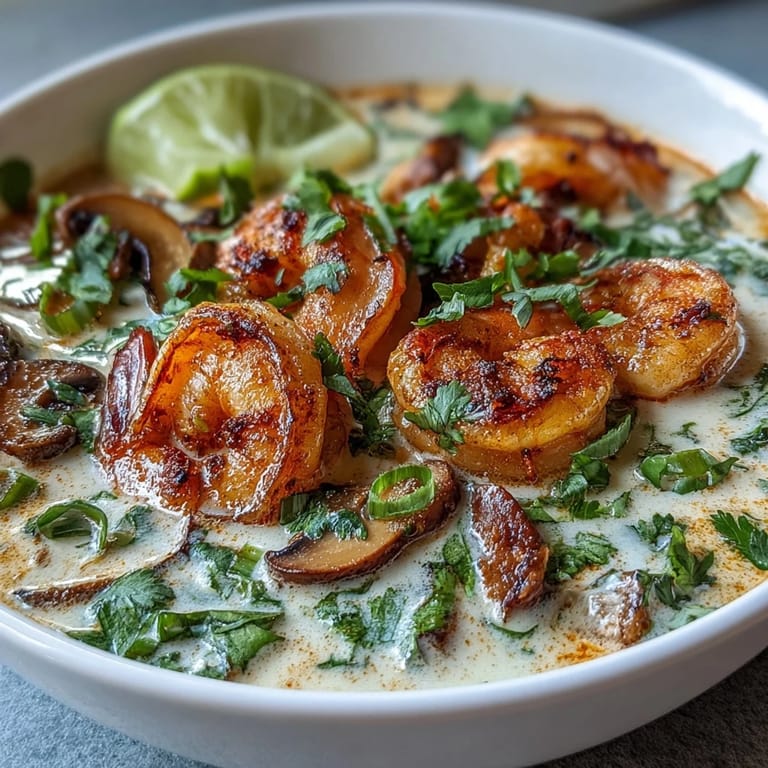
- Fish out the lemongrass stalks, ginger slices, and lime leaves, leaving the soup clear and clean. Ladle it into bowls and scatter cilantro, sliced green onions, and lime wedges over the top.
 Save to Pinterest
 The first time my sister made this at her house, she kept apologizing for the fish sauce smell before we'd even started cooking, worried it would be overpowering. By the time we tasted it, she'd forgotten entirely about that moment and was too busy enjoying something warm and nourishing that didn't need anything else. Sometimes the best dishes are the ones that surprise you twice—once with their aroma, once with how delicious they are.
The Secret of Good Broth
I learned the hard way that the quality of your chicken or vegetable broth matters more than people usually mention. A flat, salty grocery store broth will never give you that deep, rounded base that makes this soup sing, so if you have time to make your own stock, do it—even just a quick version with a chicken carcass and some aromatics. If you're buying it, taste it plain before you add anything to the pot. You're not looking for something that tastes like much on its own, but rather something with body and subtle depth that can be built upon.
Variations That Actually Work
This soup is endlessly flexible without losing its identity, which is part of why I make it so often. The shrimp can become tofu cut into cubes and added a minute or two before you finish, or even chicken breast sliced thin and cooked through before you serve. I've added baby corn, sliced bell peppers, snap peas, and even thin-sliced bamboo shoots, always adding them at different times depending on how long they need to become tender. The beauty is that the coconut milk and curry paste create such a strong flavor base that you're not gambling with the outcome—you're just personalizing it.
Serving and Stretching a Batch
I usually serve this over jasmine rice because the starch gives you something to anchor the soup against, and the rice soaks up all that golden broth in the most satisfying way. Some people prefer it as is, just a soup, and that's equally valid—it's light enough to stand alone but substantial enough to feel like a meal. This recipe makes 4 servings, but I've learned that it's one of those soups that actually gets better the next day as the flavors settle and deepen, so don't hesitate to make the whole pot and refrigerate half of it.
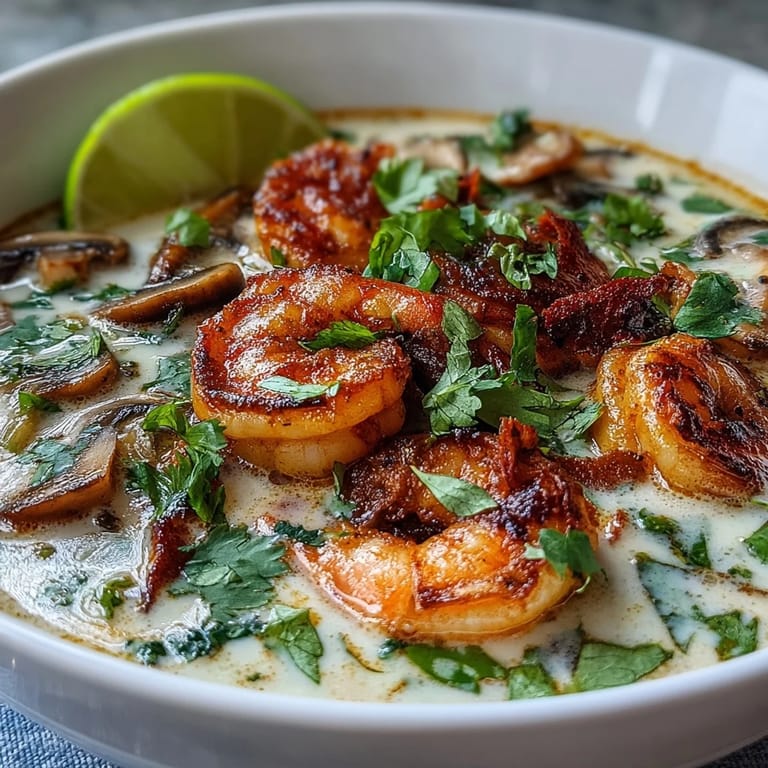
- Serve it hot in wide bowls so you can see all the garnish scattered over the top and the shrimp gleaming underneath.
- Lime wedges on the side let people adjust the brightness to their taste, which always feels elegant and respectful.
- If you're feeding guests, add the shrimp just before serving so they're cooked perfectly and don't sit around getting tough.
 Save to Pinterest
 This soup has become my answer to almost everything—a cold evening, a friend who needs comfort, a night when I want the kitchen to smell like somewhere else entirely. It asks so little and gives back so much.
Recipe FAQs
- → Can I make this soup vegetarian?
Yes, substitute shrimp with firm tofu cubes and replace fish sauce with soy sauce or a vegetarian fish sauce alternative. The soup will still have plenty of flavor from the curry paste, coconut milk, and aromatics.
- → How spicy is this soup?
The heat level is adjustable. The red curry paste provides mild to medium spice, while fresh chili slices add extra kick. You can reduce or omit the chili for a milder version, or add more for additional heat.
- → Can I freeze this soup?
The broth freezes well for up to 3 months. However, shrimp can become rubbery when frozen and reheated. For best results, freeze the broth without shrimp, then add fresh shrimp when reheating.
- → What can I serve with this soup?
Jasmine rice is the classic accompaniment, soaking up the flavorful broth. You can also serve with crusty bread, rice noodles, or enjoy it on its own as a light, satisfying meal.
- → Can I use other seafood?
Absolutely. White fish like cod or sea bass work well. You can also use mussels, scallops, or a mix of seafood. Adjust cooking times accordingly—fish fillets need only 3-4 minutes, while mussels take 5-6 minutes to open.
- → Is red curry paste necessary?
Red curry paste provides the signature Thai flavor base with its blend of chili, garlic, lemongrass, and galangal. You can use green or yellow curry paste for different flavor profiles, though the taste will vary from the traditional version.