 Save to Pinterest
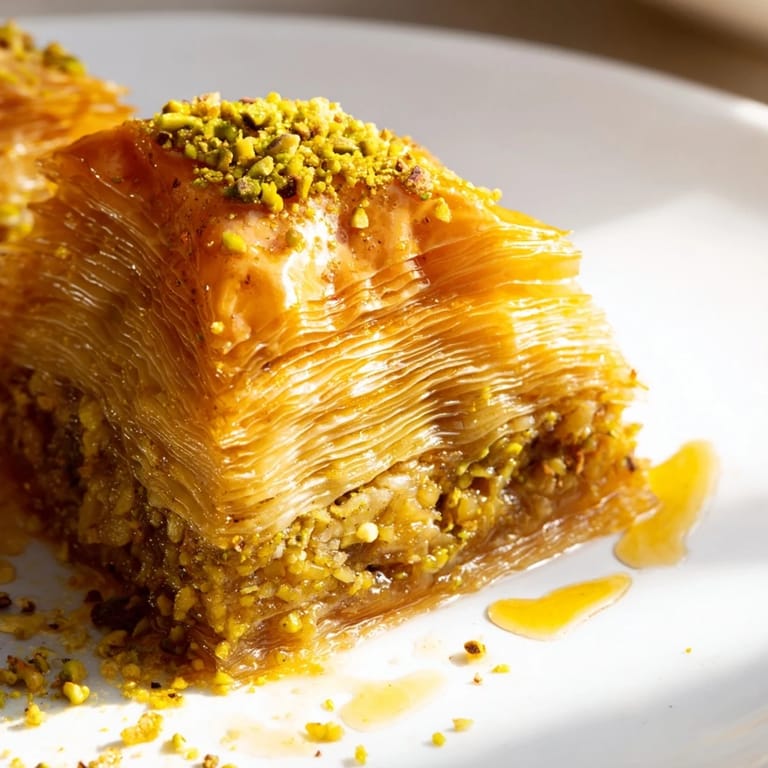
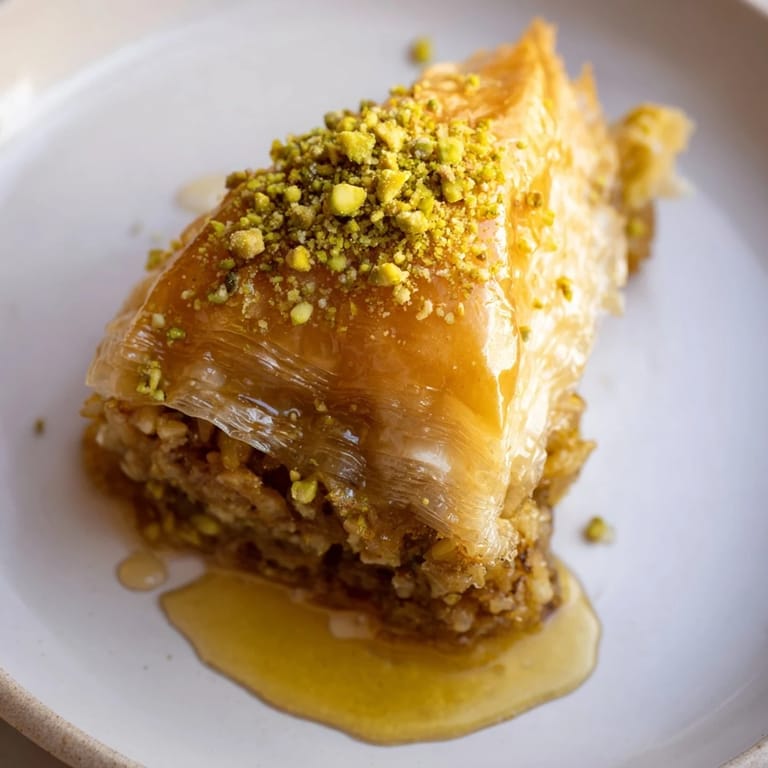
 The first time I watched my grandmother unfold a stack of phyllo sheets, I was convinced she was doing something impossible—paper-thin layers that seemed to defy gravity. Years later, standing in my own kitchen with a pastry brush in hand and melted butter ready, I finally understood the magic. Turkish baklava isn't just a dessert; it's a meditation on patience and layers, each one a small decision that builds toward something extraordinary. The crackling sound when you bite through that golden exterior, the way the honey syrup pools with the nuts—it's worth every careful brushstroke.
I made this for a dinner party where someone casually mentioned they'd never had homemade baklava, only the dense stuff from a tin. Watching them close their eyes after that first bite—the exact moment the crispness gave way to the soft, spiced filling—made me realize why this dessert has survived centuries of Turkish kitchens. It's not complicated, but it demands respect and a gentle touch.
Ingredients
- Phyllo dough (16 sheets): Thaw it slowly in the fridge overnight if you can; rushing this step leads to cracks and tears that ruin the whole structure.
- Unsalted butter (150 g, melted): Use real butter here—the flavor difference is what separates homemade from mediocre, and you'll taste every gram.
- Hazelnuts (100 g, finely chopped): Toast them lightly in a dry pan first if you want to wake up their natural earthiness; it's an optional but brilliant step.
- Pistachios (100 g, finely chopped): The green flecks are what make this feel special, so don't skip them even if they're pricier.
- Granulated sugar (100 g for filling, 100 g for syrup): Keep them separate; the filling sugar stays dry, the syrup sugar dissolves into liquid gold.
- Ground cinnamon (1 tsp, optional): I use it every time because it doesn't overpower—it whispers underneath like a secret ingredient no one can quite place.
- Honey (150 ml): Use something you actually enjoy eating by the spoonful; cheap honey creates a cough-syrup taste.
- Water (120 ml) and lemon juice (1 tsp): The acid cuts through richness and keeps the syrup from feeling cloying.
Tired of Takeout? 🥡
Get 10 meals you can make faster than delivery arrives. Seriously.
One email. No spam. Unsubscribe anytime.
Instructions
- Set your stage:
- Preheat the oven to 180°C (350°F) and brush your 20x30 cm baking pan with melted butter—every corner, every edge. This is your insurance policy against sticking and your first guarantee of crispness.
- Build the phyllo base:
- Take 4 sheets of phyllo and layer them in the pan, brushing each one generously with butter as you go, letting the butter soak in before adding the next sheet. This base layer will become impossibly crispy, so don't rush it or skimp on the butter.
- Mix your filling:
- Combine the hazelnuts, pistachios, sugar, and cinnamon in a bowl, stirring until everything is evenly distributed. The mixture should smell warm and toasted, not raw.
- First nut layer:
- Sprinkle one-third of the nut mixture across the phyllo base, spreading it evenly but not too densely—you want people to taste the phyllo, not just nuts. A gentle hand makes all the difference here.
- Build the middle:
- Layer 4 more phyllo sheets on top, brushing each one carefully, then add another third of the nut filling. You're creating a three-layer sandwich of crispy, buttery phyllo and spiced nuts.
- Almost there:
- Repeat the process: 4 more phyllo sheets, brushed with butter, then the last of the nut mixture spread across the top. By now you should be able to feel the weight and promise of what you're creating.
- The golden finish:
- Layer your final 4 phyllo sheets, brushing each one including the very top with butter until it looks like spun gold. This is your reward layer—it's going to crackle and shatter beautifully.
- Cut before baking:
- Using a sharp knife, score the entire surface into diamonds or squares, cutting all the way through to the bottom. This is crucial; cutting after baking shatters and breaks the phyllo.
- Bake to golden:
- Slide the pan into the oven and bake for 35–40 minutes, until the top is deep golden and you can hear the phyllo crisping up. The sound of it becoming brittle is your signal that magic is happening.
- Make the syrup:
- While the baklava bakes, combine water, honey, sugar, and lemon juice in a saucepan over medium heat. Bring it to a boil, then reduce to a gentle simmer for exactly 10 minutes—no more, no less—so the flavors marry without the syrup reducing too much.
- The crucial moment:
- The instant the baklava comes out of the oven, pour the hot honey syrup evenly across the hot pastry. This hot-to-hot transfer is the secret to syrup absorption that doesn't make it soggy.
- Cool with patience:
- Let it rest completely at room temperature, undisturbed, for at least a few hours (overnight is better). This is when the syrup soaks in and the flavors settle into harmony.
 Save to Pinterest
 Someone once told me that the Turks don't rush their baklava, and it took me a while to understand what they meant. Watching it cool on the counter, listening to it crackle as the temperature dropped, waiting until the next morning to taste it at its absolute best—that's when I realized this dessert teaches patience in a way that feels like a gift, not a chore.
The Phyllo Secret You Need
Phyllo is dramatic and touchy, but only if you treat it like it's fragile. The real secret is that it's stronger than you think—it just needs to stay cold and moist until you actually use it. Keep the stack under a barely damp kitchen towel while you work, and only uncover one sheet at a time. I learned this the hard way, unwrapping the entire stack at once and watching half of them crack before I could even touch them. Now I move deliberately and methodically, almost ritually, and the phyllo cooperates beautifully.
Why This Nut Combination Works
Pistachios alone can taste almost perfumy, and hazelnuts alone are a bit one-note, but together they balance each other into something sophisticated and rounded. The cinnamon isn't there to announce itself; it's there to make you wonder what that warm, comforting note is, and then to make you reach for another piece to try to figure it out. Toast your nuts lightly before chopping if you want to deepen this effect—it's optional but absolutely worth the extra five minutes.
Storage and Serving Wisdom
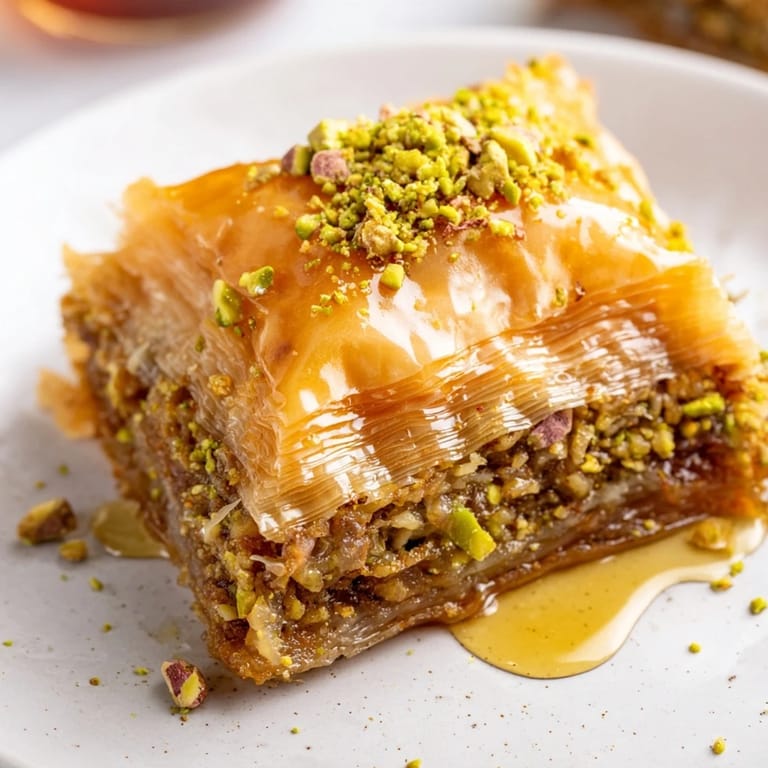
This baklava keeps beautifully at room temperature in an airtight container for up to five days, though I've never had any last that long. The phyllo stays crispy, the syrup stays moist, and everything tastes better on day two when the flavors have fully settled. Serve it at room temperature with strong Turkish coffee or tea—the slight bitterness of the drink against the sweetness and richness of the baklava is a pairing that feels almost sacred.
- If you need to chill the baklava before cutting (for cleaner pieces), do it for just 30 minutes; longer than that and the phyllo loses some of its crispness.
- You can absolutely substitute walnuts for hazelnuts if that's what you have, though the flavor will be earthier and less delicate.
- Make the syrup while the baklava bakes so it's hot and ready the moment your pastry comes out of the oven.
 Save to Pinterest
 There's something about making baklava that transforms you into someone who understands why these recipes have endured for centuries. You become part of a long line of people who've carefully brushed phyllo and drizzled honey, and that connection feels like the sweetest part of all.
Recipe FAQs
- → What type of nuts are used in this dish?
Hazelnuts and pistachios are finely chopped and layered between the phyllo sheets for a rich, nutty flavor.
- → How is the honey syrup prepared?
The syrup is made by simmering water, honey, sugar, and a touch of lemon juice until combined, then poured hot over the baked pastry.
- → Can this dish be made vegetarian?
Yes, it naturally suits a vegetarian diet as it uses butter and nuts without any meat products.
- → What is the best way to slice the pastry?
After baking, chill the pastry slightly to firm it up, then use a sharp knife to cut into diamond or square shapes before adding the syrup.
- → How should this dessert be stored?
Store in an airtight container at room temperature for up to five days to maintain freshness and crispness.
- → Can I substitute other nuts in this preparation?
Walnuts can be used in place of hazelnuts for a different but equally delicious nutty profile.