 Save to Pinterest
 My sister called me three weeks before her daughter's First Communion, voice slightly panicked: Could I make the cake? Not just any cake—one that would sit at the center of our family's celebration, a cake that felt as important as the moment itself. I'd never made fondant roses before, but something about the request made me want to try. Standing in my kitchen that first evening, I realized this wasn't about perfecting a dessert; it was about showing up for a milestone that mattered.
I remember frosting that cake the morning of the party, my hands moving slower than usual because I wanted each stroke of the spatula to be intentional. My niece wandered into the kitchen, still in her pajamas, and just stood there watching. She didn't say anything—just observed—and I suddenly understood why people pour such care into these particular cakes. They're witnessing something sacred, even if they're only a few years old.
Ingredients
- All-purpose flour (2 ½ cups / 310 g): Make sure it's fresh and not packed down in the bag; gently spoon it into your measuring cup to avoid a dense cake.
- Baking powder (2 ½ tsp): This is what gives the sponge its cloud-like crumb, so don't skip it or reduce it thinking less is lighter.
- Salt (½ tsp): A tiny anchor that makes the vanilla flavor sing instead of feeling one-dimensional.
- Unsalted butter (1 cup / 225 g for sponge, 1 ½ cups / 340 g for frosting): Softening it at room temperature takes about 30 minutes and makes a huge difference in how smoothly everything combines.
- Granulated sugar (2 cups / 400 g): The creaming step with butter is where the cake's structure begins, so don't rush those 3 minutes.
- Eggs (4 large, room temperature): Cold eggs will curdle the mixture; sit them out while you prep everything else.
- Pure vanilla extract (1 tbsp, plus 2 tsp for frosting): Splurge on real vanilla here—the artificial stuff disappears into the background of such an elegant cake.
- Whole milk (1 cup / 240 ml, room temperature): Alternating it with flour creates a tender crumb that won't feel heavy or rubbery.
- Powdered sugar (5 cups / 600 g, sifted): Sifting removes lumps and gives the frosting a silky finish; it takes an extra minute and changes everything.
- White fondant (16 oz / 450 g): This is your decorative canvas; quality matters because cheaper fondant tears more easily and tastes waxy.
- Green gel food coloring (optional): A tiny dab goes a long way; gel colors blend better than liquid ones for fondant.
- Edible pearls or silver dragees (optional): These add a whisper of sparkle without overwhelming the cake's delicate elegance.
- Cross topper: Choose one that feels right for the moment—whether it's simple or ornate sets the whole tone.
Tired of Takeout? 🥡
Get 10 meals you can make faster than delivery arrives. Seriously.
One email. No spam. Unsubscribe anytime.
Instructions
- Prepare your stage:
- Preheat your oven to 350°F and line those cake pans with parchment paper, not just grease—you want the layers to release cleanly so you can stack them without nervousness. Check that your eggs and milk are actually at room temperature by touching the carton; this detail prevents the batter from seizing up and becoming grainy.
- Combine your dry elements:
- Whisk the flour, baking powder, and salt together and set it aside; this distributes the leavening evenly so every slice will have the same rise. I like whisking by hand here because it takes only a minute and feels meditative.
- Cream butter and sugar into clouds:
- Beat them together for about 3 minutes until the mixture is pale and fluffy, which means you've incorporated air into the structure. Stop halfway through and scrape the bowl because that's where the unmixed sugar hides.
- Welcome the eggs one by one:
- Add each egg individually and beat for about 30 seconds after each one; this prevents the mixture from looking curdled and lumpy. After all four eggs are in, add your vanilla and let it blend for just a few seconds.
- Alternate and fold gently:
- On low speed, add a third of the flour mixture, then half the milk, then another third of flour, then the rest of the milk, then the final flour portion. This pattern prevents overworking the batter, which would make the cake tough instead of tender.
- Divide and smooth:
- Pour the batter evenly between your prepared pans and smooth the tops with an offset spatula so they bake evenly. If one side is thicker, rotate the pan a few times while the batter settles.
- Bake with patience:
- Bake for 30 to 35 minutes until a toothpick comes out clean or with just a few moist crumbs clinging to it. Your kitchen will smell like pure vanilla, which is the first sign everything is going right.
- Cool in stages:
- Let the cakes sit in their pans for 10 minutes so they firm up just enough, then turn them out onto wire racks to cool completely. This prevents them from breaking apart when you handle them later.
- Make the frosting foundation:
- Beat softened butter until it's creamy and pale, then add your sifted powdered sugar gradually, giving the mixer time to incorporate each addition. Pour in vanilla and a pinch of salt, then add milk 1 tablespoon at a time until the frosting reaches a soft, spreadable consistency.
- Level and layer:
- If your cake layers domed in the oven, trim them flat with a serrated knife so they stack evenly. Place the first layer on your cake board, spread a generous layer of frosting on top, then crown it with the second layer.
- Crumb coat and chill:
- Apply a thin, rough layer of frosting over the entire cake to seal in the crumbs, then refrigerate for 20 minutes; this prevents loose crumbs from messing up your final frosting layer. When you pull it out, the cake will be chilled and firm, which makes frosting feel easier.
- Final frosting coat:
- Spread a smooth, generous layer of frosting over the whole cake, using an offset spatula dipped in warm water if you want it extra polished. Chill this for at least 10 minutes so the frosting sets before you add fondant.
- Craft your fondant roses:
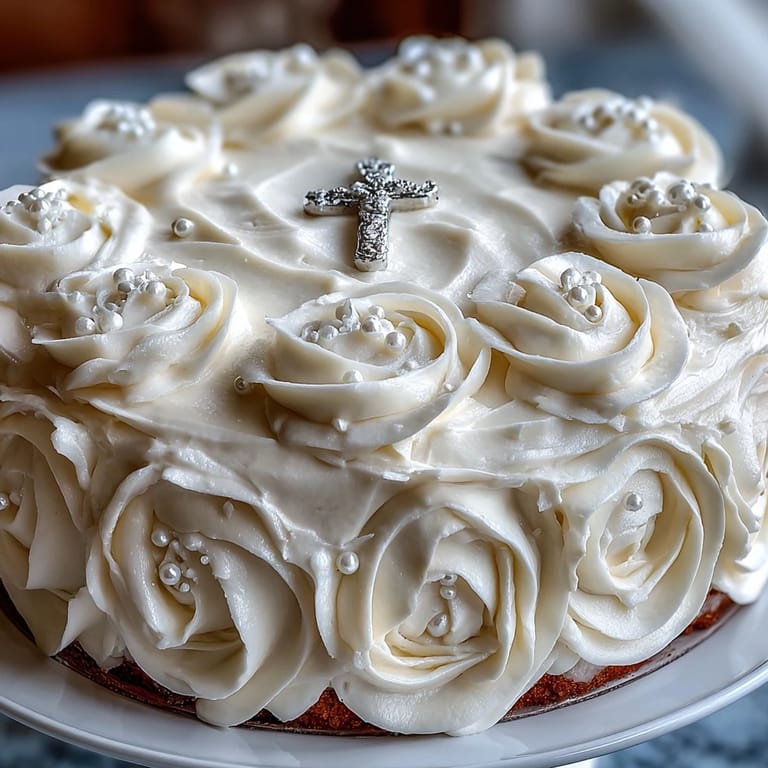
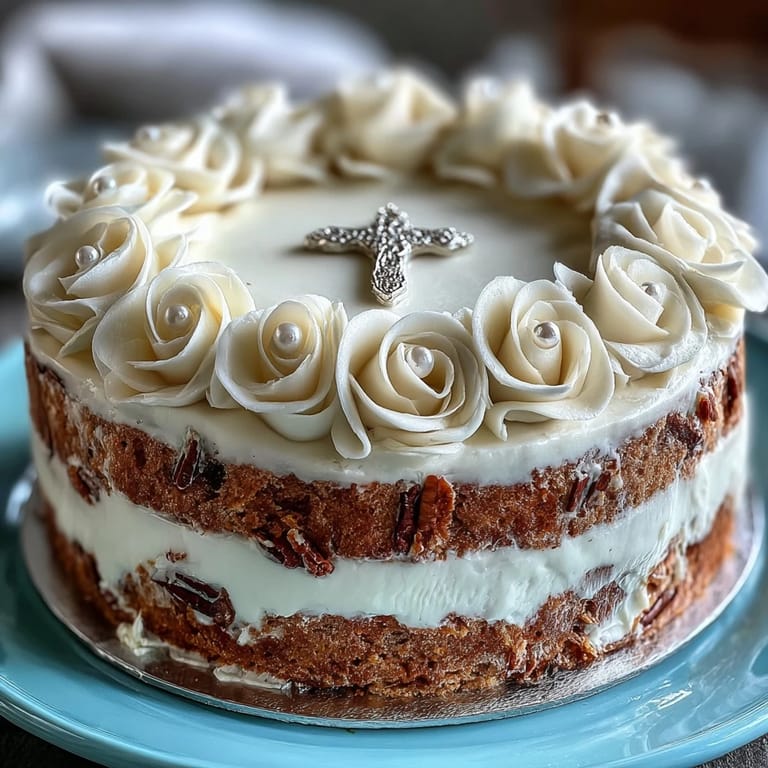
- Roll small balls of white fondant and flatten them into petal shapes, then layer and curl them together into rose forms; this takes longer than you'd expect, but the rhythm becomes almost meditative. Start with a tight center and layer petals outward, overlapping them slightly so they look lifelike.
- Add greenery if you wish:
- Tint a small portion of fondant with green gel coloring and roll it thin, then cut leaf shapes with a knife; dust them with a tiny bit of cornstarch so they don't stick to each other. Press them gently onto the cake around the roses.
- Arrange and accent:
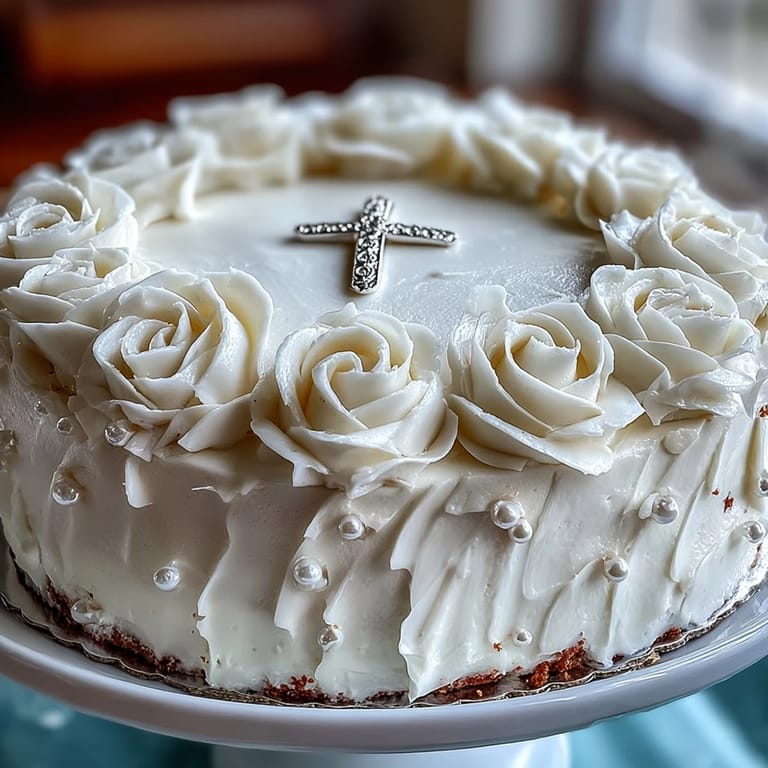
- Place your fondant roses across the cake in a graceful pattern, pressing them gently so they hold, then scatter edible pearls or dragees around them for shimmer. Step back and look at the whole cake from different angles to make sure the composition feels balanced.
- Crown with the cross:
- Position your cross topper at the center or wherever feels right, and if it's not stable, you can anchor it with a tiny dab of frosting underneath. This is the moment the cake transforms from beautiful dessert into something ceremonial.
- Final chill before serving:
- Refrigerate the finished cake for at least 30 minutes so everything sets and the flavors have time to meld. Remove it from the fridge about 15 minutes before serving so the sponge isn't too cold and the frosting isn't too firm.
 Save to Pinterest
 When I placed that cake on the dessert table at the church basement afterward, watching family members approach it with the kind of reverence usually reserved for heirlooms, I understood something I hadn't expected. This cake had become a small monument to a moment that mattered. My niece's mom hugged me and said it was too beautiful to cut, but we cut it anyway, and every person who tasted it said the same thing: it was tender and light and tasted like celebration.
The Science of the Sponge
A vanilla sponge cake lives and dies by its structure, which is built in those first few minutes of creaming. When butter and sugar beat together, they're not just mixing—they're trapping tiny air bubbles that expand in the oven's heat, creating lift and openness throughout the cake. If you rush this step or skip it, you end up with something more like a dense pound cake. I learned this the hard way by trying to speed things up once, thinking 90 seconds of creaming would work just fine. It didn't.
Why Fondant Matters for This Cake
Fondant roses look like you hired a pastry chef, but they're really just an exercise in patience and repetition. The first rose you make will look slightly lumpy and imperfect, but by the time you've made five or six, your hands understand the proportion and pressure needed. What I love about fondant for a First Communion cake is that it photographs beautifully and stays pristine for hours under lights and in warm rooms where buttercream piping might start to soften and weep.
Timing and Logistics
Making this cake over one or two days is smarter than trying to do everything the morning of. I bake the layers the day before, wrap them in plastic wrap, and refrigerate them overnight; they're actually easier to handle when they're a bit more firm. The frosting can be made the morning of, the fondant work can happen in the afternoon, and final assembly takes only 30 minutes if you're organized.
- Bake and cool the layers the day before so they're stable and easy to layer without anxiety.
- Make the frosting no more than a few hours before assembly or it can separate if it sits too long at room temperature.
- Shape your fondant roses at least 4 hours before you arrange them so they firm up and hold their shape better when pressed onto the cake.
 Save to Pinterest
 This cake is for the moments that feel bigger than ordinary, and that's exactly why it deserves to be made with intention and care. Bake it knowing that someone will remember not just how it tasted, but the fact that you made it.
Recipe FAQs
- → How do you ensure the vanilla sponge remains tender?
Use room temperature ingredients and carefully alternate dry and wet ingredient addition to avoid overmixing, resulting in a light, tender crumb.
- → What is the best way to achieve smooth buttercream?
Beat softened butter thoroughly before gradually adding powdered sugar and vanilla extract, finishing with milk or cream to create a creamy, spreadable texture.
- → How can fondant roses be shaped perfectly?
Roll small fondant balls, flatten each into thin petals, and assemble by layering to mimic natural rose petals, allowing slight curling for realism.
- → What is the recommended cooling process before frosting?
Allow baked layers to cool completely on wire racks to prevent melting or sliding of the buttercream during application.
- → Can this dessert accommodate dietary restrictions?
For gluten-free needs, substitute flour with a gluten-free blend; for lighter texture, replace half butter with vegetable oil.