 Save to Pinterest
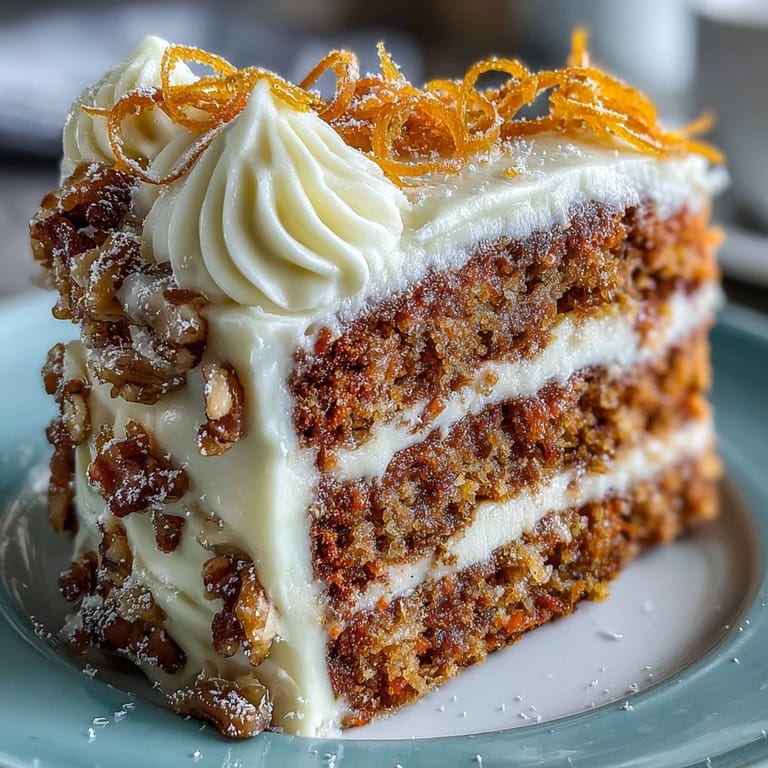
 The earthy aroma of freshly grated carrots always sweeps across my kitchen when I make this cake, reminding me not of any grand holiday but of cheerful Saturday mornings splattered with orange flecks everywhere. For me, carrot cake is about the quiet satisfaction of watching simple ingredients transform—especially when the anticipation of swirling cream cheese frosting is thick in the air. Candied carrot curls take things a step further and create an almost artistic buzz, even if it means sticky fingers and a few failed ribbons along the way. It’s a project, something I break into parts and occasionally fix with extra laughter and a new apron. There’s no expectation of perfection, just celebration in the making.
I remember the first time I baked this carrot cake for an Easter brunch; somehow, everyone ended up clustered in the kitchen, waiting for the cakes to cool and the frosting marathon to begin. Someone appointed themselves chief carrot-peeler (not always with perfect strips), and I tried not to laugh when our candied curls looked more Jackson Pollock than Martha Stewart. By the end, the only things left were empty plates and a few stray curls sticking to elbows. The joy came as much from the shared mess as the beautiful cake set in the center of the table. For a moment, dessert felt like the heart of spring itself, bright and a little bit unpredictable.
Ingredients
- All-purpose flour: The backbone of the cake, giving it structure; spoon it into your measuring cup for the lightest crumb.
- Baking powder & baking soda: This duo lifts the cake—double-check their freshness for a beautiful rise.
- Salt: Just enough brings all the other flavors into focus without being obvious.
- Ground cinnamon, nutmeg, and ginger: Layer in warmth, earthiness, and that subtle, cozy complexity—use fresh spices if you have them for extra punch.
- Granulated sugar & light brown sugar: Both sweeten, but the brown sugar’s slight stickiness adds deep caramel notes and extra moisture.
- Vegetable oil: Keeps things wonderfully moist long after the cake cools—don’t swap for butter in this one.
- Eggs: Bind everything together and add richness; always best at room temperature to prevent curdling.
- Vanilla extract: A splash rounds out the flavor, never optional in my kitchen.
- Finely grated carrots: The star ingredient; grate them finely so they melt into the cake, making every bite sweet and tender.
- Walnuts or pecans (optional): Toast them beforehand if you’re feeling fancy—they add a satisfying crunch and nutty aroma.
- Raisins (optional): Stir them in for little bursts of sweetness, or leave them out to settle in old-school purist territory.
- Cream cheese (for frosting): Make sure it’s fully softened; cold cream cheese is a shortcut to lumpy frosting.
- Unsalted butter (for frosting): Also softened—leave it out for at least 30 minutes for seamless blending.
- Powdered sugar (for frosting): Sifted to avoid any sneaky lumps in your frosting swirl.
- Vanilla extract (for frosting): Echoes the cake’s flavor and adds that creamy, dreamy finish.
- Pinch of salt (for frosting): Just a nudge to keep the sweetness in check.
- Carrots, granulated sugar, water (for candied carrot curls): A sweet, simple science experiment; the peels must be sturdy enough to twist into curls, so pick the fattest carrots you can find.
Tired of Takeout? 🥡
Get 10 meals you can make faster than delivery arrives. Seriously.
One email. No spam. Unsubscribe anytime.
Instructions
- Get the cake pans ready:
- Preheat your oven to 350°F (175°C). Grease two 8-inch round pans and line them with parchment so nothing sticks and clean-up is a breeze.
- Mix the dry ingredients:
- In a medium bowl, whisk together the flour, baking powder, baking soda, salt, cinnamon, nutmeg, and ginger—the aroma honestly gives away how cozy your kitchen will smell.
- Make the wet mixture:
- In a larger bowl, whisk both sugars with vegetable oil until glossy. Crack in the eggs one at a time, really beating after each, and blend in the vanilla extract until silky.
- Combine and fold:
- Add the dry ingredients to the wet mixture in batches, stirring just until you no longer see streaks of flour. Fold in the carrots, nuts, and raisins—the batter will look thick and orange-flecked, and that’s perfect.
- Bake:
- Split the batter evenly between your pans. Bake for 35–40 minutes, until a skewer poked into the middle comes out clean and the cake springs back to a gentle press.
- Cool completely:
- Let the cakes rest in their pans for 10 minutes, then tip them out onto a wire rack to cool all the way. This step is crucial—patience really does make for better frosting later.
- Candied carrot curls:
- Lower oven to 225°F (110°C). Peel carrots into long ribbons, simmer in a bubbling mix of sugar and water for 10 minutes, then fish them out and let them sit on a parchment-lined tray. Twist each strip into loose curls and bake for 30–40 minutes until they hold their shape but aren’t brittle—expect to sneak a taste.
- Frosting time:
- Beat softened cream cheese and butter together until smooth as a cloud, then add sifted powdered sugar, vanilla, and salt, beating until fluffy and irresistible.
- Assemble the masterpiece:
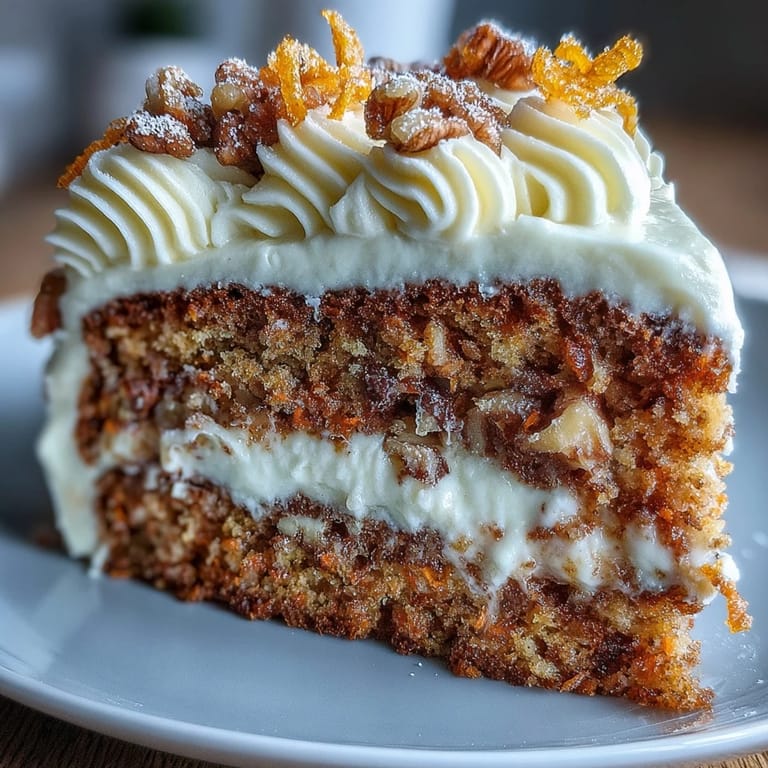
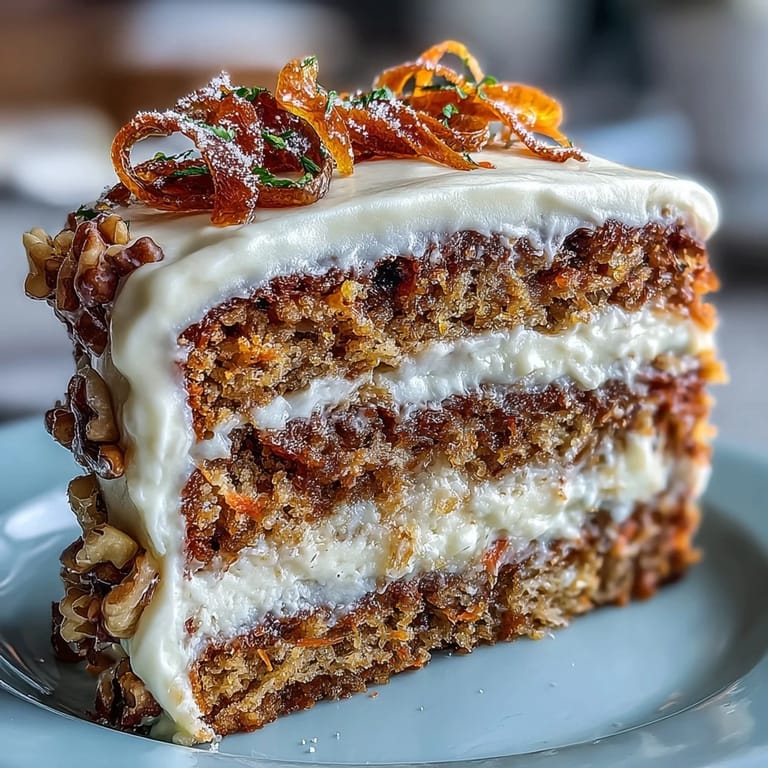
- Lay down one cake layer, slather with frosting, and repeat with the second; cover the sides and top generously, and crown with your carrot curls for a stunning finish.
 Save to Pinterest
 One very rainy spring afternoon, I baked this cake with my niece, who managed to dust herself (and me) with flour, scatter pecan halves everywhere, and still insist on taste-testing the frosting with her pinkie. The carrot curls, as it turned out, doubled as impromptu mustaches for everyone in the house, transforming our kitchen into a silly scene that still makes me smile. This cake doesn’t just mark a celebration; it often orchestrates one. The memories linger longer than the crumbs do. Sometimes, the best desserts are the ones that create their own little party as you make them.
Mastering Those Candied Carrot Curls
Early on, I realized the trickiest part of this recipe isn’t the cake or the frosting—it’s wrangling those carrot curls into submission. Use the thickest, freshest carrots for sturdy ribbons, and don’t rush the simmering: the sugar syrup lets the strips bend and twist without snapping. When shaping, work quickly but don’t stress about symmetry—imperfection adds charm. If some look a little wonky, they’ll still taste sweet and fetch plenty of compliments. And if you end up with some odd shapes, just call it edible abstract art.
Layering and Assembling Without Stress
The key to neat layers is patience: cool the cakes completely (seriously) and trim the domes if you want a perfectly even stack. Frosting tends to pick up crumbs—using a thin “crumb coat” helps seal them in, so your final swoops look smooth and photo-worthy. Sometimes I freeze the cake layers for 10 minutes before the final layer of frosting for extra insurance. Don’t worry if things aren’t bakery-perfect; a homemade touch looks (and tastes) way better. There’s always at least one spot where I dab on extra frosting to cover 'creative' stacking.
Serving, Storing, and Little Extras
If you have leftovers, refrigerator time only improves the flavor and texture—the spices seem to become richer and the crumb even more tender. This cake is fantastic paired with a hot cup of black tea or a bubbly glass of Moscato for something extra celebratory. For gifting, a wedge wrapped in wax paper makes an unbeatable thank-you for a neighbor or friend.
- If you’re short on nuts or raisins, just leave them out—the cake still shines.
- Sifting your powdered sugar for the frosting makes a world of difference in smoothness.
- Let the cake come back to room temperature before serving for the softest, most flavorful bite.
 Save to Pinterest
 No matter how fancy the curls or how messy the process, this carrot cake always gets devoured faster than I expect. Here’s to cakes that bring a little cheer and leave nothing but sweet memories behind.
Recipe FAQs
- → How do I keep the cake moist?
Use vegetable oil rather than butter, avoid overmixing once flour is added, and remove the pans when a toothpick comes out clean. Cooling in the pans for 10 minutes helps retain moisture before transferring to a rack.
- → Can I make it nut-free?
Yes. Omit the walnuts or pecans, or substitute with toasted oats or sunflower seeds for texture. Toasting nuts before folding them in brings out deeper flavor if you choose to include them.
- → What’s the easiest way to make candied carrot curls?
Peel carrots into long thin strips, simmer them briefly in equal parts sugar and water, then lay on parchment and bake at low heat until set but still pliable. Twist around a spoon handle while warm to form curls.
- → How do I prevent the frosting from becoming runny?
Soften cream cheese and butter to room temperature, beat until smooth before adding sifted powdered sugar gradually. Chill the frosted cake briefly to firm the frosting, especially in warm environments.
- → How should I store and serve leftovers?
Store covered in the refrigerator for up to 4 days to keep the frosting stable. Remove from fridge 20–30 minutes before serving so slices reach room temperature and flavors open up.
- → Can components be prepared ahead of time?
Yes. Bake layers and wrap tightly; they keep refrigerated for 2 days or frozen up to a month. Frosting can be made ahead and chilled; bring it back to room temperature and re-whip before using.